Shoulder seams, sock toes, the bottom of a bag knitted in the round: anywhere 2 sets of live stitches need to meet, the three-needle bind off joins and binds them off in one pass, with no sewing. You hold the 2 needles with the stitches together and work with a third. This tutorial covers the steps, working it on the wrong side or the right side, and a practice drawstring pouch in 2 sizes that’s closed with a three-needle bind off.
In this post
Quick facts
- Skill levelAdvanced beginner
- PracticeDrawstring pouch, 2 sizes
- YarnWorsted (#4) cotton
- NeedlesUS 7 (4.5 mm)
- Gauge20 sts × 28 rounds = 4 in (10 cm)
- TimeAbout 3 / 5 hours
Pouch pattern PDF
The 5-page PDF has the bind off steps, the pouch diagram, the size table and both pouches round by round. Print on US Letter, or use Fit to page on A4.
How to do the three-needle bind off
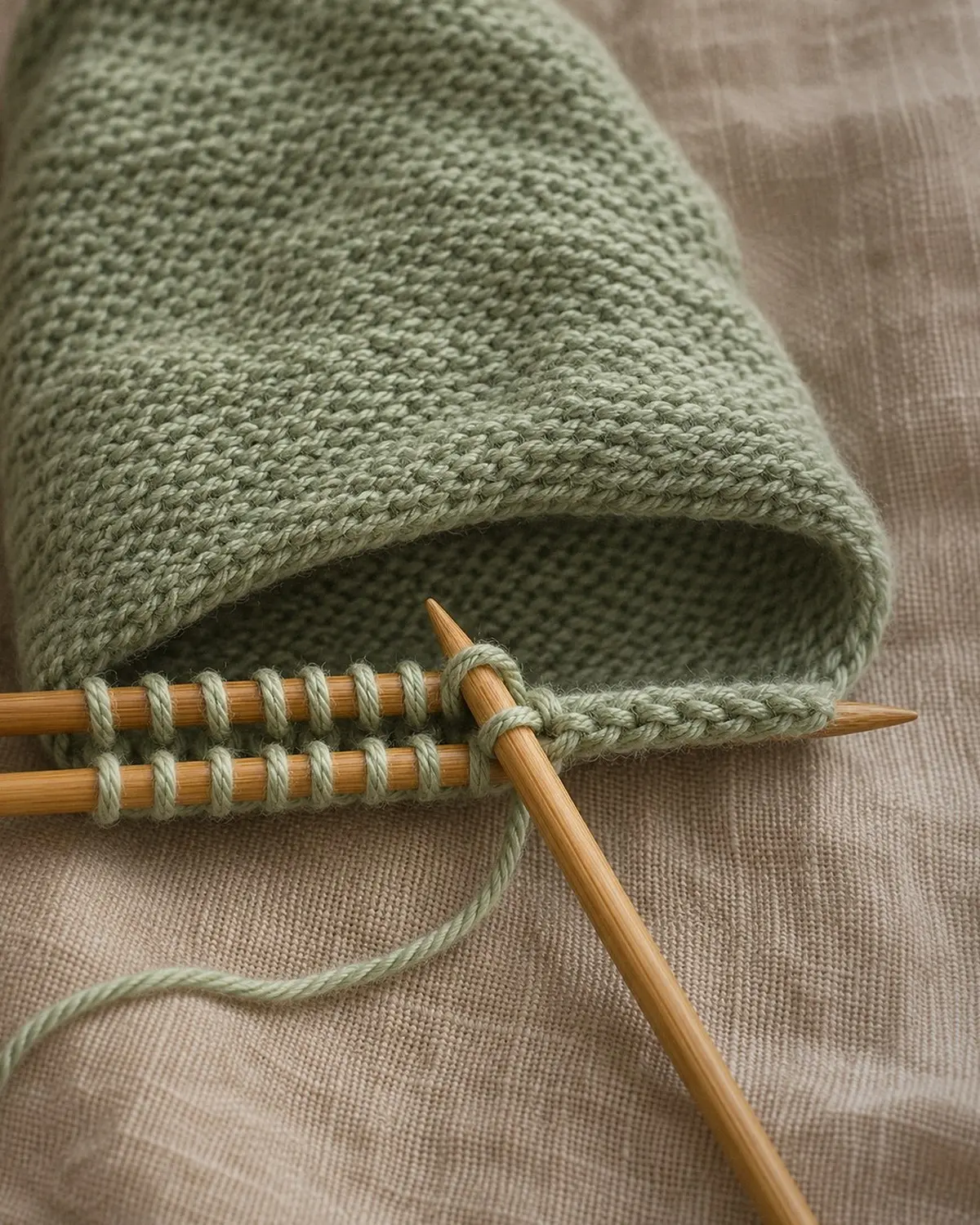
- 2 needles, parallel: Hold the 2 needles side by side, points to the right, with the right sides of the fabric facing each other (wrong side out).
- Through both: Insert a third needle knitwise into the first stitch on the front needle AND the first stitch on the back needle.
- Knit them together: Wrap the yarn and pull it through both: 1 stitch on the right needle. Do it again: now there are 2.
- Pass over: Pass the first stitch on the right needle over the second, as in a normal bind off. Repeat to the end, then pull the yarn through the last stitch.
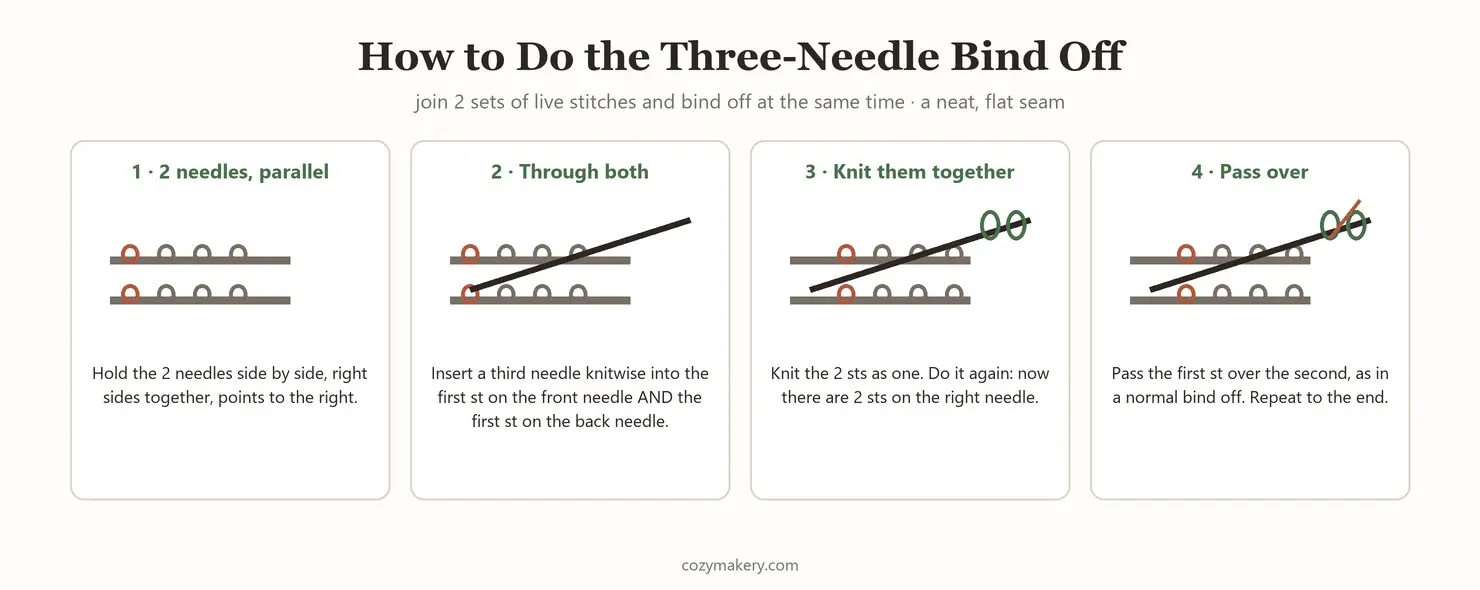
It’s a normal bind off worked through 2 stitches at a time. For an invisible join instead of a ridge, use the Kitchener stitch.
Wrong side or right side?
Worked with the fabric wrong side out (right sides together), the bind off makes a ridge on the inside and a clean line on the outside: that’s what you want for shoulders and bags. Worked right side out, the ridge sits on the outside as a decorative seam, which looks great on a cushion or across the top of a raglan.
Tips for a neat seam
- Same count on both needles: check before you start; the stitches are joined in pairs.
- Bind off loosely, or use a needle one size larger as the third needle. A tight seam puckers.
- Point the needles the same way, both tips to the right, so the first stitches line up.
- No third needle? A crochet hook works: pull a loop through both stitches, then through the loop on the hook.
Practice project: drawstring pouch
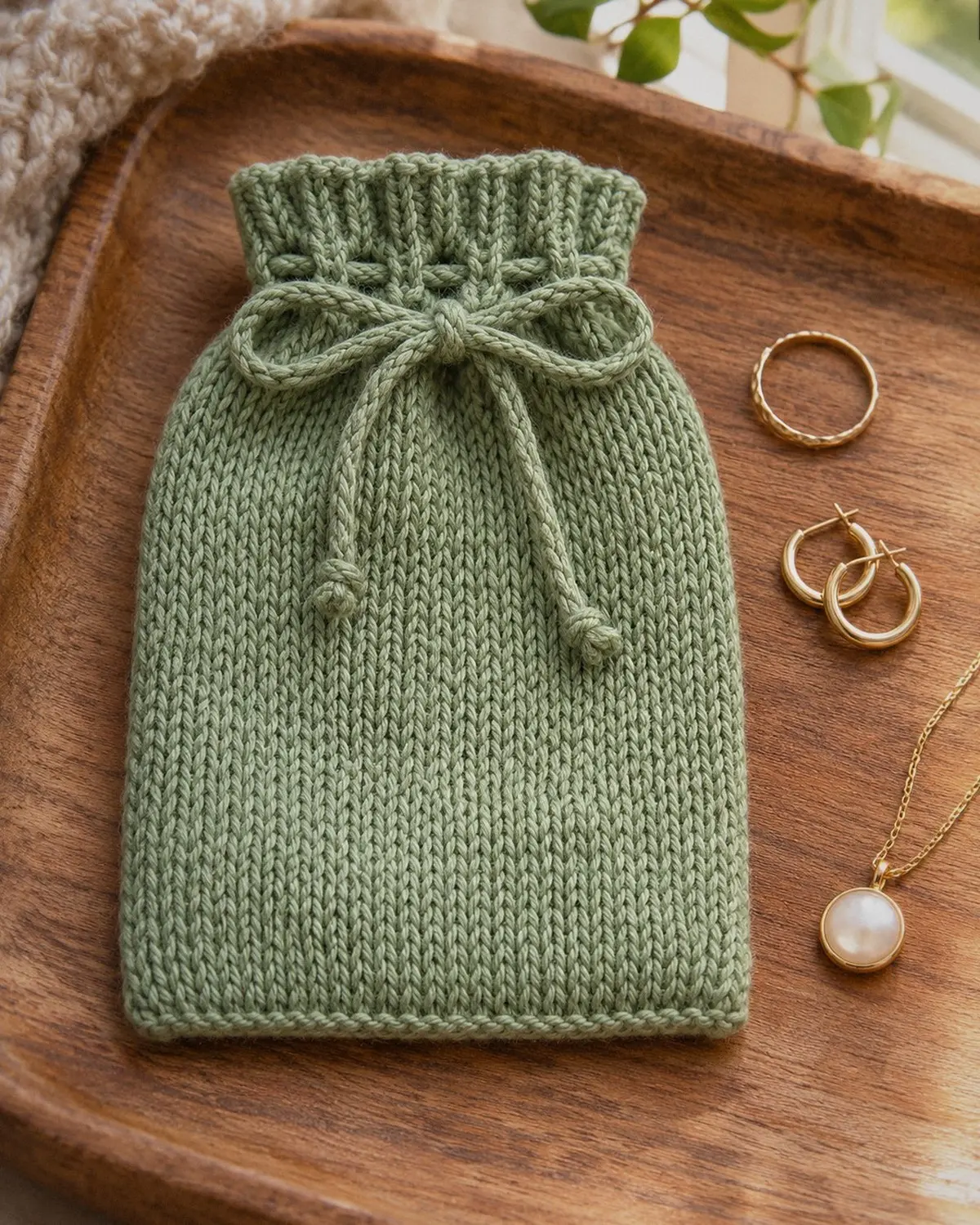
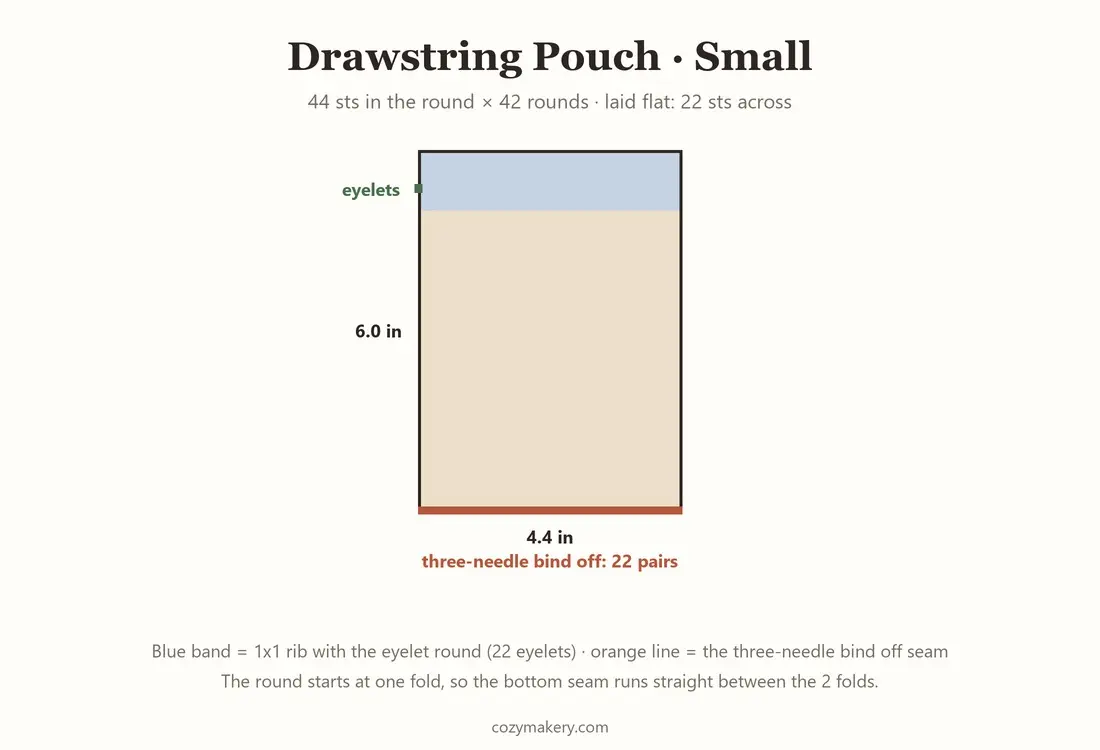
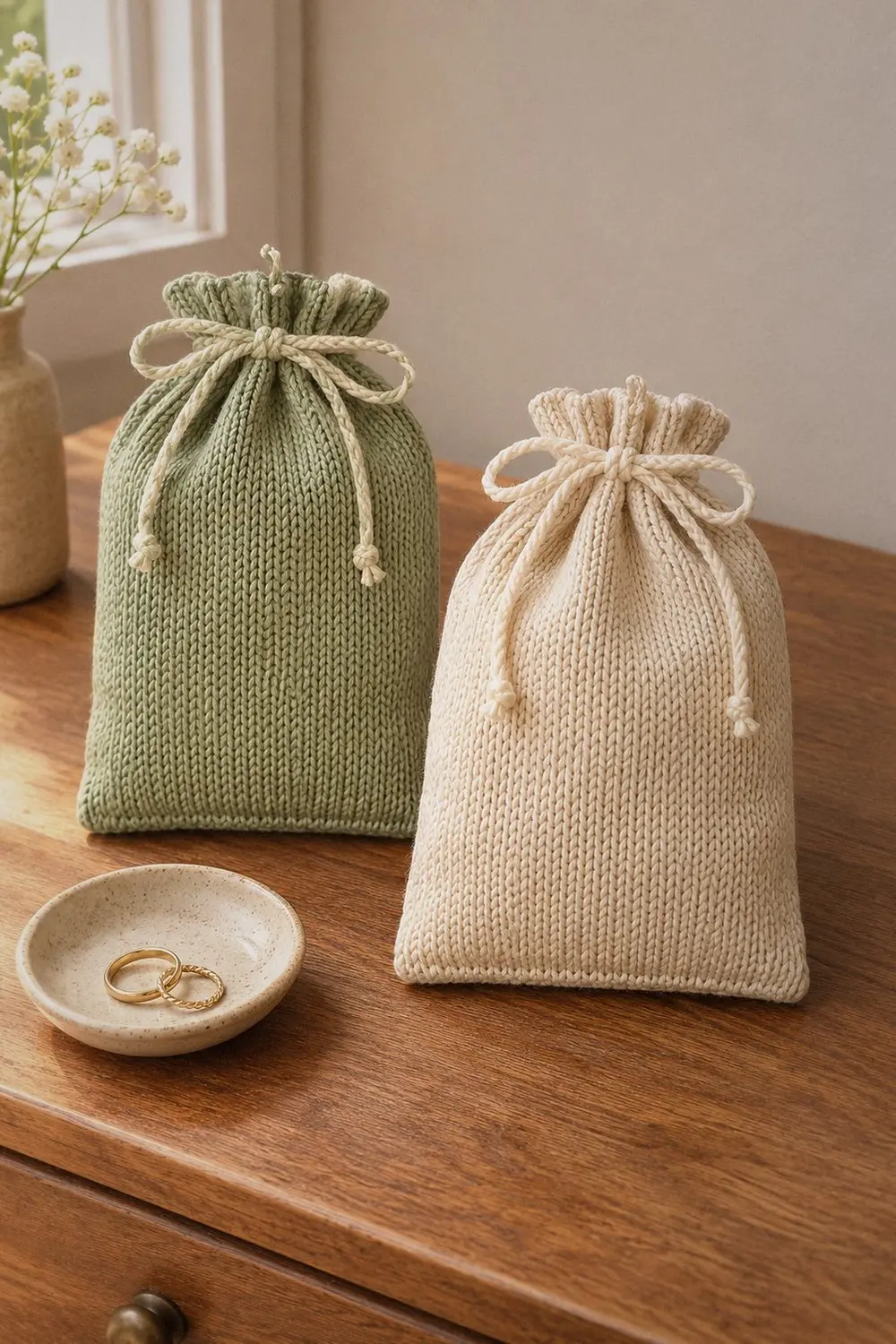
The pouch is knitted in the round from the top down: 1×1 rib with a round of eyelets for the cord, then stockinette. At the bottom, turn it inside out, split the stitches onto 2 needles and close it with a three-needle bind off. The small pouch is 44 stitches round, so 22 pairs at the bottom.
You'll need
- Worsted (#4) cotton: 75 yd (small) or 130 yd (medium), cord included
- US 7 (4.5 mm) double-pointed needles or a short circular, plus 1 spare needle, stitch marker, tapestry needle
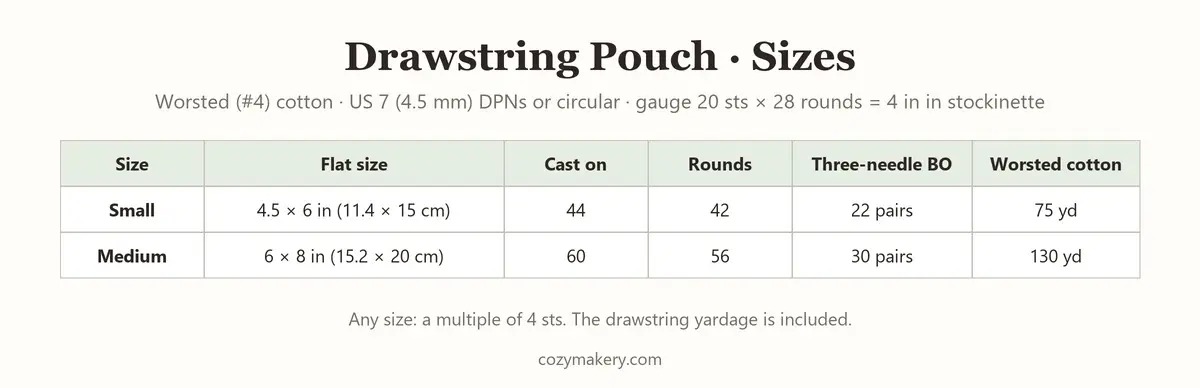
Gauge: 20 sts and 28 rounds = 4 in (10 cm) in stockinette, a standard worsted cotton figure rather than a measured one.
Small pouch (4.5 × 6 in (11 × 15 cm) flat)
- Cast on: Cast on 44 sts on double-pointed needles or a short circular. Join in the round without twisting; place a marker. (44)
- Rounds 1–4: *K1, p1*; repeat to the end. (44)
- Round 5 (eyelets): *Yo, k2tog*; repeat to the end (22 eyelets). (44)
- Rounds 6–7: *K1, p1*; repeat to the end. (44)
- Rounds 8–42: Knit. The pouch measures about 6.0 in (15 cm) from the cast-on. (44)
- Divide: Turn the pouch inside out (wrong side out). Put the first 22 sts on one needle and the last 22 on a second needle; hold them parallel, the marker at one side. (44)
- Three-needle bind off: With a third needle: *knit the first st of the front needle together with the first st of the back needle*; do it again, pass the first st on the right needle over the second. Repeat across until 1 st is left (22 pairs). Cut the yarn and pull it through. Turn right side out. (0)
- Drawstring: Make a twisted cord about 24 in (61 cm) long and thread it in and out of the eyelets. Knot the ends.
Medium pouch (6 × 8 in (15 × 20 cm) flat): cast on 60 sts, work 56 rounds with the same rib and eyelets, and join 30 pairs.
I traced every round and the bottom join: front stitch 1 pairs with the last stitch of the round, so the seam runs straight between the 2 folds, and the bind off ends with exactly 1 loop. For the basics of round knitting, see how to knit in the round; the cord can also be an i-cord.
Three-needle bind off questions
What if I have a different number of stitches on each needle?
Knit 2 together on the needle with more stitches before you start, so the counts match.
Can I use a crochet hook instead?
Yes. Pull a loop through both stitches, then through the loop on the hook, and repeat all the way across.
More knitting: mattress stitch, stockinette stitch and twisted rib.
A provisional cast-on gives you live stitches at the start of the work, so you can join both ends of a band with this bind off.