Slip stitch knitting uses one colour per row and still makes 2-colour patterns: on some stitches you don’t knit, you just slip them from one needle to the other, so they keep the colour from the row below and stretch up over the new row. It’s the easiest colourwork there is, with no carrying 2 yarns. This tutorial covers slipping purlwise, yarn at the back or front, carrying yarn up the side, and a practice project: a 2-colour brick dishcloth in 2 sizes.
In this post
Pattern at a glance
- Skill levelBeginner
- PracticeDishcloth, 2 sizes
- YarnWorsted (#4) cotton, 2 colours
- NeedlesUS 7 (4.5 mm)
- Gauge18 sts × 36 rows = 4 in (10 cm)
- TimeAbout 2 / 3 hours
Free printable pattern
The PDF has the slip stitch steps, the simulated swatch, the size table and both cloths row by row. The Slip Stitch Knitting PDF has 5 pages and prints on US Letter paper; on A4, choose “Fit to page” in the print dialog.
How slip stitch colourwork works
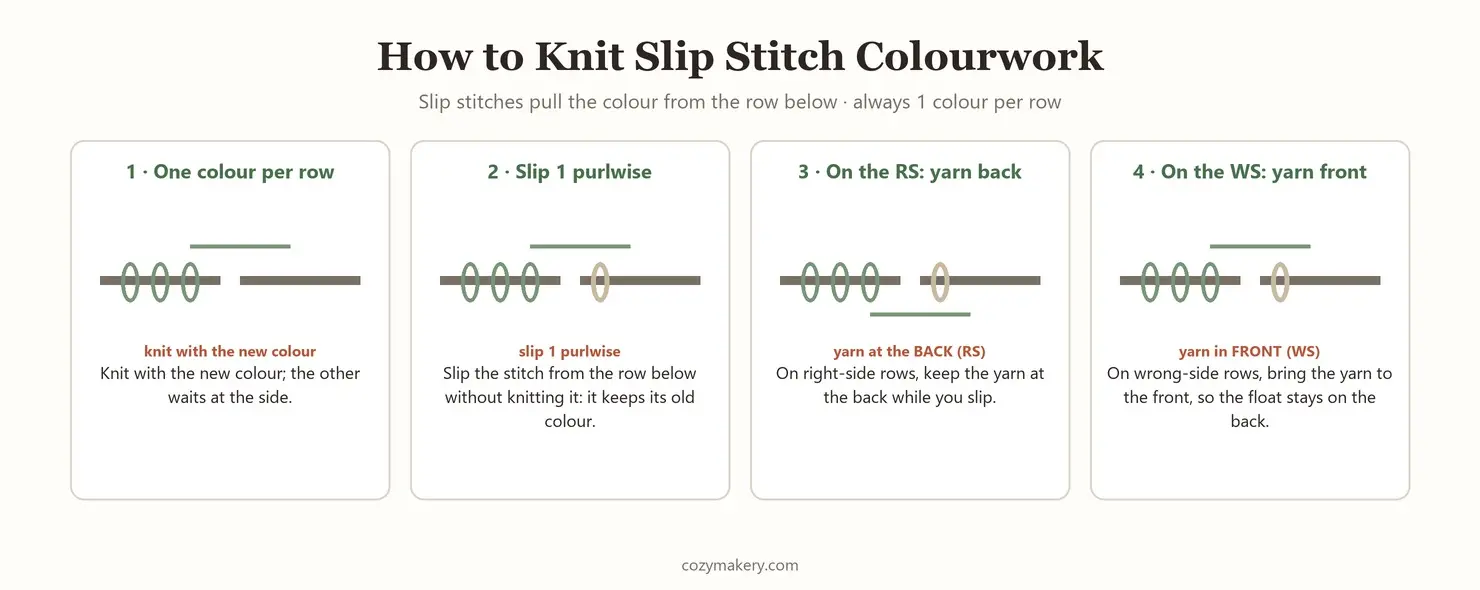
- One colour per row: Knit 2 rows with one colour, then 2 with the other. The colour not in use waits at the side.
- Slip 1 purlwise: On the pattern rows, slip the marked stitches purlwise without knitting them: they keep their old colour.
- RS rows: yarn back: On right-side rows, keep the yarn at the back while you slip, so the little float is on the back.
- WS rows: yarn front: On wrong-side rows, bring the yarn to the front to slip, so the float is still on the back of the work.
The brick pattern
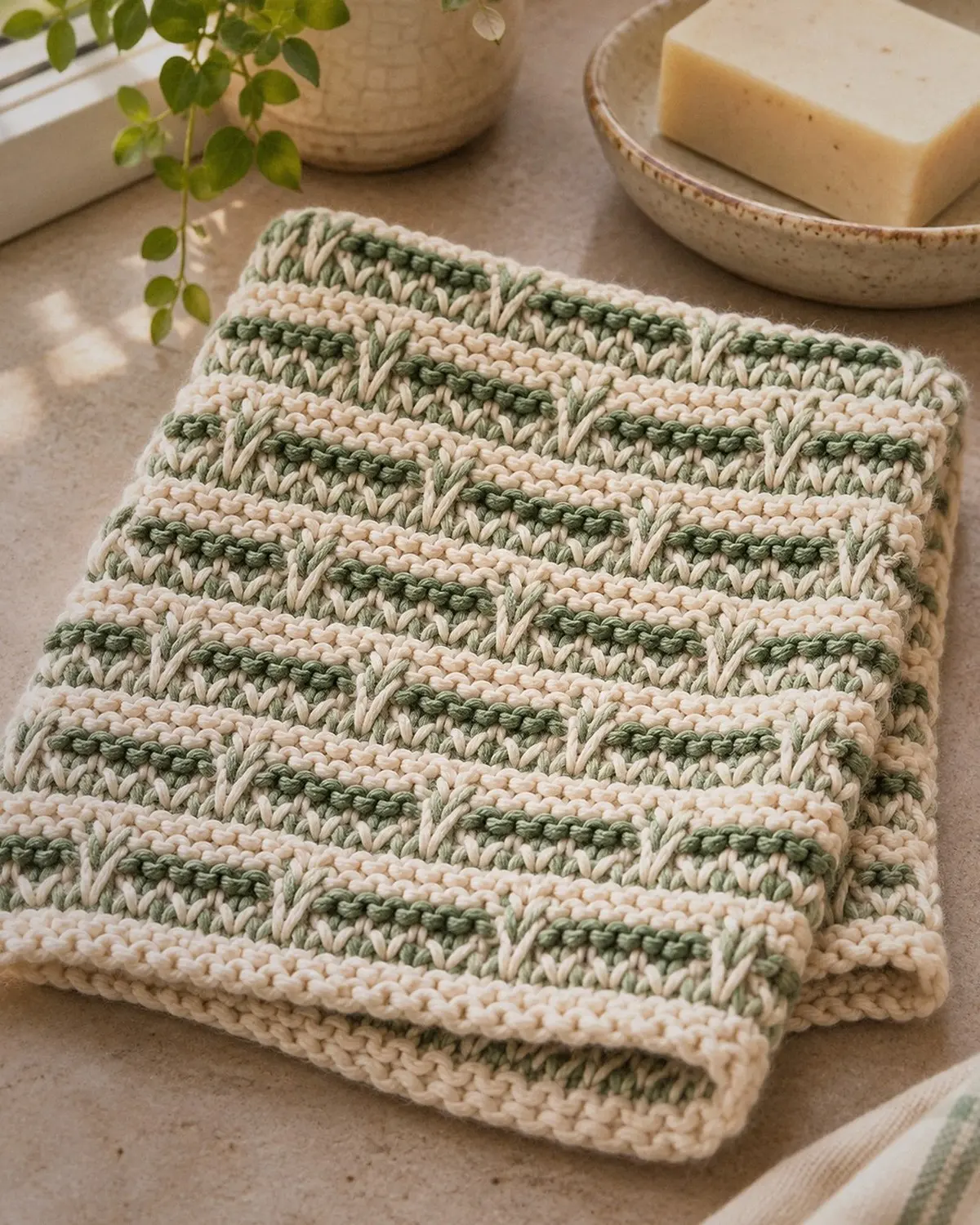
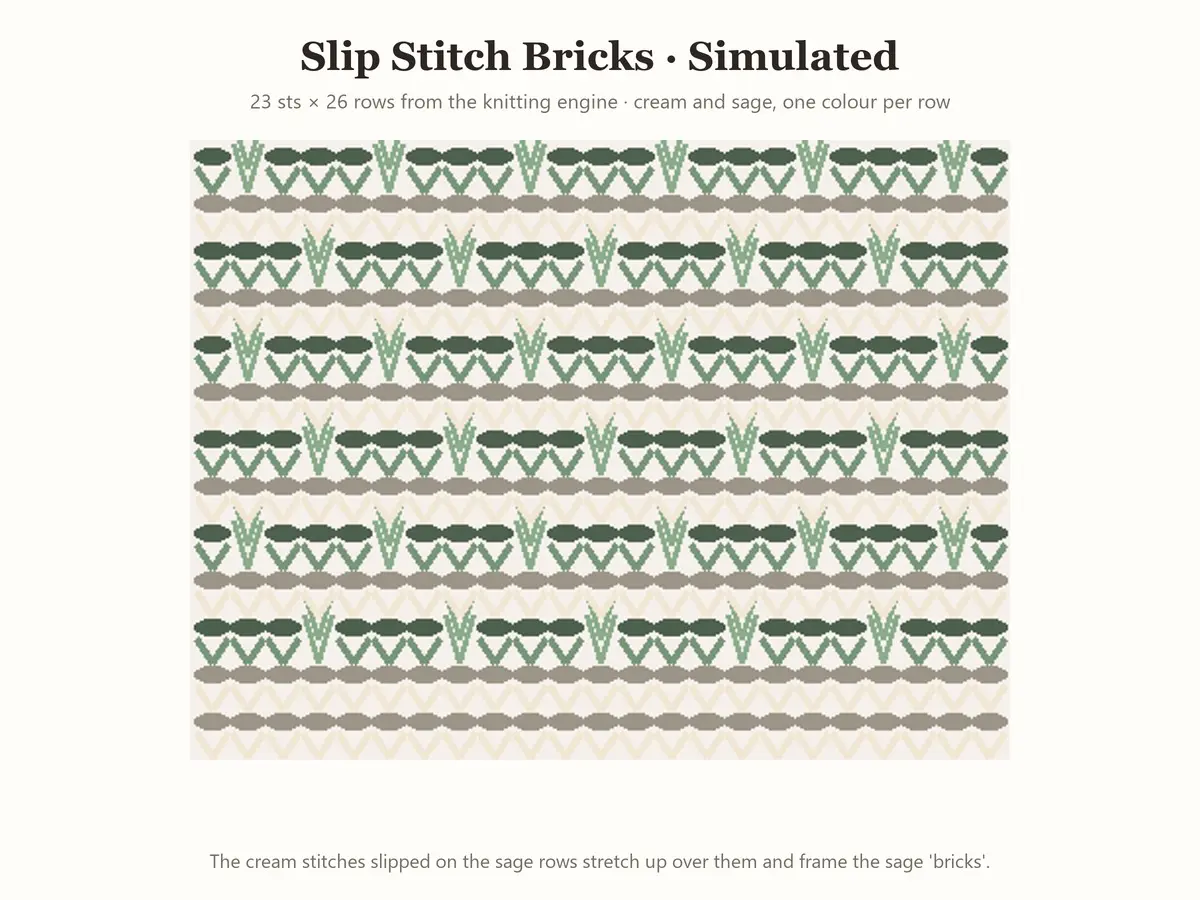
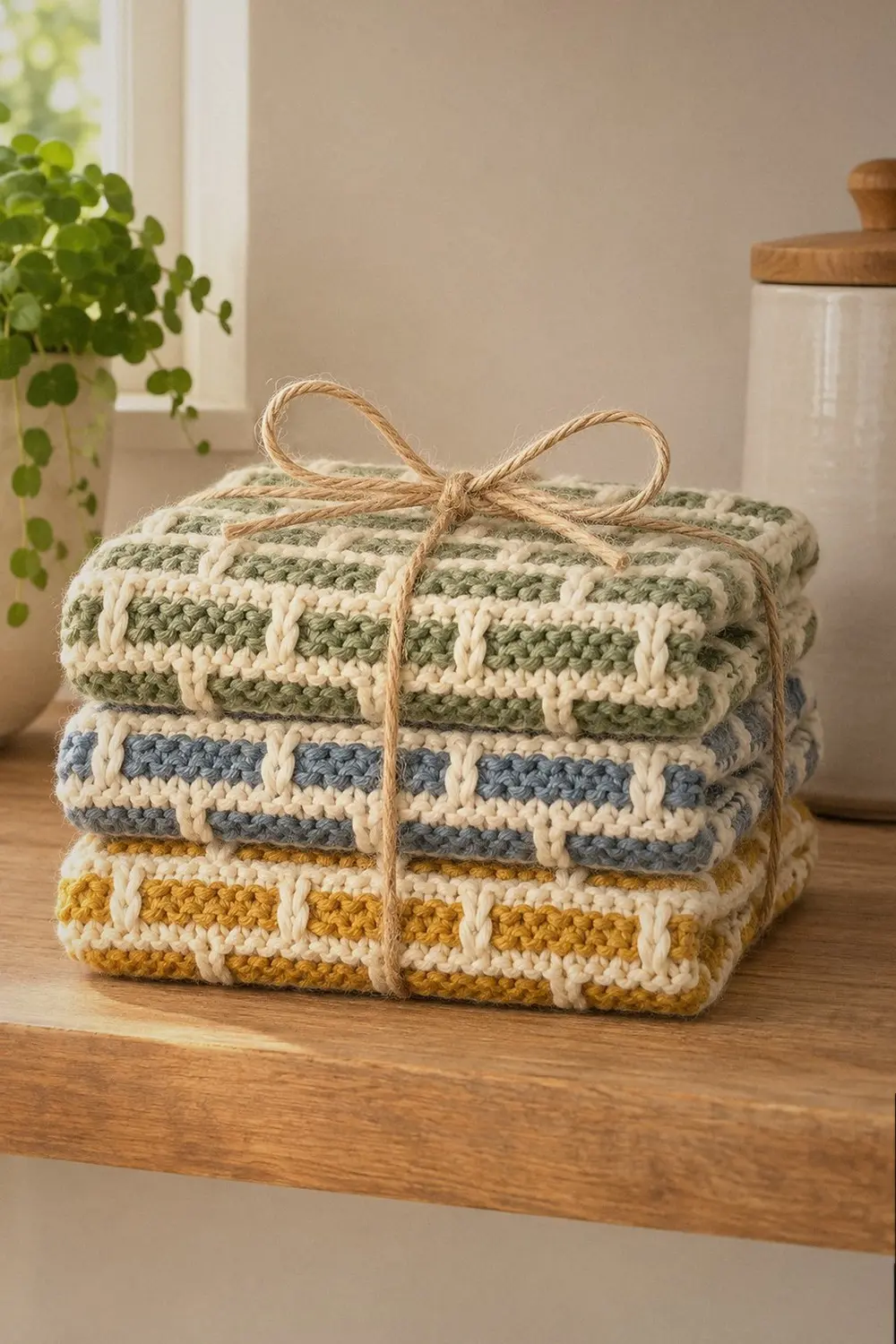
Rows 1–2 are cream; rows 3–4 are sage, with every 4th stitch slipped; rows 5–6 are cream again; rows 7–8 are sage with the slipped stitches moved half a brick along. The slipped cream stitches run up through the sage rows and outline the bricks.
Tips
- Always slip purlwise so the stitch isn’t twisted.
- Keep the floats loose: spread the stitches on the right needle before slipping, or the fabric pulls in.
- Carry the yarn up the side loosely every 2 rows instead of cutting it.
- Want flat, woven slip stitch? See linen stitch, which slips every other stitch.
Practice project: brick dishcloth
A cotton dishcloth in garter-based slip stitch bricks, with plain cream borders top and bottom. Cast on a multiple of 4 + 3; the dishcloth uses 43 stitches.
You'll need
- Worsted (#4) cotton: cream 80 yd and sage 50 yd (dishcloth; washcloth in the table)
- US 7 (4.5 mm) needles, tapestry needle
Gauge: 18 sts and 36 rows = 4 in (10 cm), a typical worsted cotton value in this pattern, not one we measured.
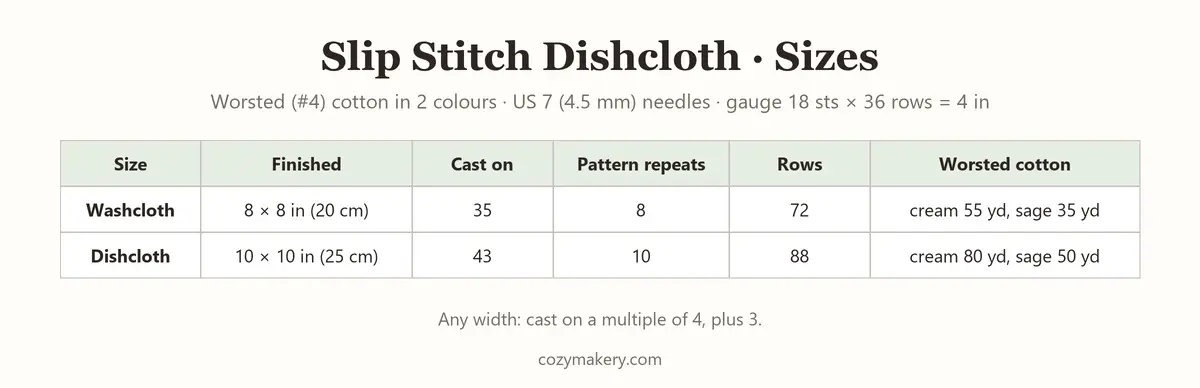
Dishcloth (10 × 10 in (25 × 25 cm))
- Cast on: With cream (A), cast on 43 sts. (43)
- Rows 1–4: A: knit. (43)
- Pattern row 1–2: A: knit 2 rows. (43)
- Pattern row 3 (RS): B (sage): k3, *sl1 with the yarn at the back, k3*; repeat to the end. (43)
- Pattern row 4 (WS): B: k3, *sl1 with the yarn in front, k3*; repeat to the end. (43)
- Pattern rows 5–6: A: knit 2 rows. (43)
- Pattern row 7 (RS): B: k1, *sl1 wyib, k3*; repeat to the last 2 sts, sl1 wyib, k1. (43)
- Pattern row 8 (WS): B: k1, sl1 wyif, *k3, sl1 wyif*; repeat to the last st, k1. (43)
- Repeat: Work pattern rows 1–8 10 times in all. Carry the unused colour loosely up the side; don't cut it. (43)
- Finish: A: knit 4 rows. Bind off knitwise. Weave in the ends. (0)
Washcloth: cast on 35 sts and work 8 pattern repeats.
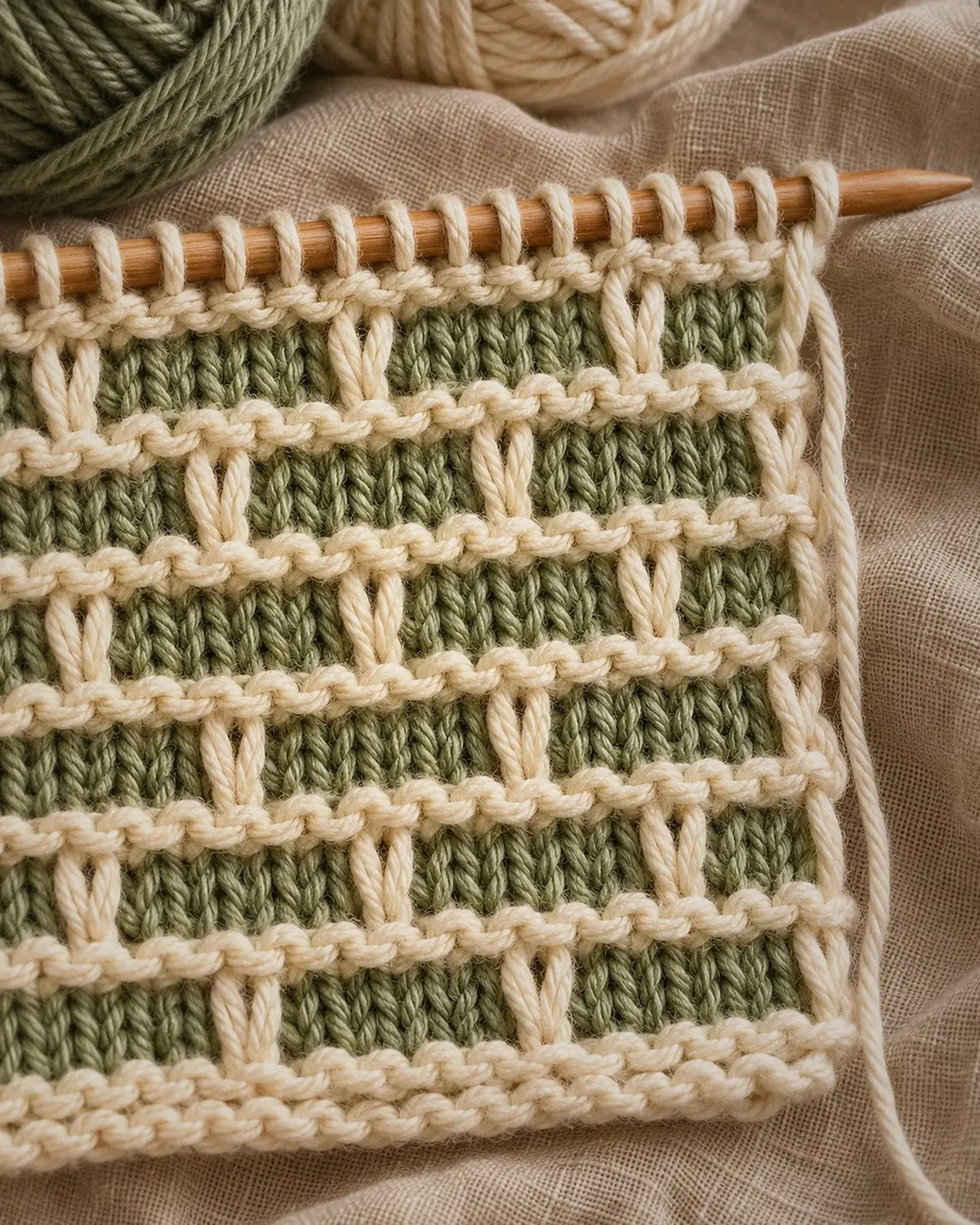
We knitted every row of both sizes in our knitting engine: the count never changes, every float is on the wrong side, each slipped stitch is slipped on exactly 2 rows and knitted on the next, and the bricks are offset by half a brick. For more knit-purl texture, try seed stitch.
Frequently asked questions
What does slip stitch mean in knitting?
Moving a stitch from the left needle to the right without knitting it. In colourwork it carries a colour up from the row below.
Slip knitwise or purlwise?
Purlwise, unless the pattern says otherwise, so the stitch isn’t twisted.
Is slip stitch colourwork hard?
No: you only ever knit with one colour, and the slipping makes the pattern.
Why is my fabric so tight?
The floats are too short. Spread the stitches before slipping and use a needle 1 size bigger.
How many pages is the Slip Stitch Knitting PDF?
5 pages on US Letter, with the swatch and both sizes. On A4, print with “Fit to page”.
What's the difference between slip stitch and mosaic knitting?
Mosaic knitting is slip stitch colourwork with charted, more complex patterns. This brick pattern is a simple first step.
Save it for later
Pin the photo below to keep the slip stitch dishcloths on your Pinterest board. Made the slip stitch dishcloths? I’d love to see it: send a photo to info@cozymakery.com.
More knitting: how to knit, how to purl and brioche knitting.