I-cord knitting makes a neat little knitted tube on just 3 or 4 stitches. You knit the stitches, slide them back to the other end of the needle without turning, and knit them again; the yarn pulled across the back closes them into a round cord. It’s used for drawstrings, handles, ties and edgings. This tutorial covers basic i-cord, attached i-cord and the i-cord bind-off, plus a practice project: a coiled i-cord coaster and trivet.
In this post
Pattern at a glance
- Skill levelBeginner
- PracticeCoiled coaster + trivet
- YarnWorsted (#4) cotton
- NeedlesUS 7 (4.5 mm) DPNs
- Gauge4-st cord about 0.42 in (1 cm) wide, 6 rows per inch
- TimeAbout 1 / 3 hours
Free printable pattern
The PDF has the i-cord steps, the spiral layout, the size table and both makes step by step. The I-Cord Knitting PDF has 5 pages and prints on US Letter paper; on A4, choose “Fit to page” in the print dialog.
How to knit i-cord
- Cast on: Cast on 4 stitches onto a double-pointed needle (or a short circular).
- Knit: Knit the stitches.
- Slide, don't turn: Push the stitches back to the other end of the needle, with the same side facing you. The yarn is now at the far end.
- Pull and knit again: Pull the yarn snugly across the back and knit the stitches again. Repeat: a tube forms.
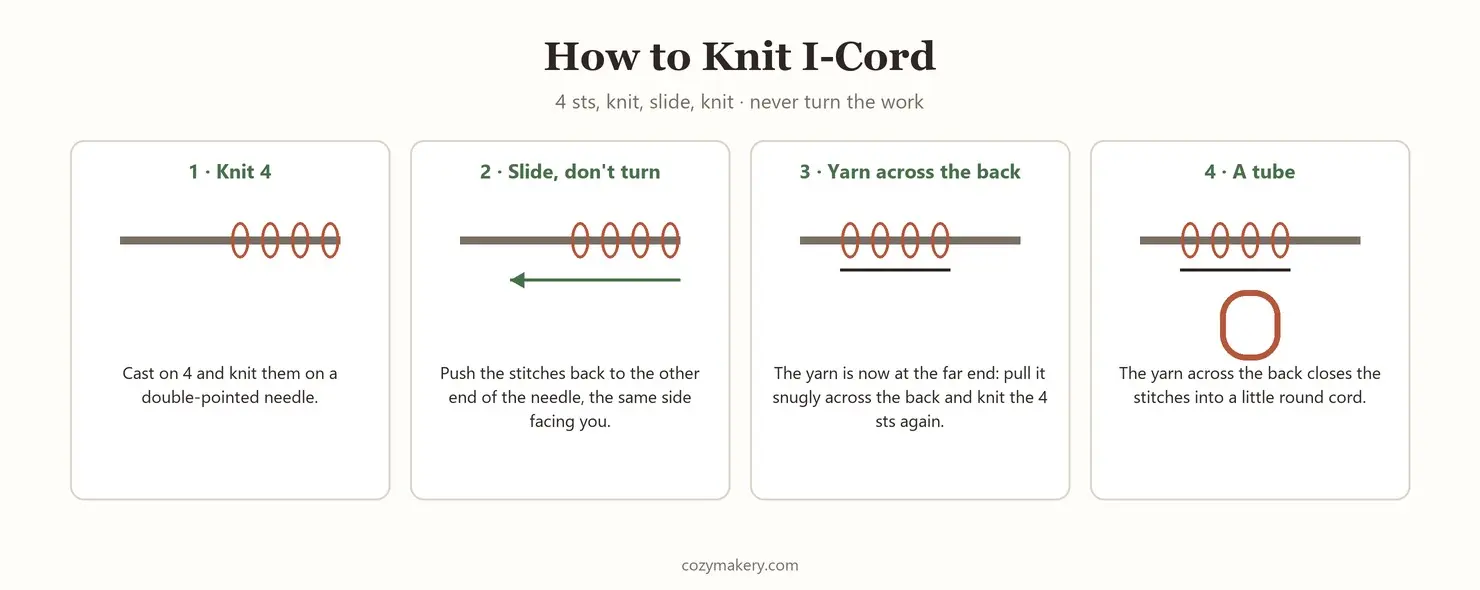
Tug the cord gently every few rows: it evens out the stitches and closes the little ladder at the back. 3 stitches make a thin cord, 4 a round one, 5 or more start to show a gap.
Attached i-cord and the i-cord bind-off
- Attached i-cord (applied i-cord): with 3 sts on the needle, pick up a stitch along the edge of a piece, then k2, ssk (the last cord stitch with the picked-up one). Slide and repeat. It gives a neat rounded edge; our picking up stitches guide shows the pick-up.
- I-cord bind-off: cast on 3 sts at the start of the row, then *k2, ssk, slip the 3 sts back to the left needle*; repeat until all the live stitches are used up.
- Uses: drawstrings on bags, ties on baby hats, handles, and edges that won’t curl.
Practice project: coiled i-cord coaster and trivet
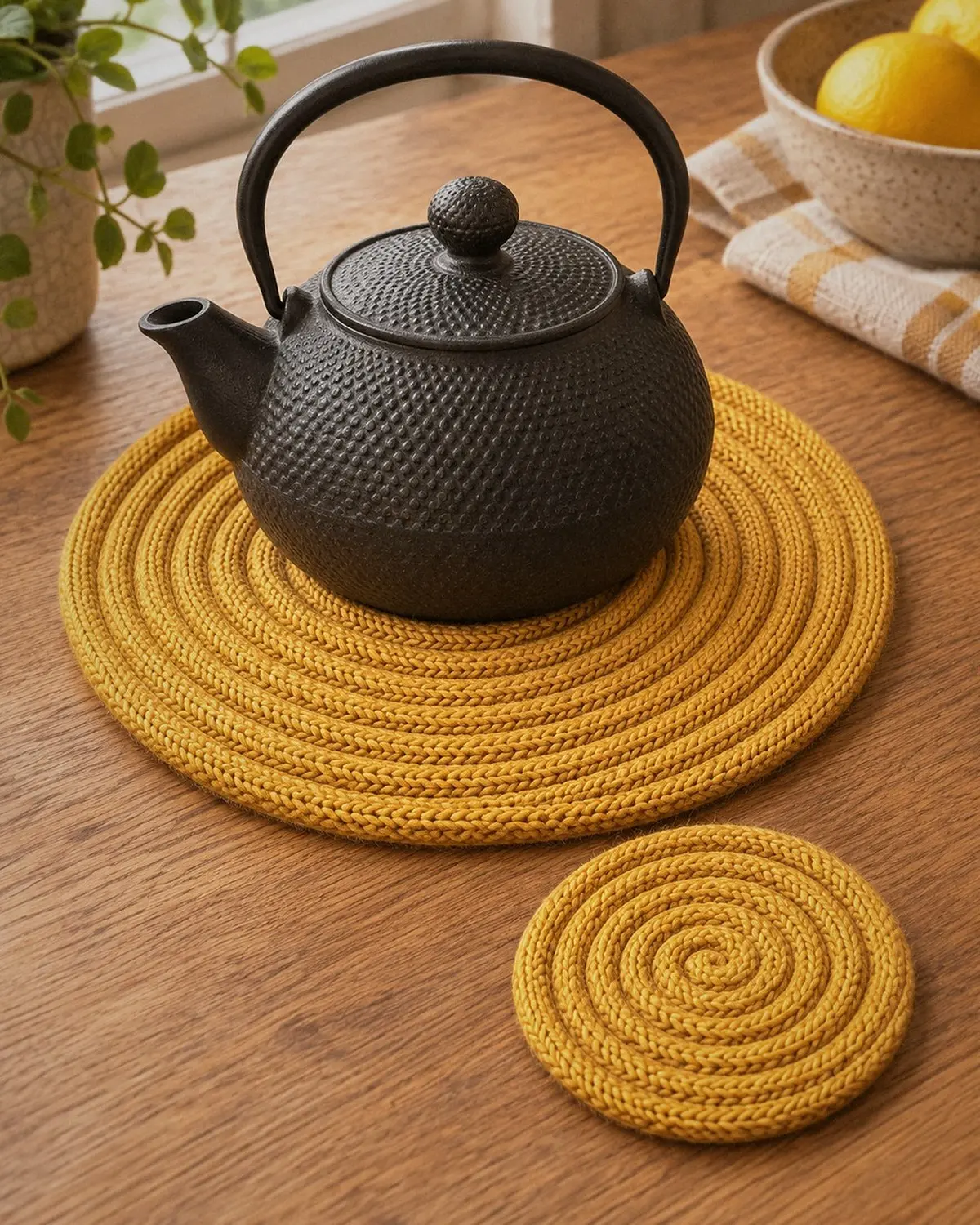
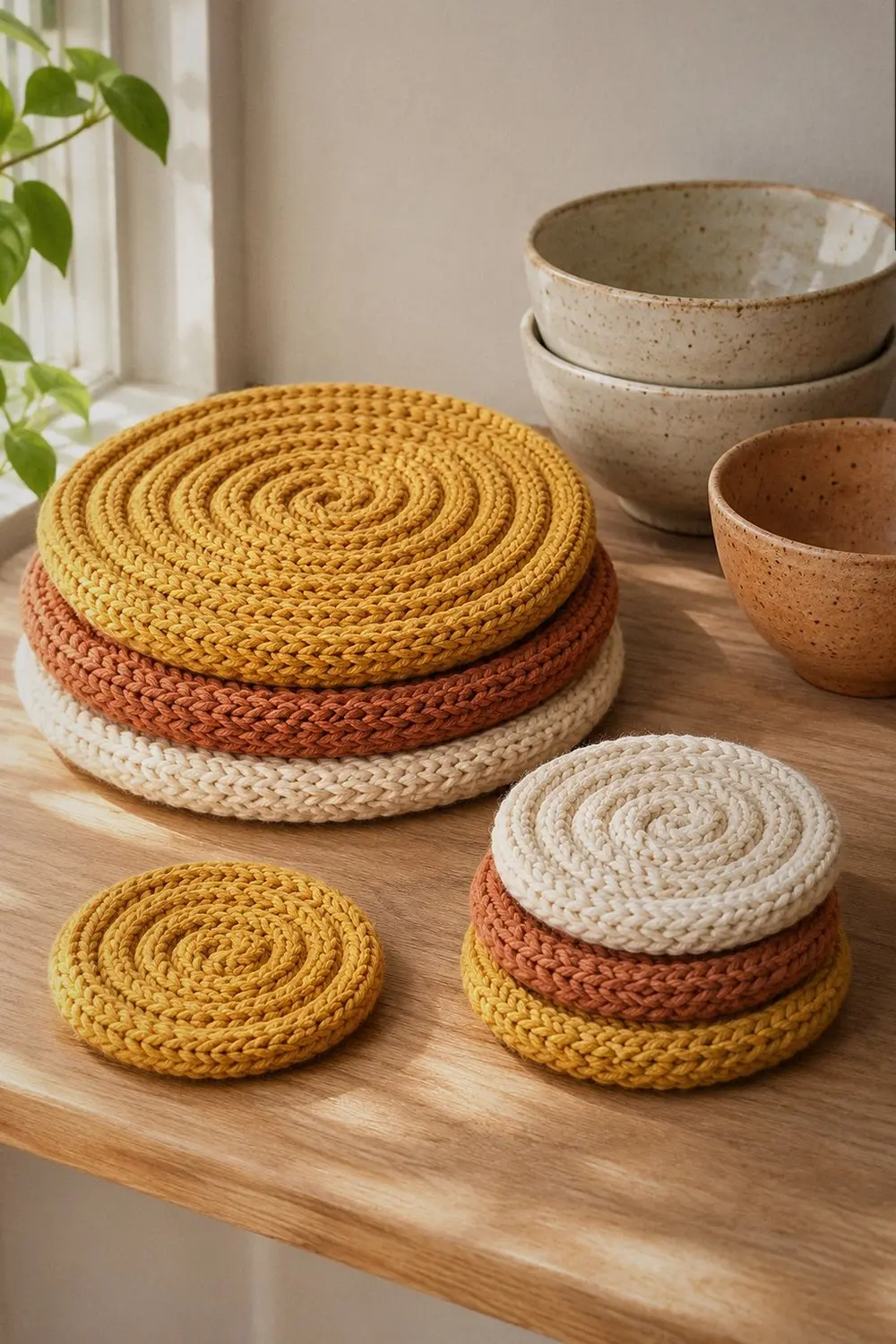
Knit one long i-cord and coil it into a flat spiral, then tack each turn to the one inside it. The coaster is 4 in (10 cm) across, the trivet 7 in (18 cm). Cotton is best: it’s heat resistant and washable.
You'll need
- Worsted (#4) cotton: 25 yd (coaster) or 75 yd (trivet)
- 2 US 7 (4.5 mm) double-pointed needles or a short circular, tapestry needle
Gauge: a 4-stitch worsted i-cord about 0.42 in (1 cm) wide with 6 rows per inch. These are typical values, not ones we measured: knit 2 in (5 cm) of cord, measure it, and adjust the number of rows.
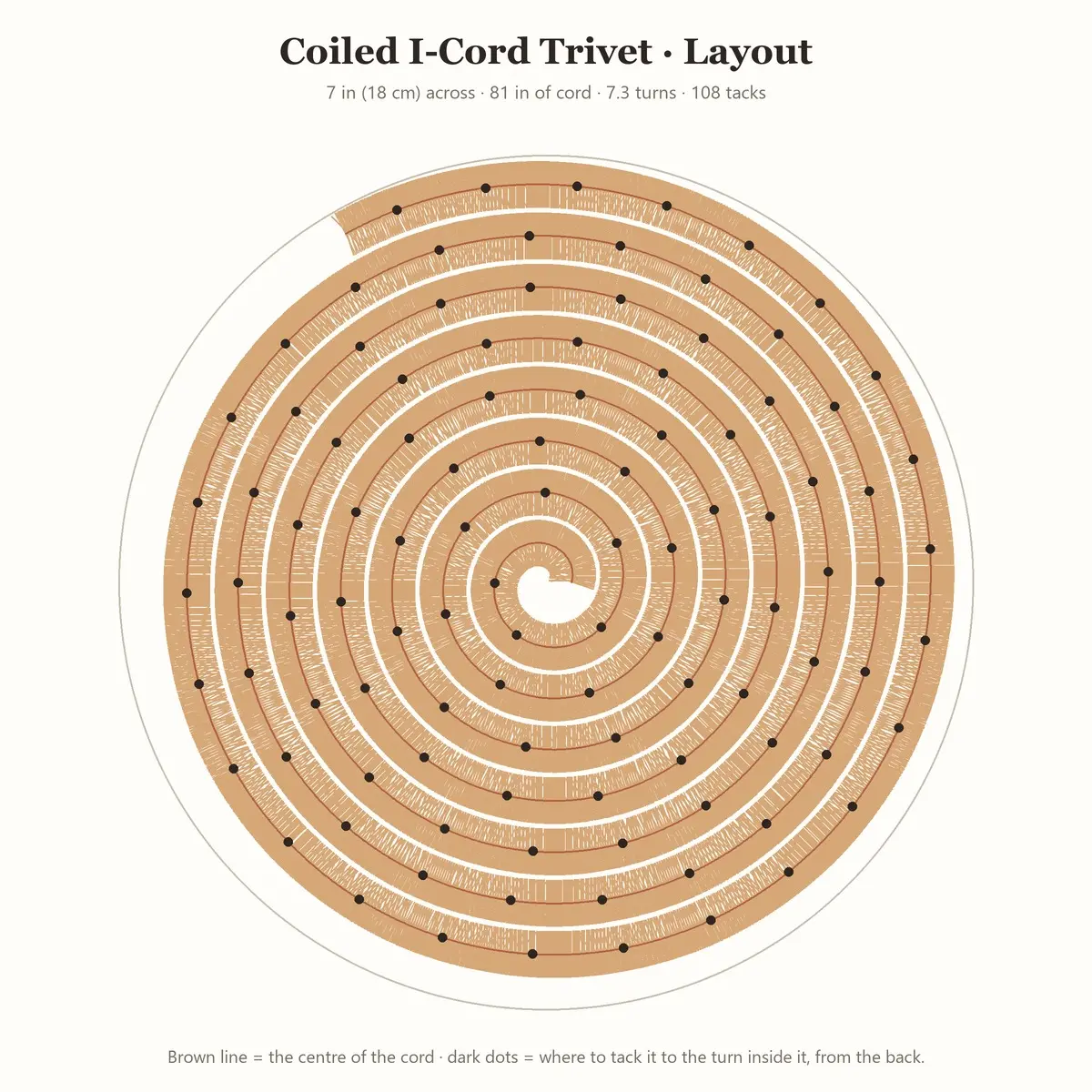
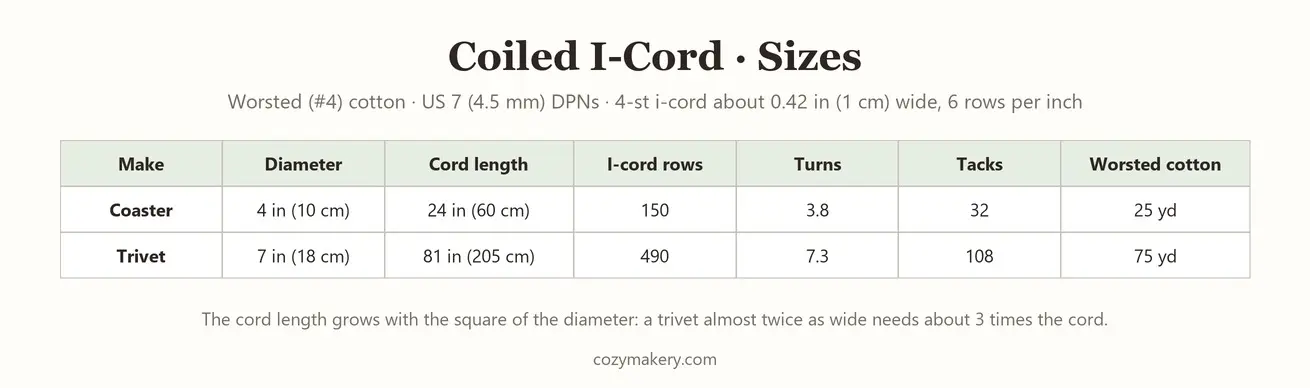
Trivet (7 in (18 cm) across, about 81 in of cord)
- Cast on: With double-pointed needles (or a short circular), cast on 4 sts. (4)
- I-cord row: Knit the 4 sts. Don't turn: slide them back to the other end of the needle, pull the yarn snugly across the back, and knit them again. (4)
- Keep going: Repeat the i-cord row 490 times in all (about 81 in or 205 cm of cord). Tug the cord every few rows to even it out. (4)
- Finish the cord: Cut the yarn, leaving a 30 in (75 cm) tail. Thread it through the 4 sts and pull tight. Keep the tail for sewing. (0)
- Coil: Start at the cast-on end: curl the cord round itself into a tight flat spiral, the same side up all the way, so no gap shows between the turns.
- Sew: With the tail and a tapestry needle, tack each turn to the one inside it from the back, about every 3/4 in (2 cm): about 108 tacks. Tuck the end under on the back and stitch it down. (108)
Coaster: knit 150 rows (about 24 in of cord) and tack it about 32 times.
We laid the spiral out in code: one turn of the spiral moves out by exactly one cord width, so the turns touch without overlapping, and the cord length comes from the spiral itself. Every i-cord row went through our knitting engine with 4 stitches on every row. The rows and yarn come from the cord gauge. For other knitted kitchen makes, try our stockinette guide or the cable knitting tutorial.
Frequently asked questions
What does i-cord stand for?
‘Idiot cord’, a name popularised by Elizabeth Zimmermann because it’s so easy to knit.
Why does my i-cord have a ladder at the back?
The yarn across the back is too loose. Pull it snugly before the first stitch, and tug the cord every few rows.
Can I knit i-cord without double-pointed needles?
Yes, on a short circular needle, or on a spool knitter, which makes the same tube.
How long a cord do I need for a trivet?
For a 7 in trivet, about 81 in (205 cm). The length grows with the square of the diameter.
How many pages is the I-Cord Knitting PDF?
5 pages on US Letter, with the spiral layout and both sizes. On A4, print with “Fit to page”.
Can I put a hot pan on the trivet?
A warm pot or teapot, yes, on cotton. For a pan straight from the oven, use 2 trivets stacked or a cork mat under it.
Save it for later
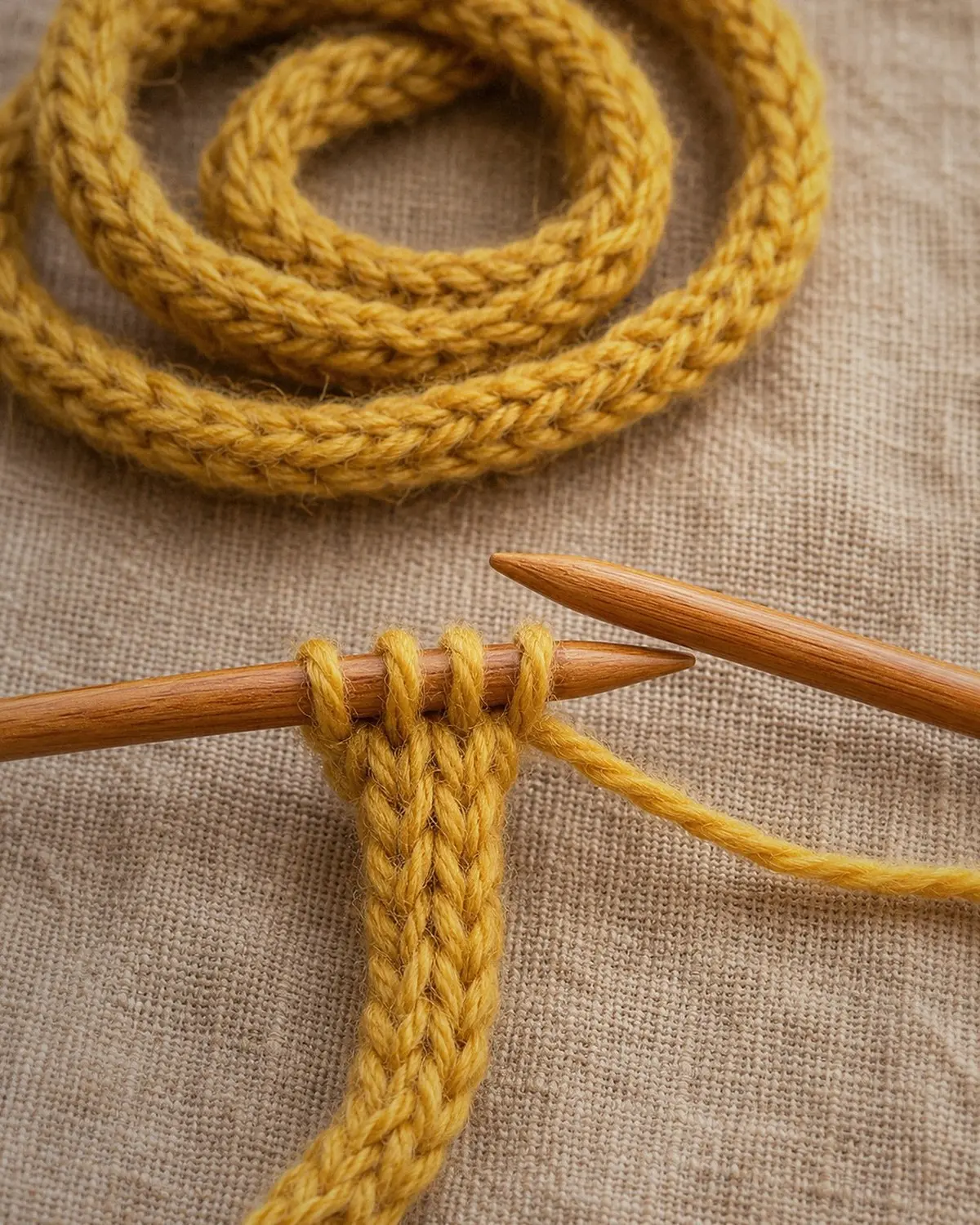
Pin the photo below to keep the coiled i-cord trivet on your Pinterest board. Made the coiled i-cord trivet? I’d love to see it: send a photo to info@cozymakery.com.
More knitting: how to knit, how to cast on and brioche knitting.