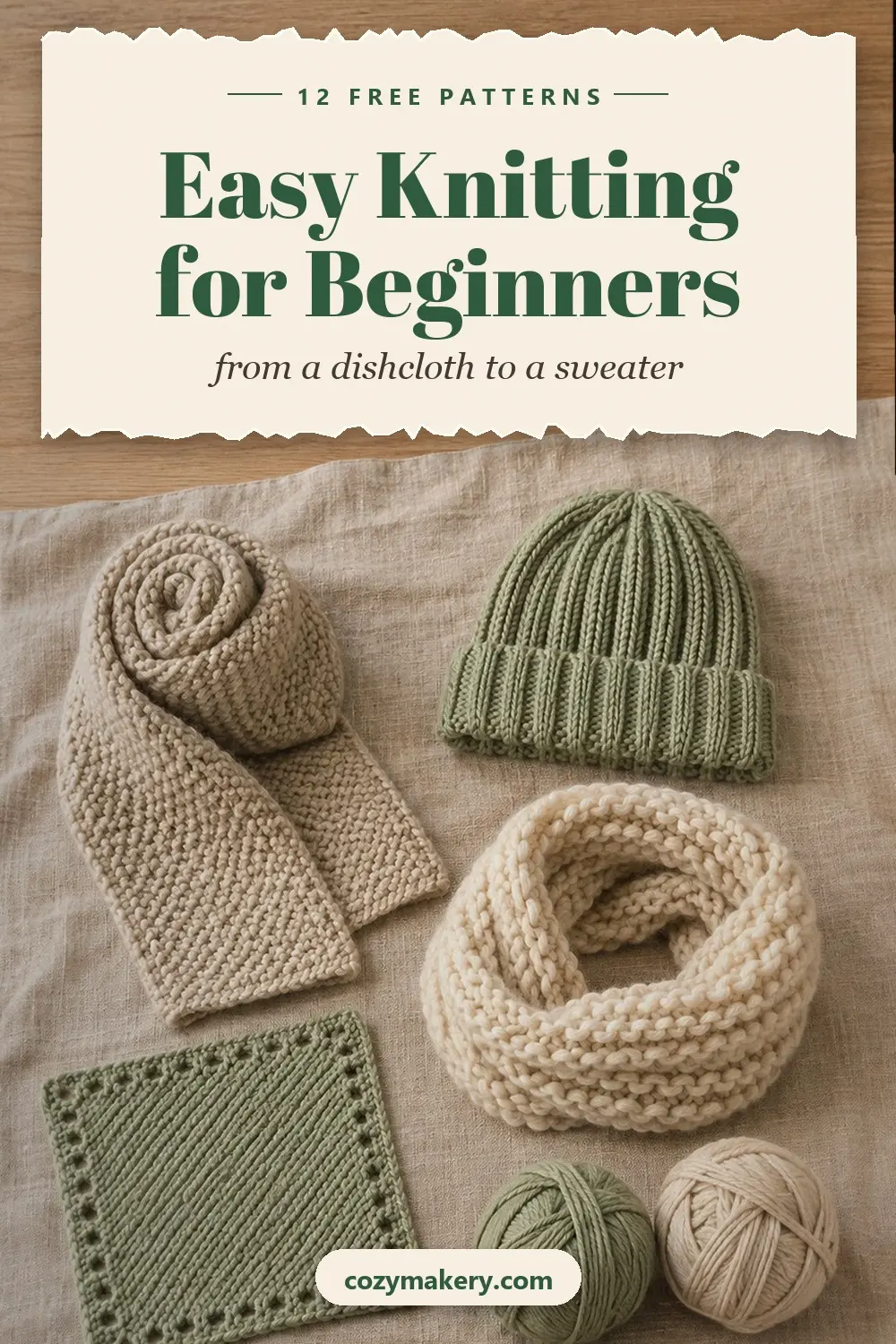
These 12 easy knitting patterns for beginners are all free, written in US terms, with a chart and a printable PDF on every pattern page. They go from a first dishcloth and scarf to hats, blankets and your first sweater, roughly in order, and each one says how long it takes. Number 1, a corner-to-corner dishcloth that only uses knit stitches and one simple increase, has its full pattern right here.
In this post
Before you start
- Needles: US 7 or 8 (4.5–5 mm) bamboo or wooden straights are easiest to grip. A 32 in circular is handy later for blankets.
- Yarn: smooth, light-coloured worsted (#4). Cotton for dishcloths, wool or acrylic for wearables.
- New to it? Start with how to cast on and how to bind off, then how to read a knitting pattern. If a stitch slips off: how to fix a dropped stitch.
12 easy knitting patterns
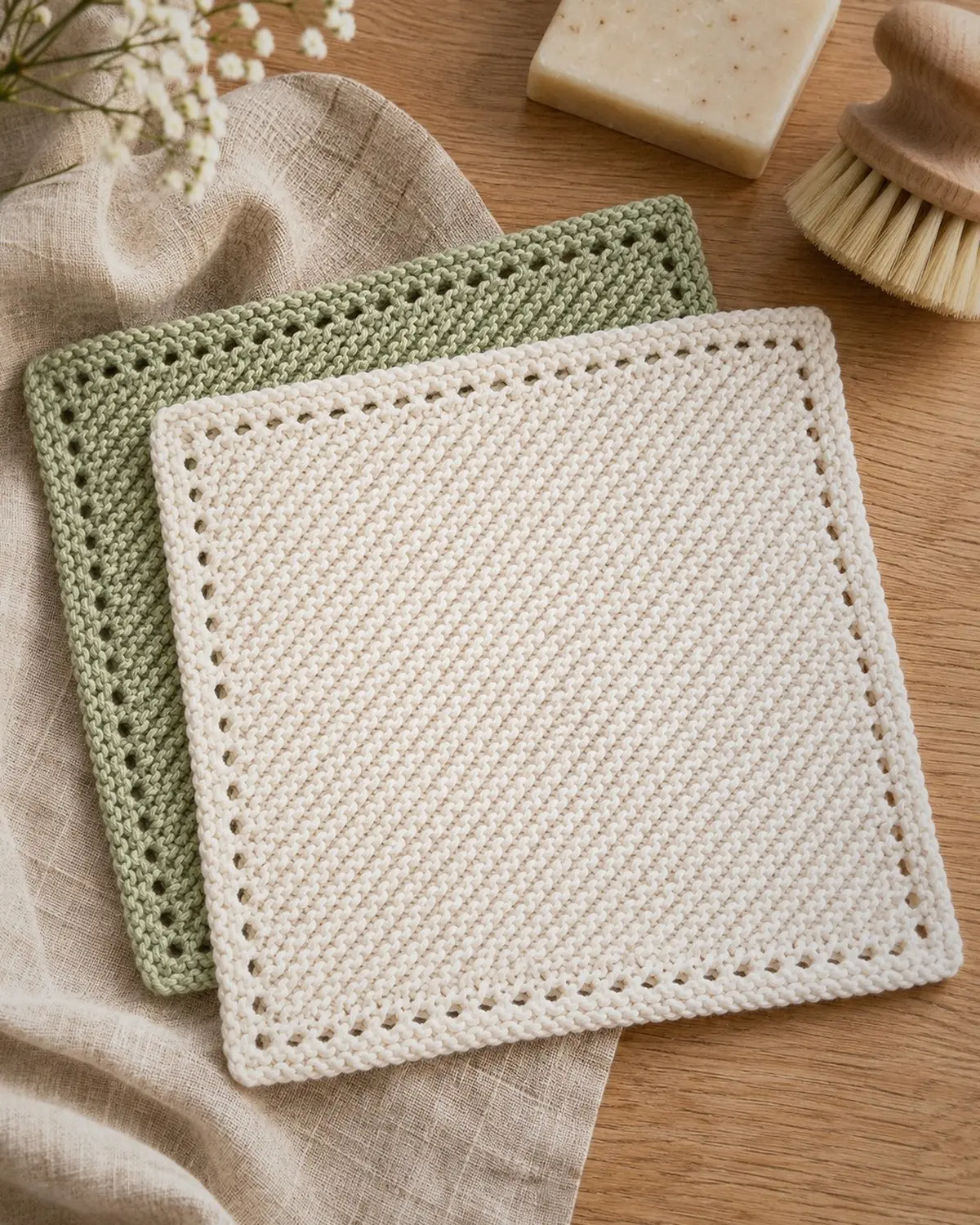
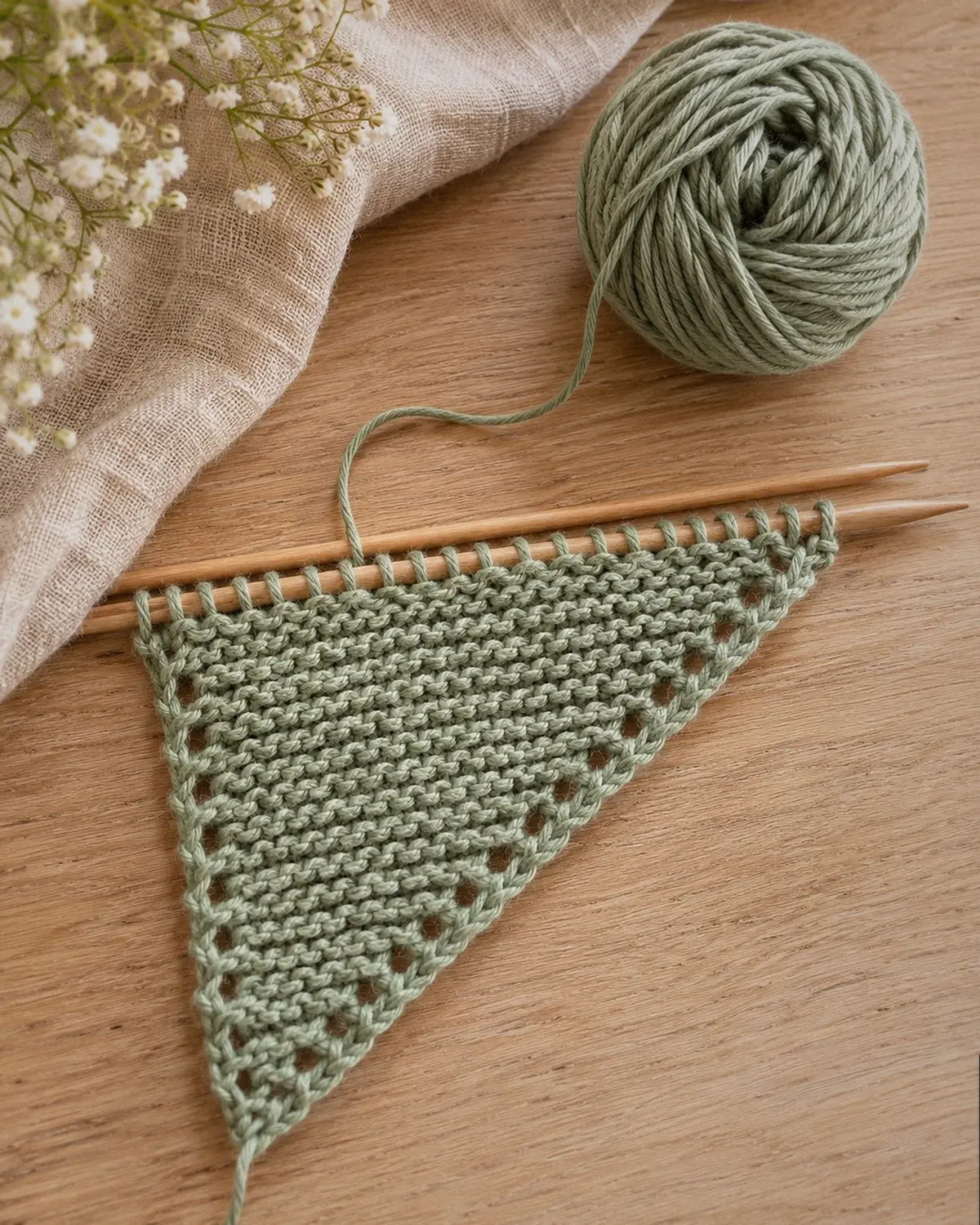
1. Corner-to-corner dishcloth
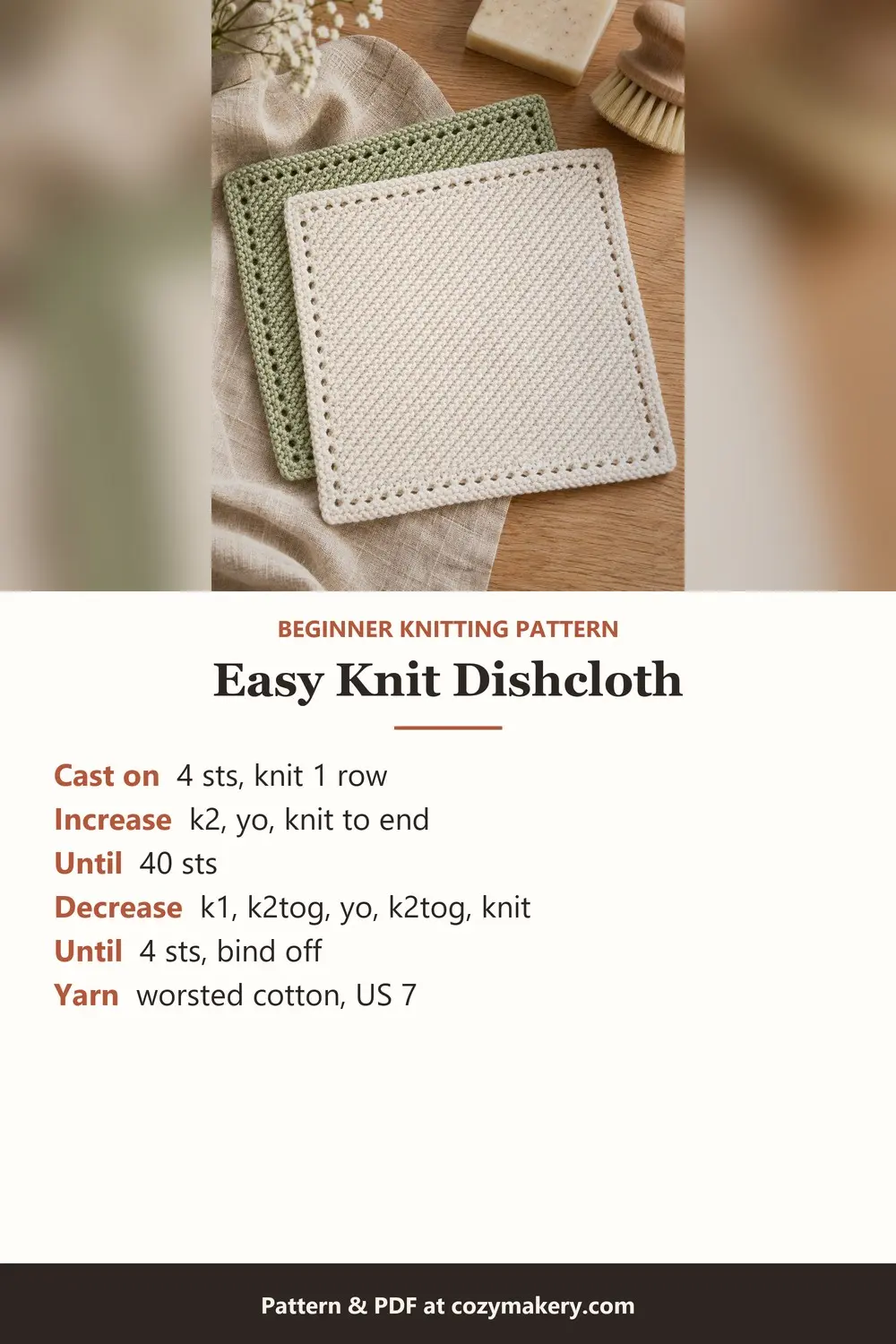
Cast on 4, add one stitch every row until it’s wide enough, then take one away every row. Only knit stitches, about 2 hours, about 8.9 in (23 cm) square. The full pattern is further down.
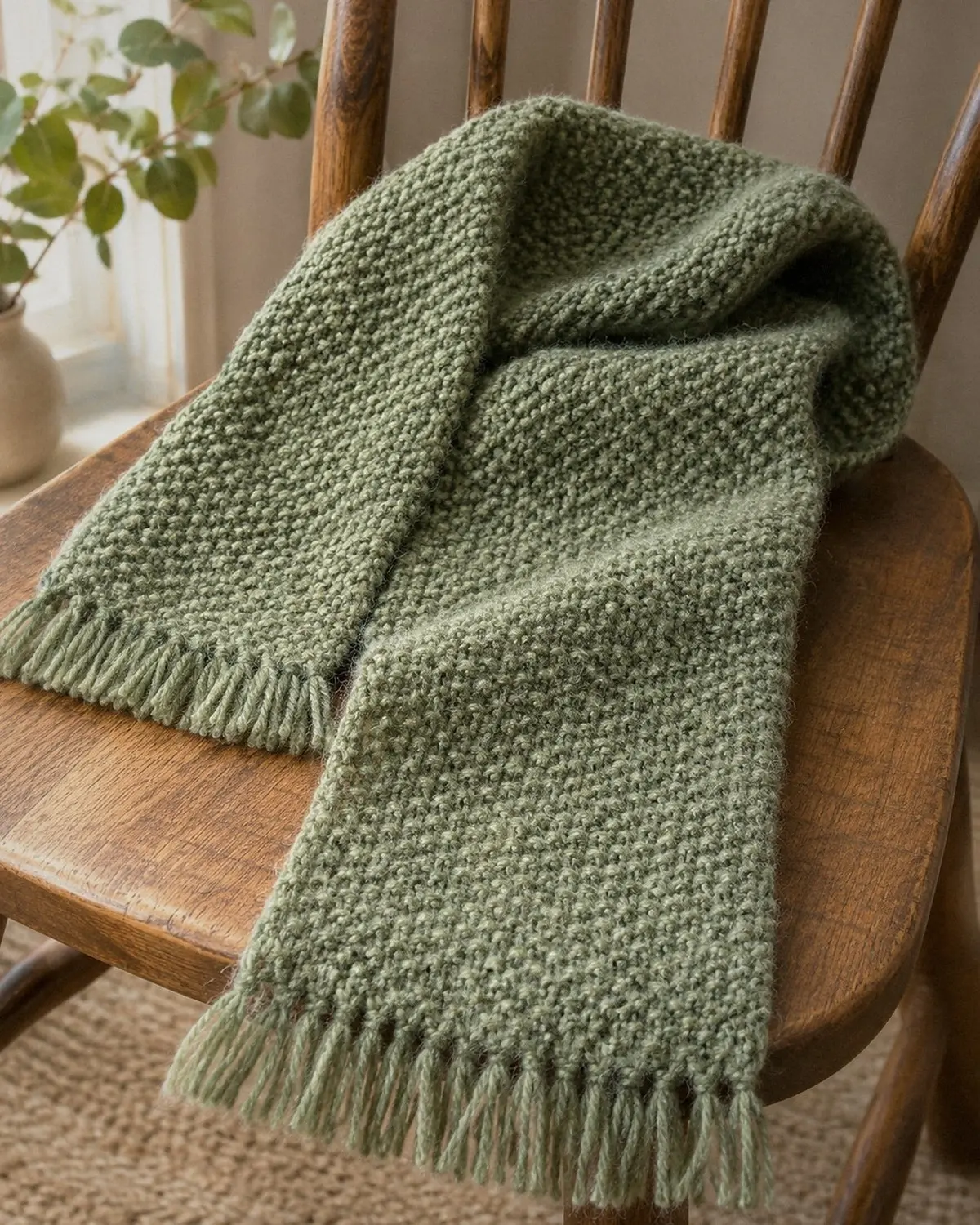
2. Seed stitch scarf
Knit 1, purl 1 on every row: a reversible scarf that lies flat. Child and adult sizes, about 10–14 hours for the adult one. Get the free pattern.
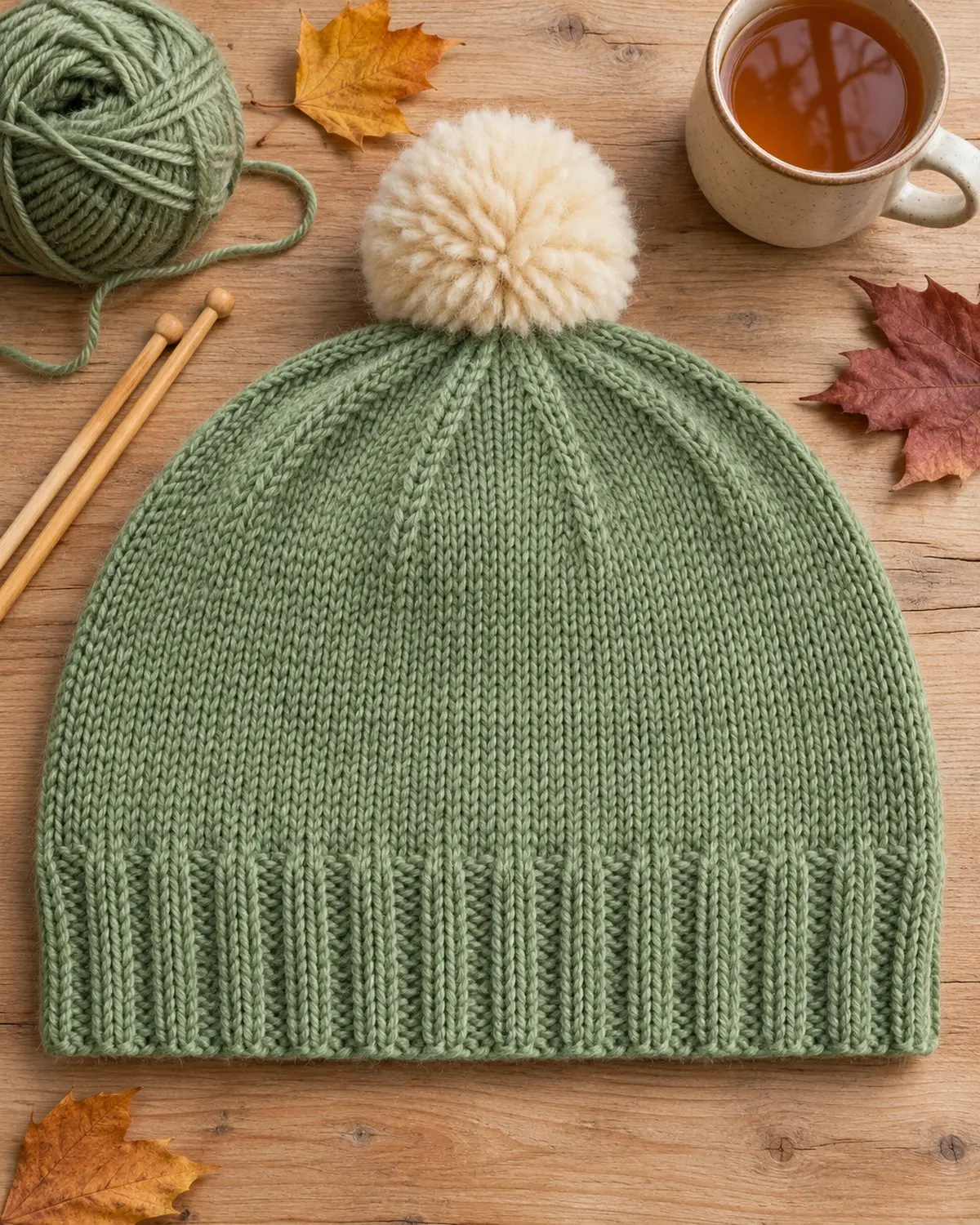
3. Easy knit beanie
A ribbed beanie knitted flat on straight needles and seamed, in child and two adult sizes. About 4–5 hours. Get the free pattern.
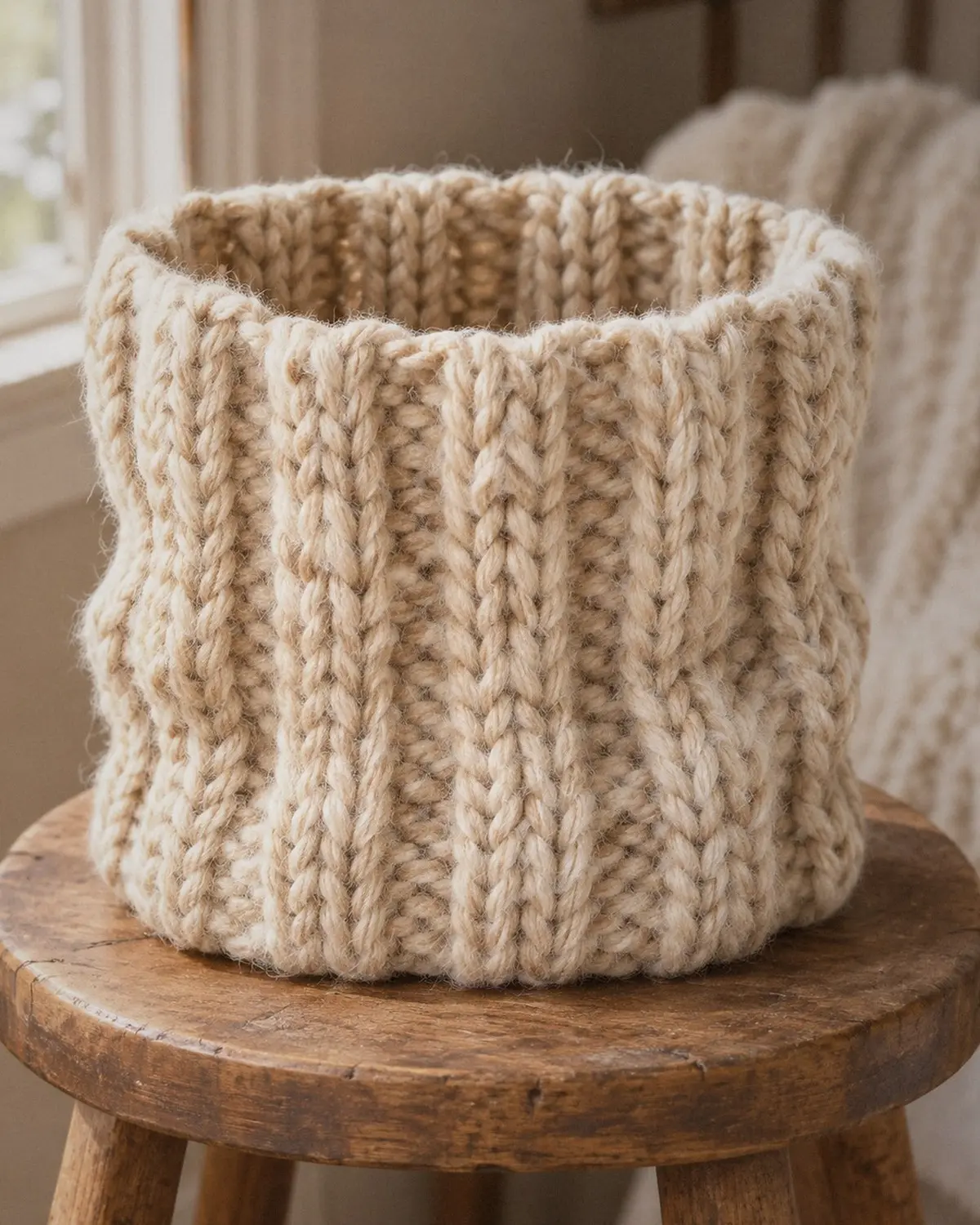
4. Chunky 2×2 rib cowl
Knit 2, purl 2 in the round in bulky yarn: a neck warmer in an evening or a long loop. Your first project on a circular needle. Get the free pattern.
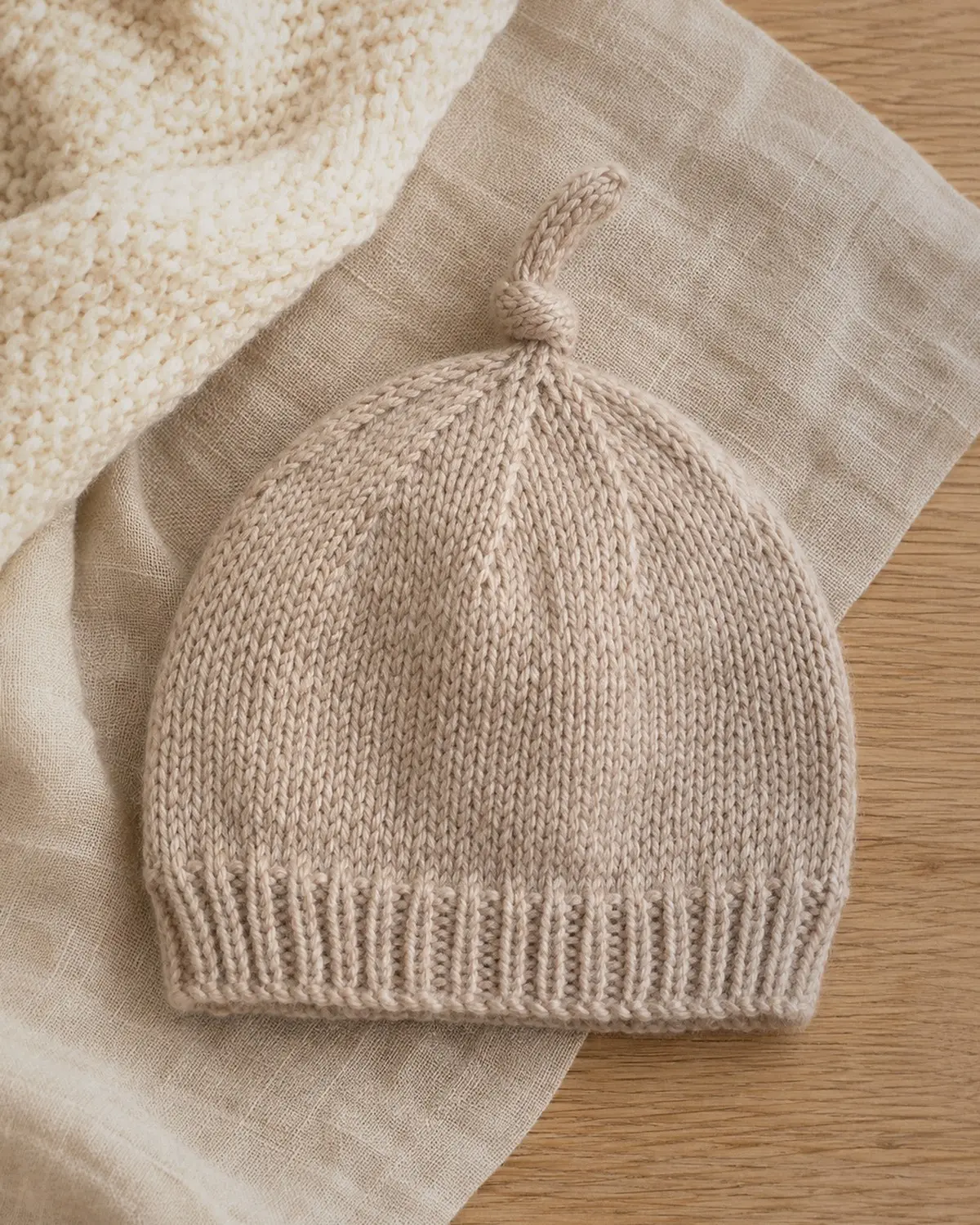
5. Newborn hat with a top knot
A tiny hat in DK yarn in three baby sizes, 2–3 hours. A lovely first project in the round. Get the free pattern.
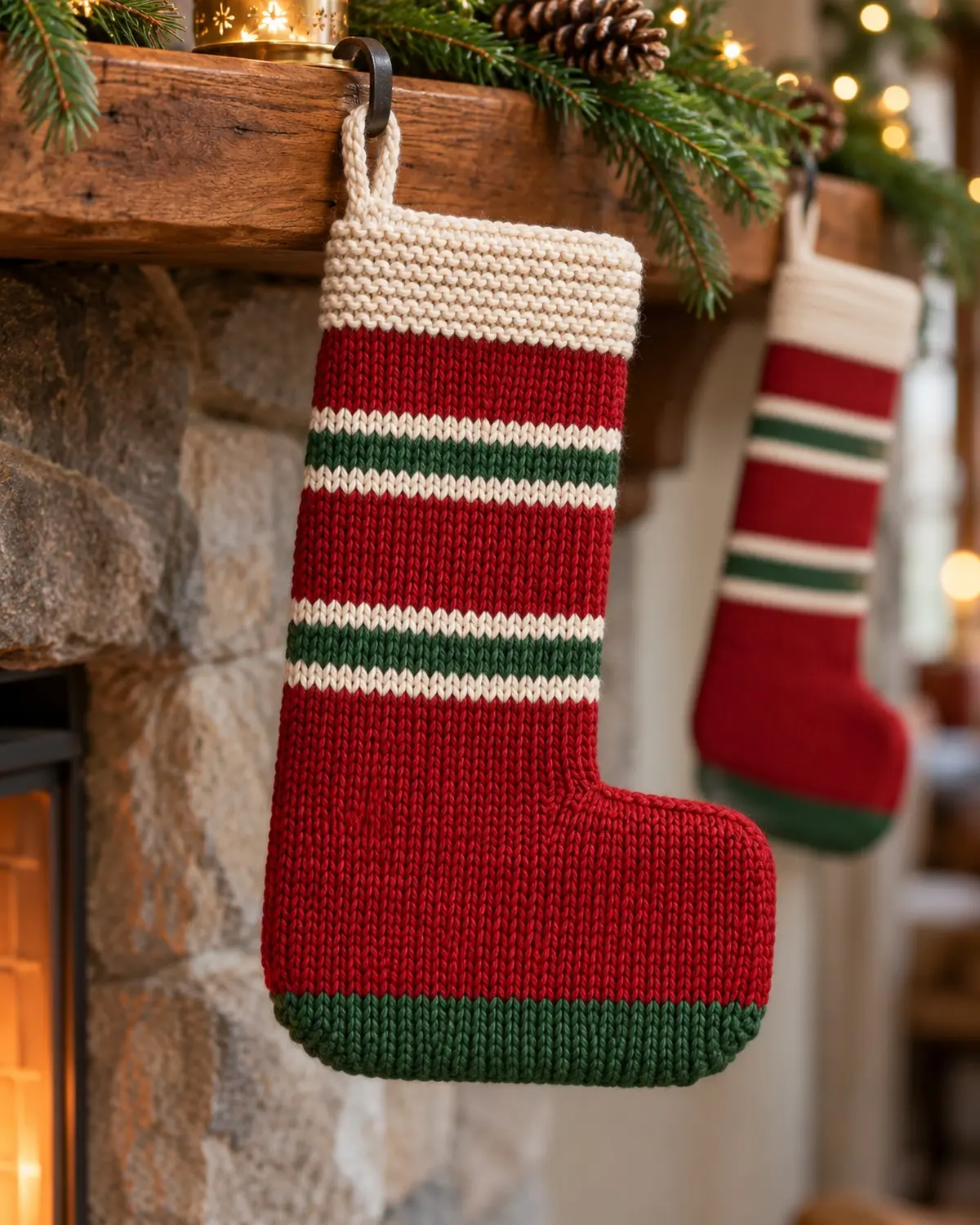
6. Christmas stocking
Knitted flat and seamed, no heel to turn, with a mini size for ornaments. About 6 hours for the classic size. Get the free pattern.
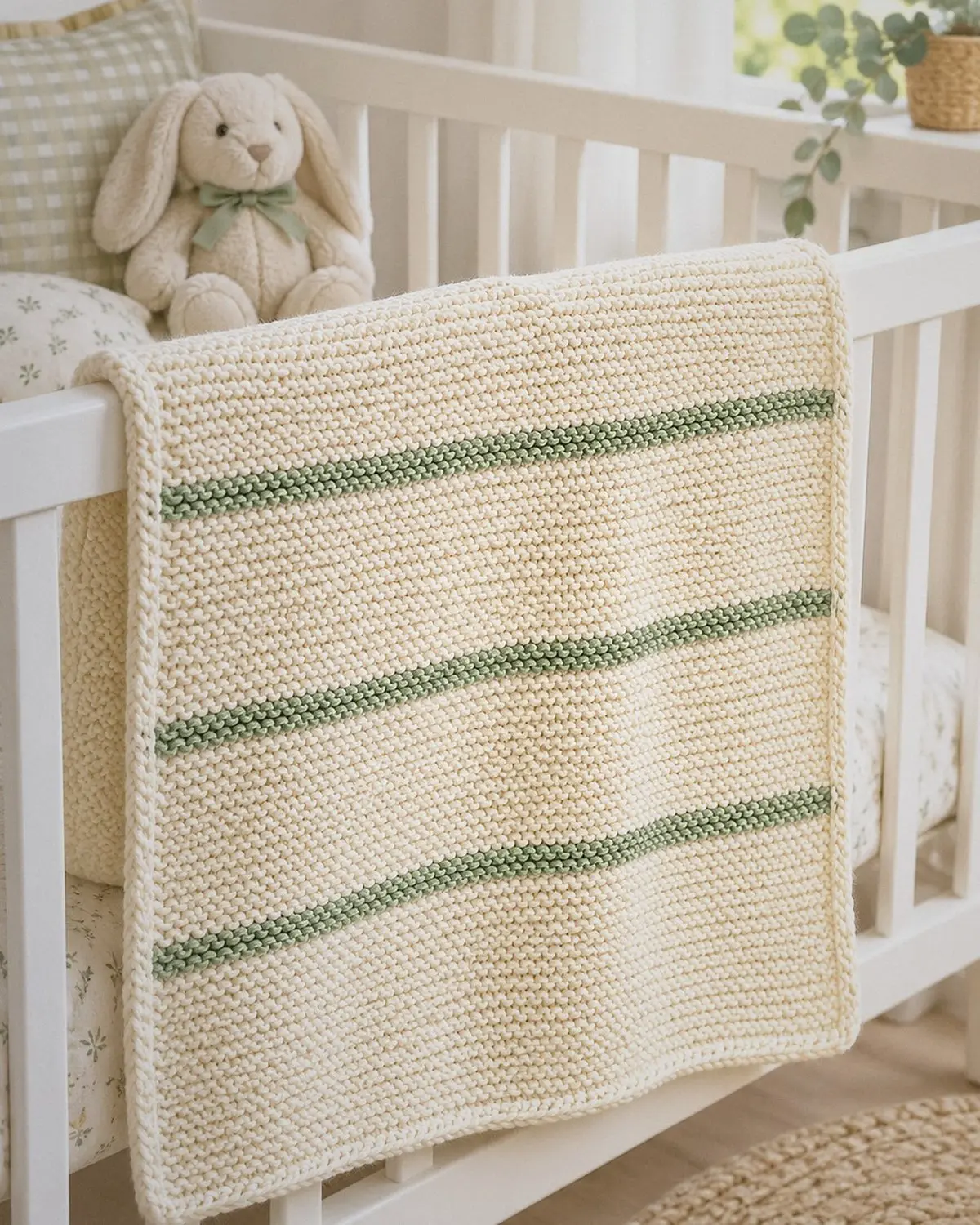
7. Garter stitch baby blanket
Knit every row with slipped-stitch edges, in 2 sizes: the gentlest first blanket. Get the free pattern.
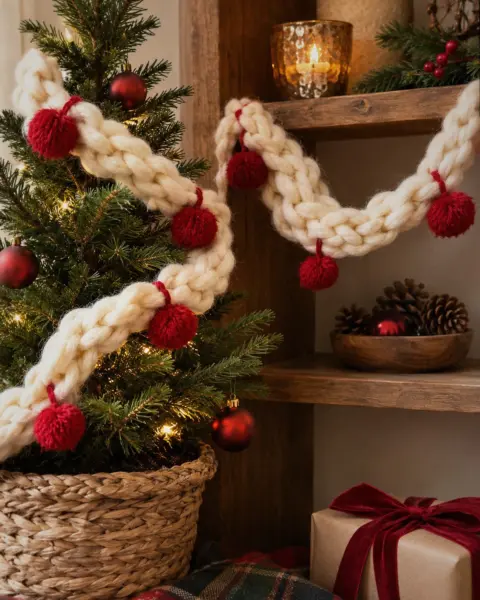
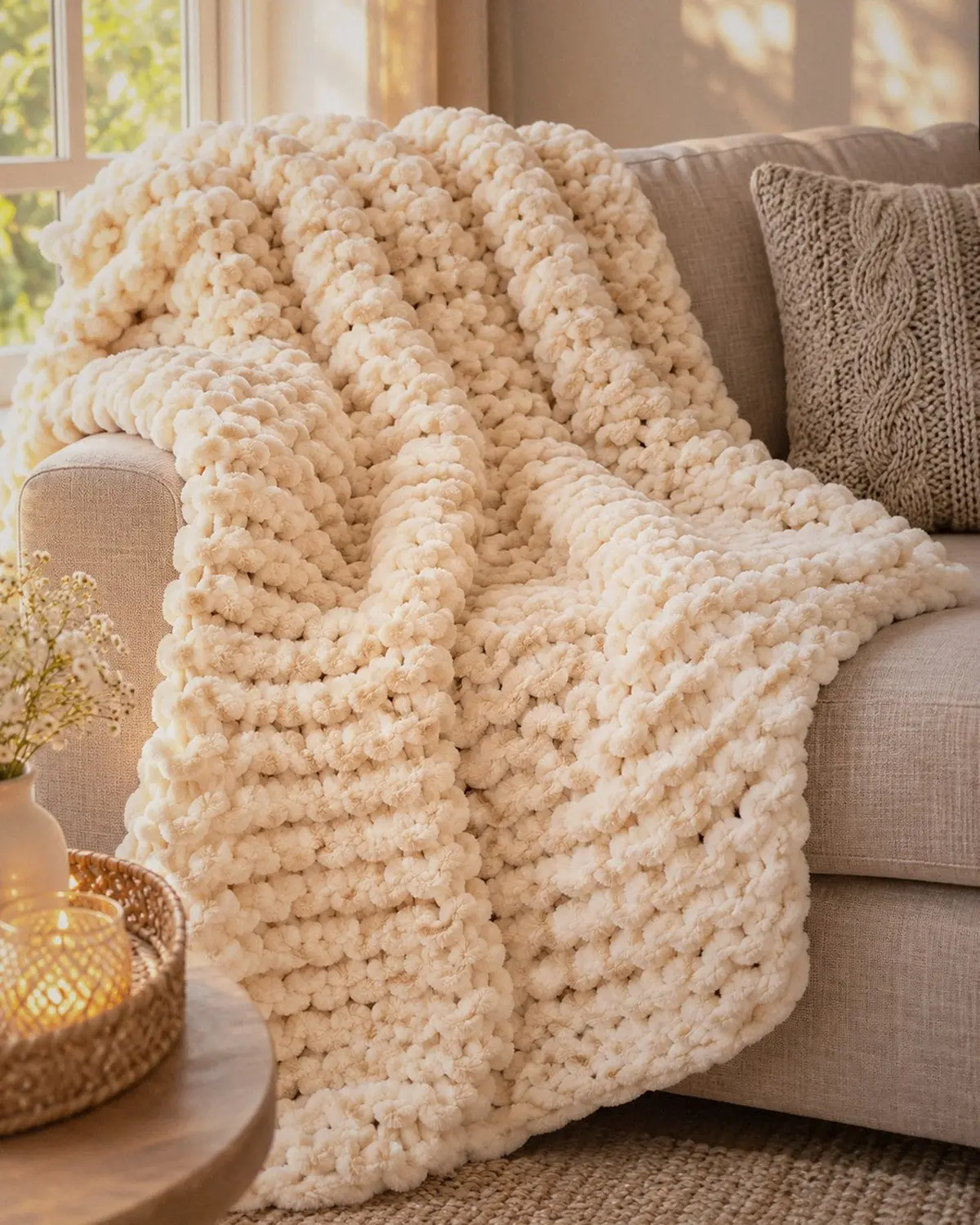
8. Chunky knitted blanket
Jumbo chenille on 15 mm needles, or arm-knit: a whole blanket in an afternoon. Get the free pattern.
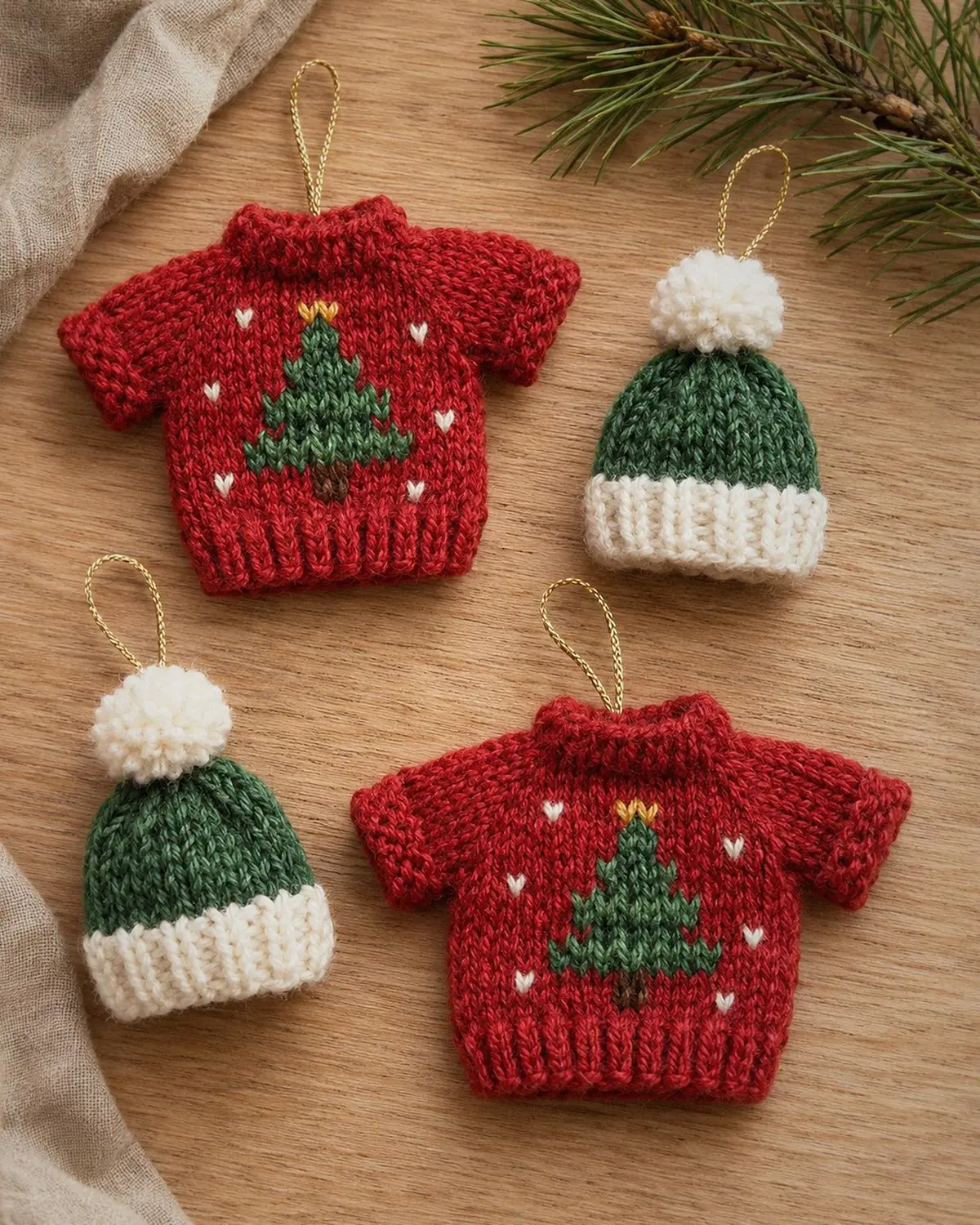
9. Mini sweater and bobble hat ornaments
Tiny Christmas ornaments that teach rib, stockinette and a little colourwork. 1–2 hours each. Get the free pattern.
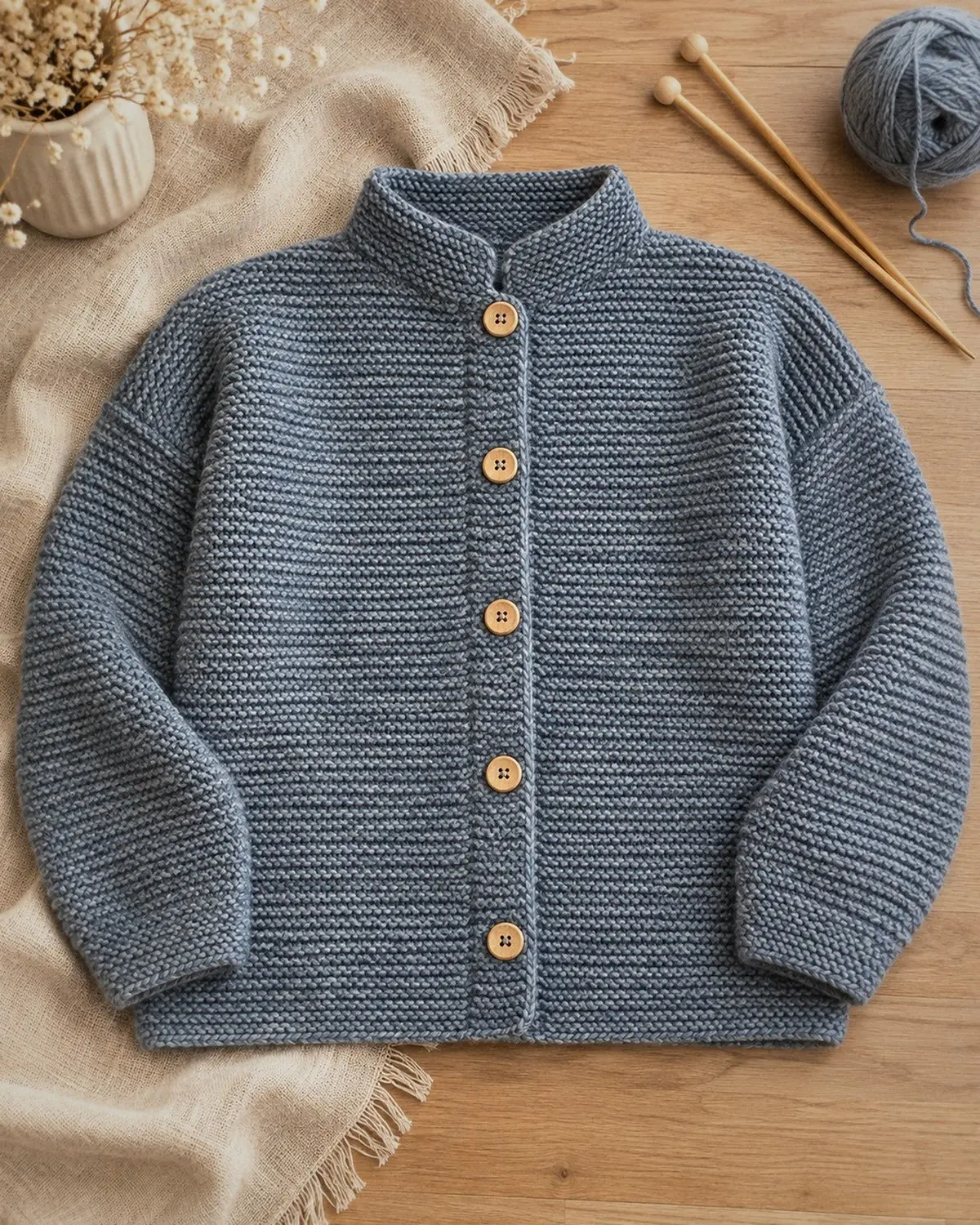
10. Garter stitch cardigan
Your first garment: simple pieces in garter stitch with a mandarin collar, S to XL. Get the free pattern.
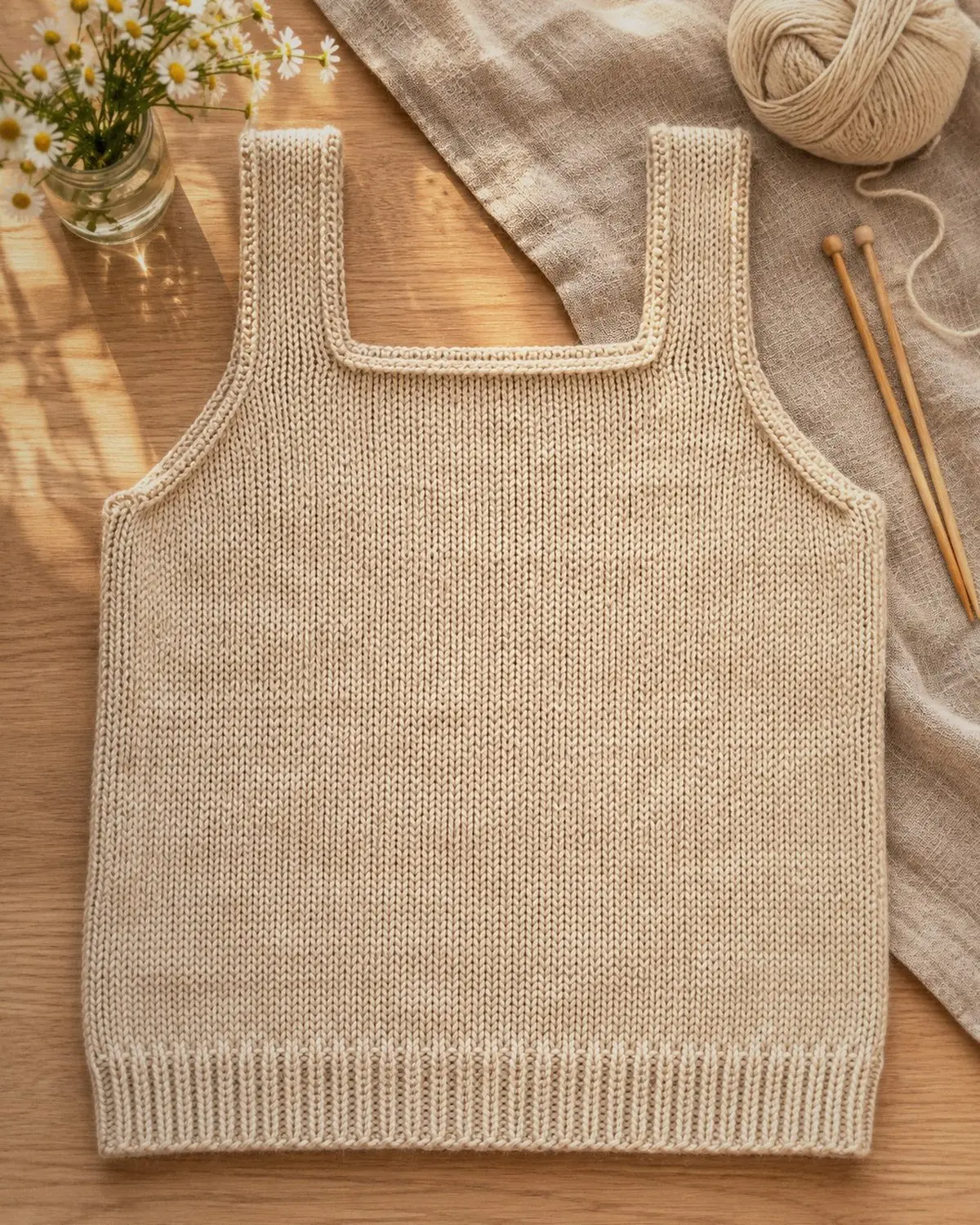
11. Knit tank top
A fitted summer top in DK cotton in 7 sizes, with simple shaping. Get the free pattern.
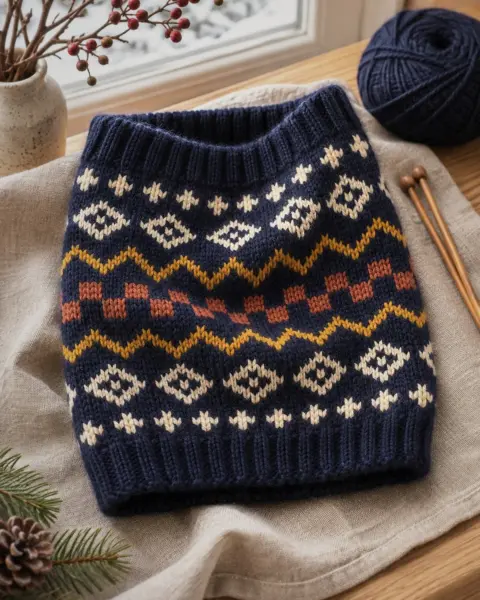
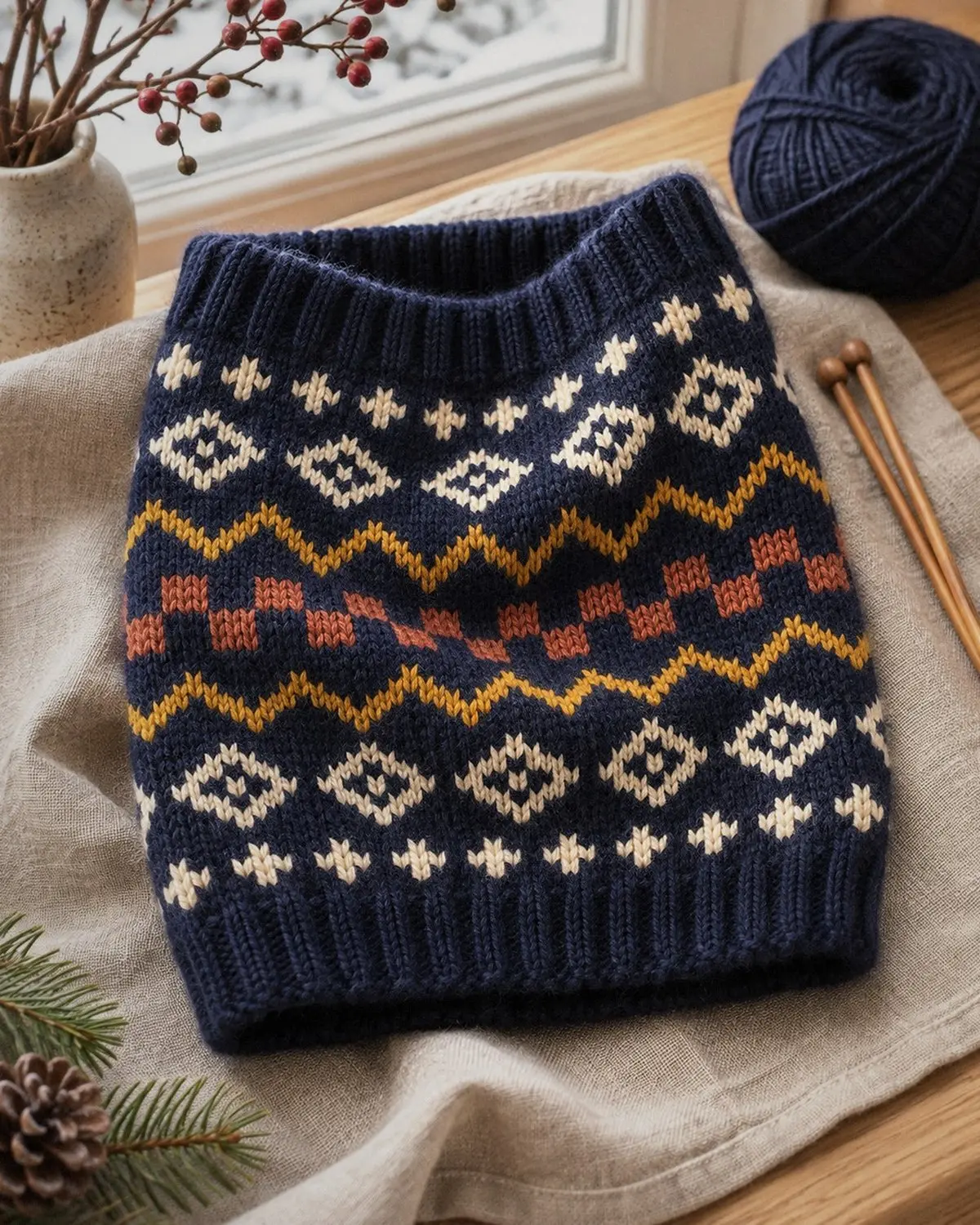
12. Fair Isle cowl
Four colourwork charts on a cowl in the round, with floats of 5 stitches or fewer: the next step after plain knitting. Get the free pattern.
Ready for a bigger project? The new basketweave knit blanket is only knit and purl too.
Free pattern: corner-to-corner knit dishcloth
Pattern at a glance
- Skill levelBeginner
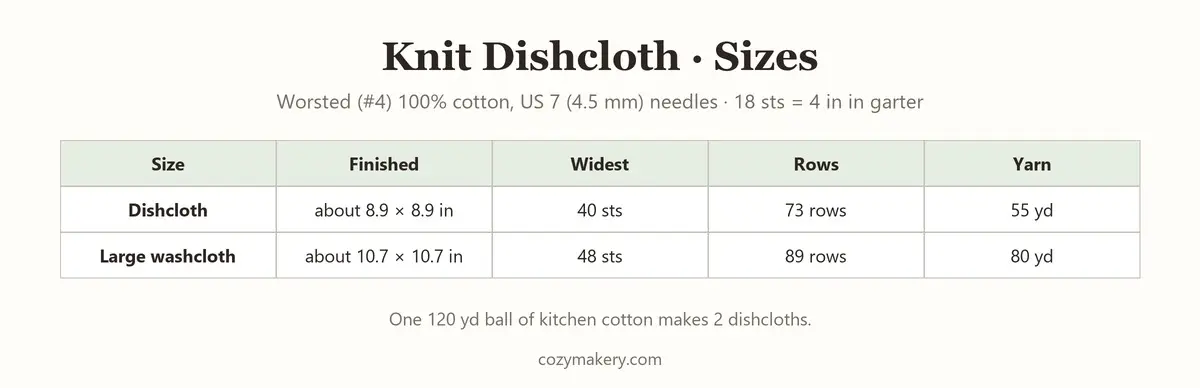
- Sizeabout 8.9 in (23 cm) square
- YarnWorsted cotton, 55 yd
- NeedlesUS 7 (4.5 mm)
- Stitchesk, yo, k2tog
- TimeAbout 2 hours
The 12 Easy Knitting Patterns for Beginners PDF has 5 pages and prints on US Letter paper; on A4, choose “Fit to page” in the print dialog.
Materials
- Worsted (#4) 100% cotton: 55 yd (large washcloth 80 yd)
- US 7 (4.5 mm) needles and a tapestry needle
Abbreviations
| Abbreviation | Meaning |
|---|---|
| k | knit |
| yo | yarn over: wrap the yarn over the needle once, makes a stitch and a little hole |
| k2tog | knit 2 stitches together |
| st(s) | stitch(es) |
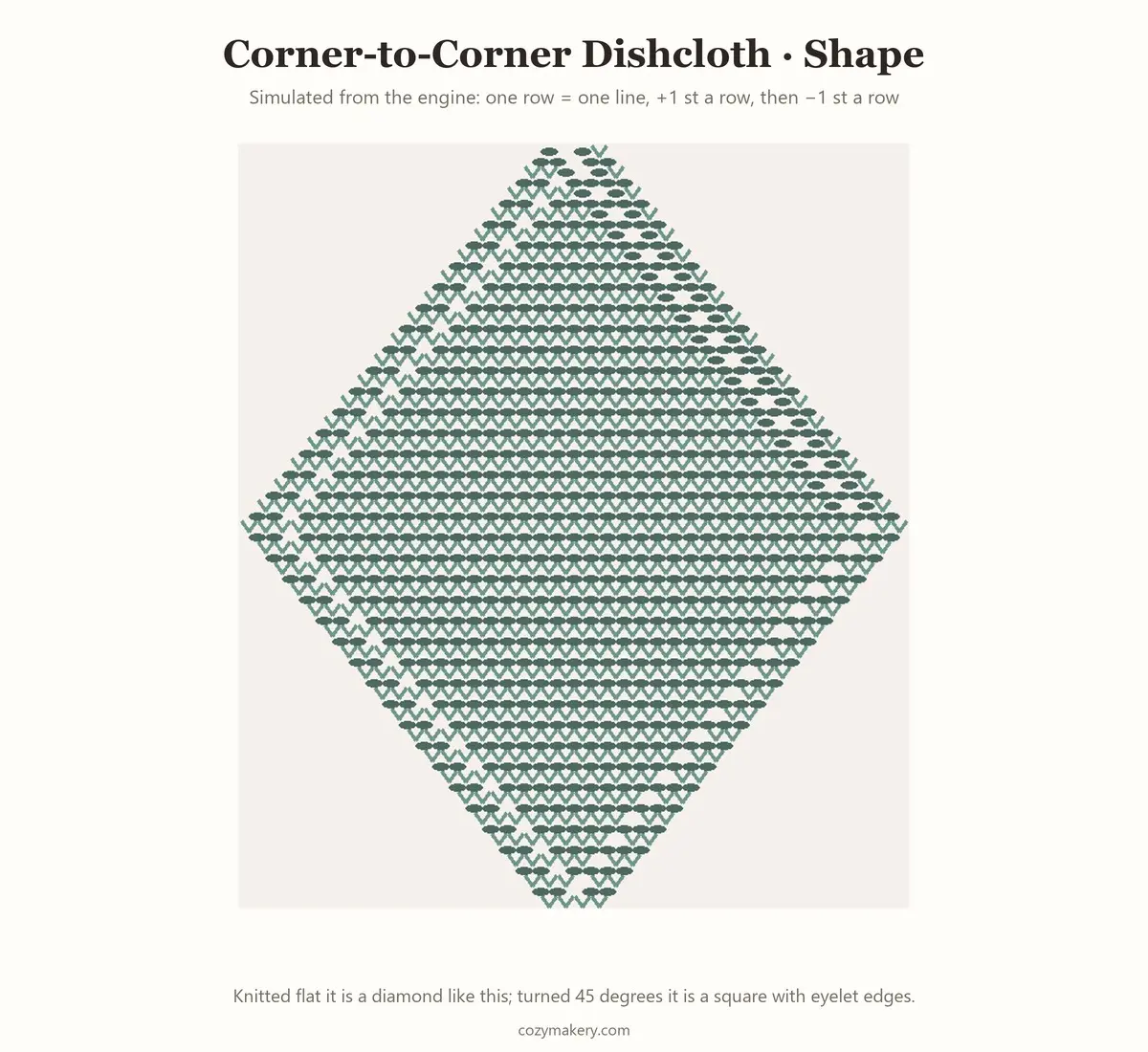
Shape
Chart
Sizes
Dishcloth
- Cast on: Cast on 4 sts. (4)
- Row 1: Knit across. (4)
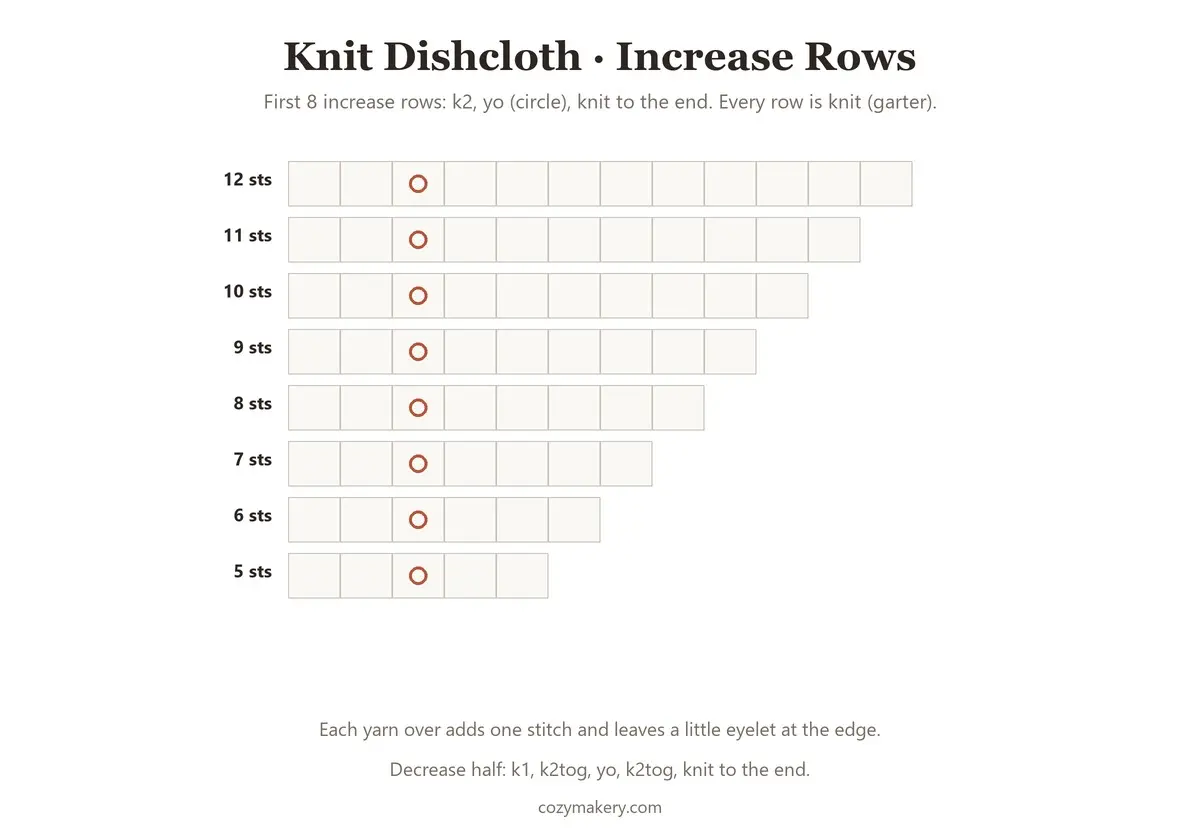
- Increase rows: K2, yo, knit to the end. Repeat this row until you have 40 sts (36 increase rows). (5 → 40)
- Decrease rows: K1, k2tog, yo, k2tog, knit to the end. Repeat this row until 4 sts remain (36 decrease rows). (39 → 4)
- Bind off: Bind off the last 4 sts knitwise. Weave in the ends. (0)
Checkpoints
| Where | Stitches on the needle |
|---|---|
| After Row 1 | 4 |
| Increase row 10 | 14 |
| Widest point | 40 |
| Decrease row 10 | 30 |
| End | 4 |
What's exact, what's calculated
- Exact: Every row was worked stitch by stitch in the engine: +1 stitch every increase row, −1 every decrease row, back to 4.
- Exact: The yarn overs sit at the start of every row, so the eyelets run around all four edges.
- Calculated: Size and yarn come from the gauge below (about 2.6 cm of cotton per stitch + 15% spare).
- Assumed: Gauge 18 sts = 4 in in garter stitch with worsted cotton on US 7 needles (standard label gauge). The size follows your gauge: knit until it looks big enough, then decrease.
Teaching a child? Start with finger knitting: no needles needed.
Need the purl stitch for these? Here is how to purl, step by step, with a free washcloth.
Frequently asked questions
What should a beginner knit first?
A dishcloth or a scarf: flat, small and forgiving. The corner-to-corner dishcloth above also teaches your first increase and decrease.
What size needles are best for beginners?
US 7–8 (4.5–5 mm) with worsted yarn. Wooden or bamboo needles are less slippery than metal.
How long does it take to learn to knit?
Most people can knit a dishcloth in their first week and a simple hat within a month.
Knitting or crochet: which is easier?
Many find crochet quicker to start, knitting more relaxing once it clicks. See our easy crochet patterns for beginners too.
How many pages is the knitting patterns PDF?
5 pages on US Letter paper, with the free pattern from the knitting patterns list written out step by step. On A4 paper, pick Fit to page when you print the knitting patterns PDF so the charts aren’t cropped.
Save it for later
Pin the image below to keep the knitting patterns pattern on your Pinterest board. Made the knitting patterns? I’d love to see your version: send a photo to info@cozymakery.com.
Keep learning: how to knit in the round and how to pick up stitches. For colourwork with only 1 colour per row, try slip stitch knitting.