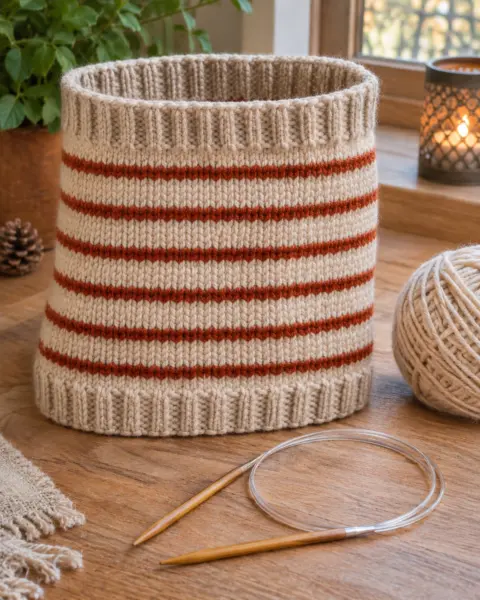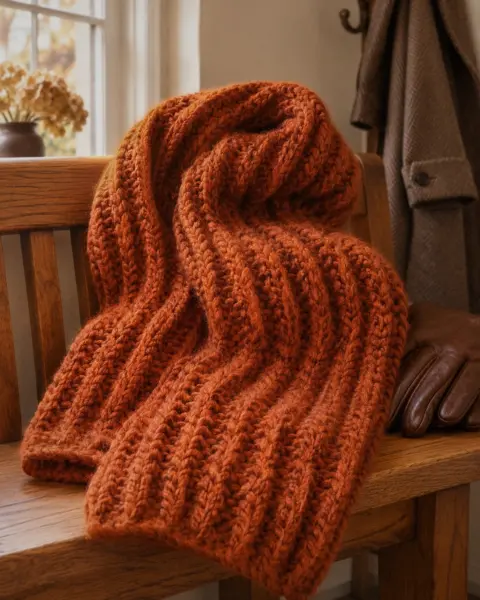
The German twisted cast on (also called the Old Norwegian cast on) is a long-tail cast on with an extra twist in every stitch. The twist makes the edge stretchy, sturdy and neat, which is exactly what cuffs, sock tops and hat brims need: they stretch over your hand or head and spring back. This tutorial covers the slingshot hold, the 4 moves, how long a tail you need, and a practice project: 2×2 rib fingerless mitts in 3 sizes.
In this post
Pattern at a glance
- Skill levelAdvanced beginner
- PracticeFingerless mitts, 3 sizes
- YarnWorsted (#4) wool
- NeedlesUS 7 (4.5 mm)
- Gauge24 sts × 30 rows = 4 in (10 cm)
- TimeAbout 4 hours a pair
Free printable pattern
The PDF has the cast-on steps, the mitt diagram, the size table and all 3 sizes. The German Twisted Cast On PDF has 5 pages and prints on US Letter paper; on A4, choose “Fit to page” in the print dialog.
How to do the German twisted cast on
- Slingshot: Make a slip knot, leaving a long tail. Hold the tail over your thumb and the ball yarn over your index finger, as for a long-tail cast on.
- Under both thumb strands: Take the needle UNDER both strands of the thumb loop, then bring it down into the loop from above.
- Catch the index yarn: Bring the needle over the front thumb strand, catch the index-finger yarn and bring it back down through the thumb loop.
- Snug it: Let the thumb loop go and tighten gently. Repeat for every stitch.
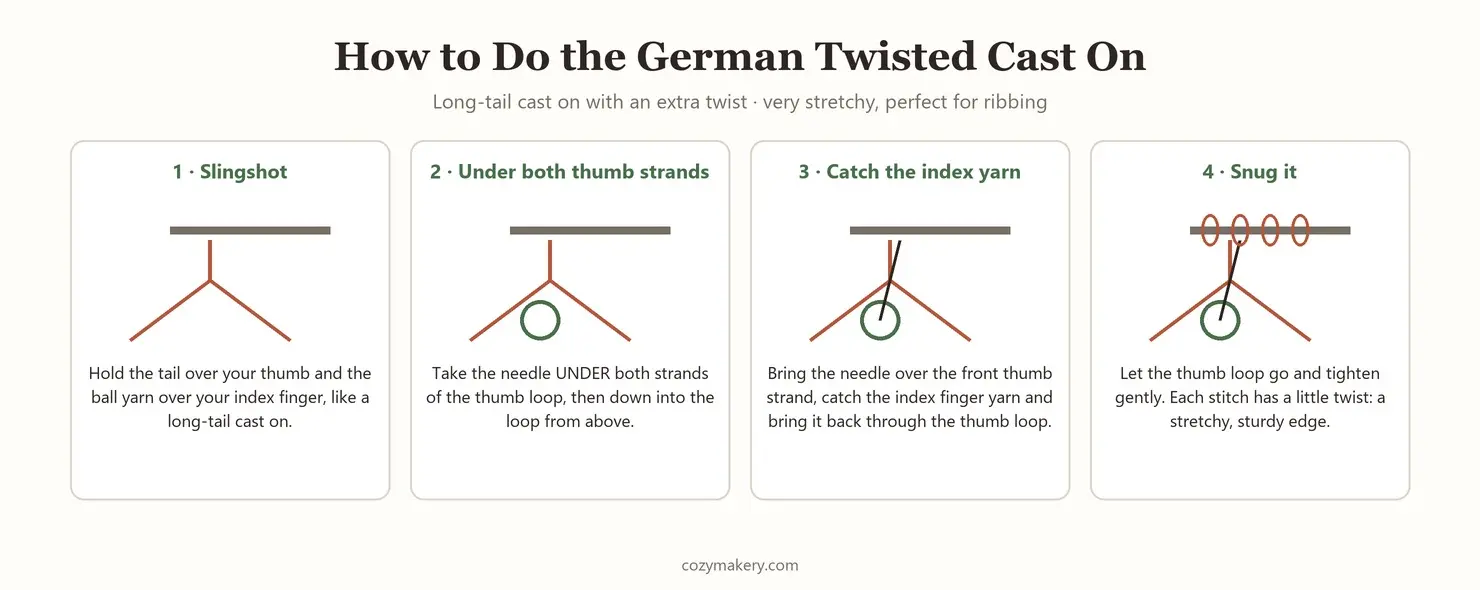
If the long-tail cast on is new to you, learn it first in our how to cast on guide: this is the same hold with one extra move.
How long a tail?
The twist uses a bit more yarn than a plain long-tail cast on. For worsted yarn, allow about 1.4 in per stitch, plus 6 in to weave in. For the medium mitts’ 42 stitches that’s about 4.9 ft. Running out near the end? Pull the stitches off and start again with a longer tail.
Tips
- Space the stitches a needle’s width apart on the needle; crowded stitches lose the stretch.
- Don’t tighten too hard: snug, not tight. A cast on that’s too tight is the most common problem.
- Use it for ribbing: cuffs, sock tops, hat brims and anything that needs to stretch.
- Count in pairs as you go, so you don’t lose count on long cast-ons.
Practice project: rib fingerless mitts
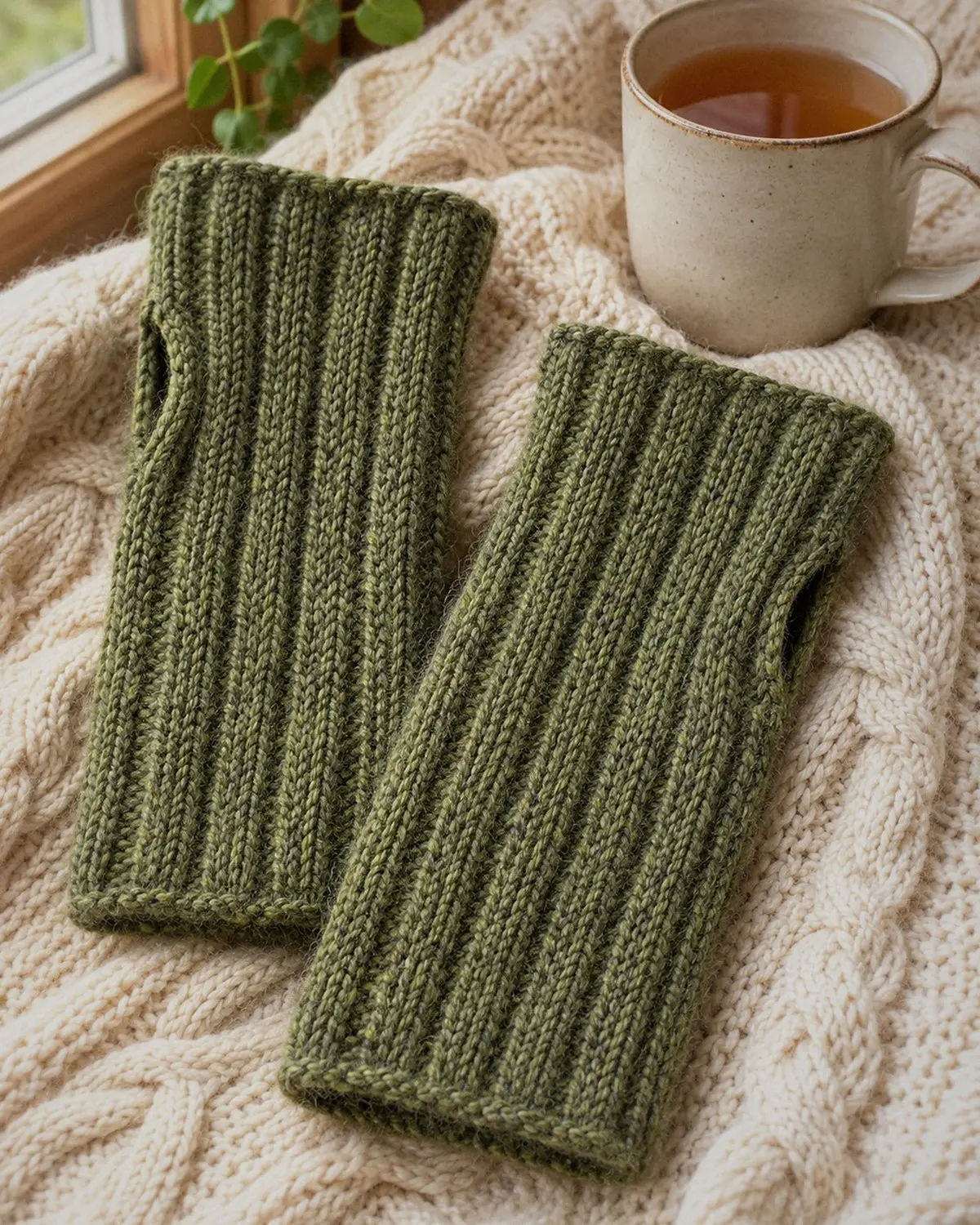
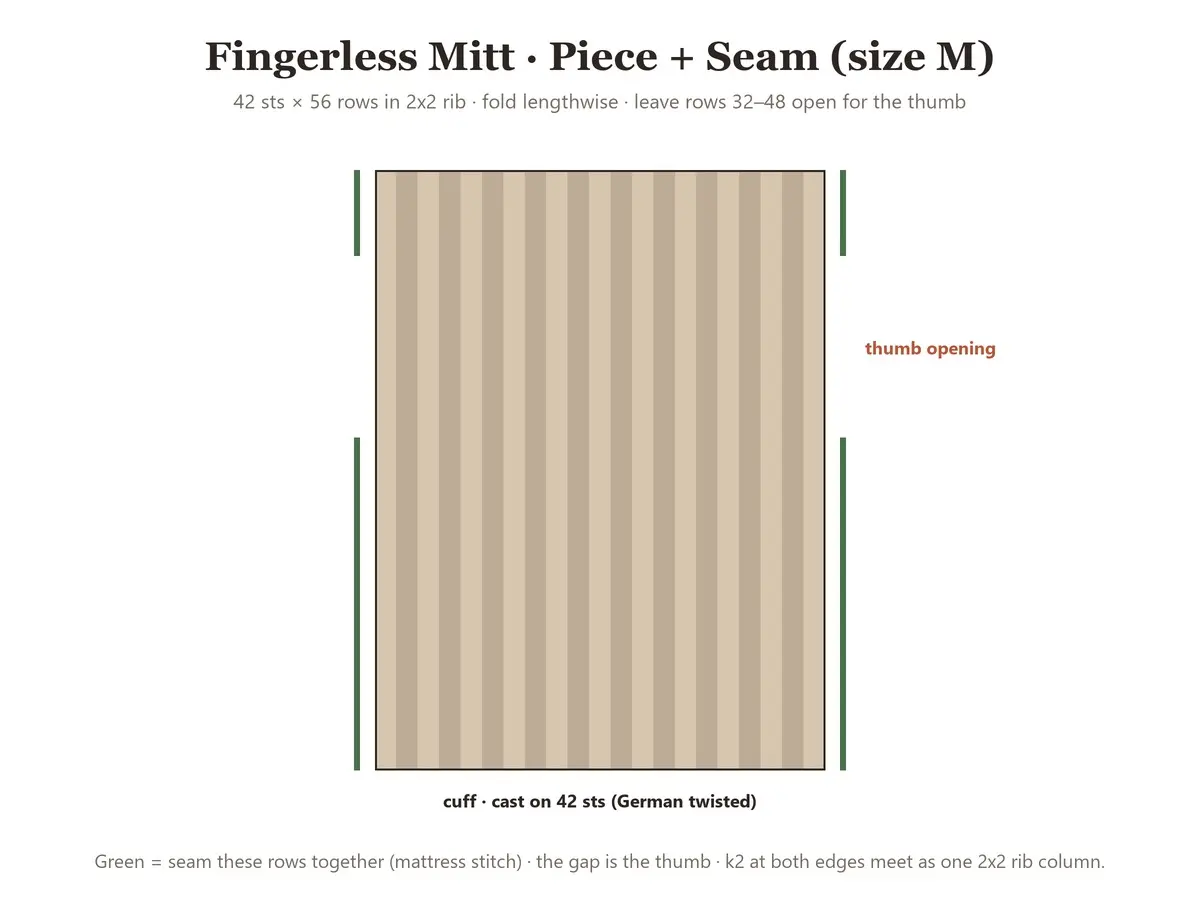
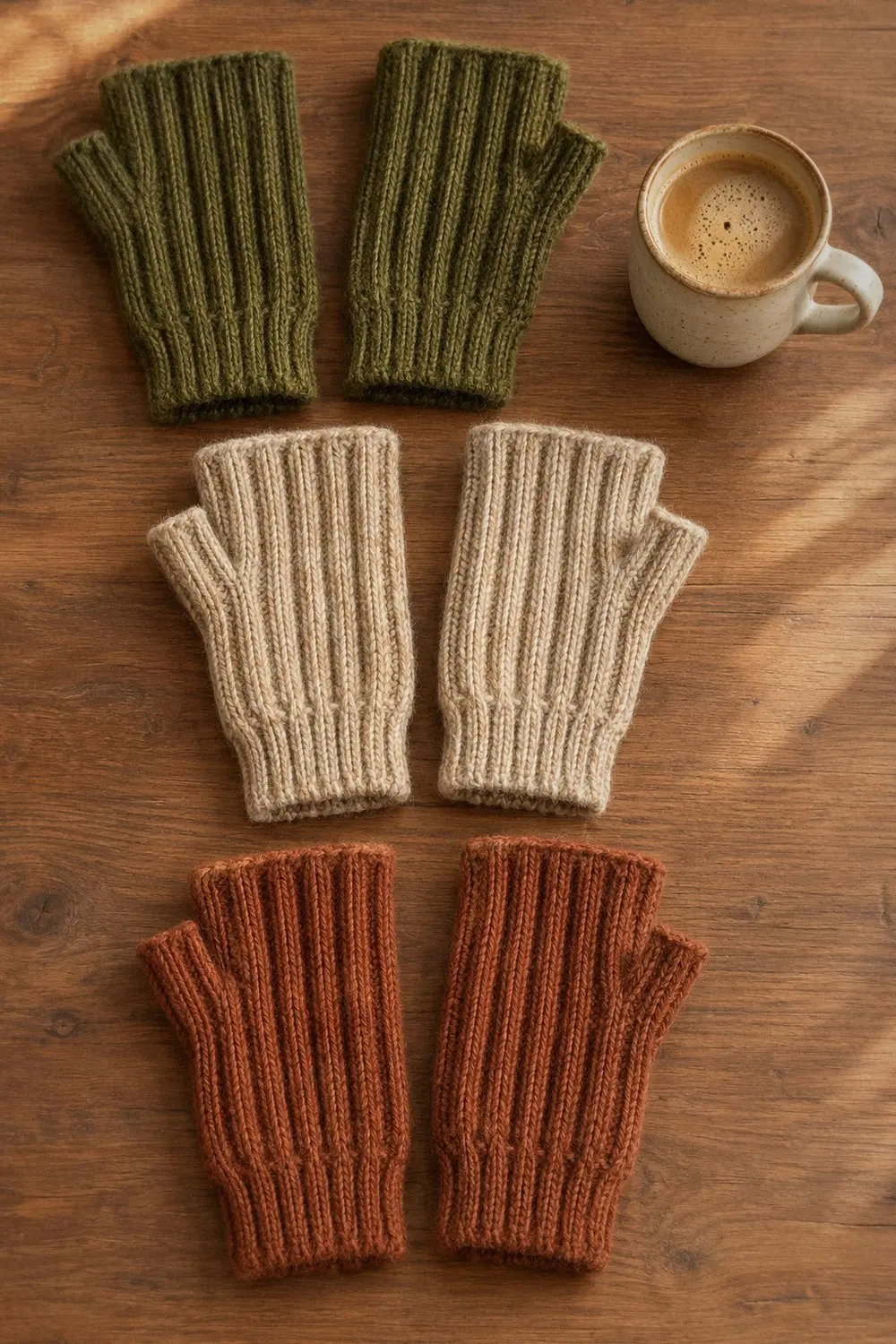
Each mitt is a rectangle of 2×2 rib, cast on with the German twisted cast on, then folded and seamed with a gap for the thumb. The cast-on count is a multiple of 4, plus 2, so both edges start with k2 and the seam closes the rib.
You'll need
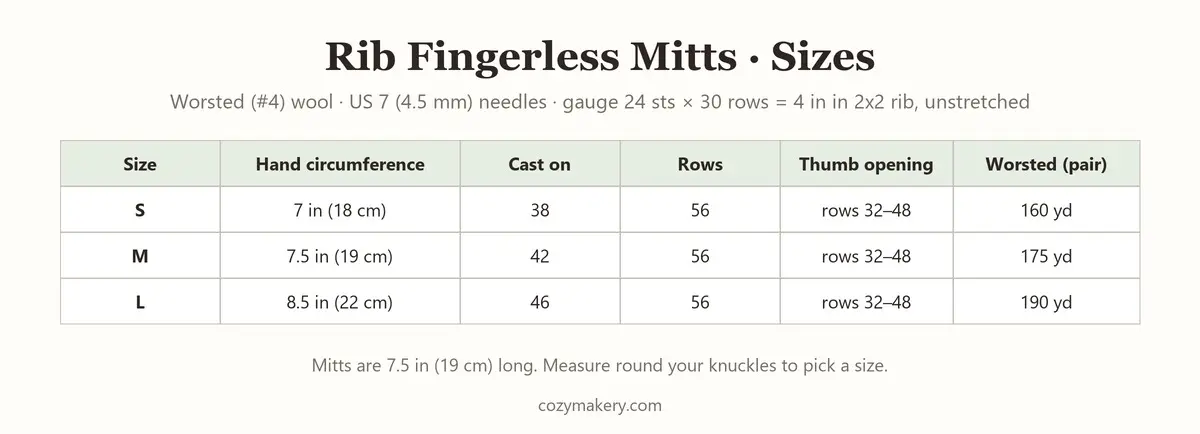
- Worsted (#4) wool: 160 / 175 / 190 yd for a pair (S / M / L)
- US 7 (4.5 mm) needles, tapestry needle
Gauge: 24 sts and 30 rows = 4 in (10 cm) in 2×2 rib, unstretched. It’s a typical worsted value, not one we measured.
Mitts, size M (hand 7.5 in, 19 cm)
- Cast on: With the German twisted cast on, cast on 42 sts, leaving a tail of about 4.9 ft (149 cm) plus 12 in (30 cm) for the seam. (42)
- Row 1 (RS): K2, *p2, k2*; repeat to the end. (42)
- Row 2 (WS): P2, *k2, p2*; repeat to the end. (42)
- Rows 3–56: Repeat rows 1 and 2. The piece measures about 7.5 in (19 cm). (42)
- Bind off: Bind off loosely in rib (knit the knits, purl the purls as you go). Make a second mitt the same. (0)
- Seam: Fold in half lengthwise, right side out. Mattress stitch the long edges from the cuff up to row 31, leave rows 32–48 open for the thumb, then seam the last 8 rows.
Size S: cast on 38 sts; size L: cast on 46 sts. All sizes are 56 rows long, with the same thumb opening.
We knitted every row of all 3 sizes in our knitting engine and checked the cast-on count (a multiple of 4 + 2), the thumb opening and the size. The side seam is mattress stitch. For a crochet version, see our crochet fingerless gloves.
Frequently asked questions
Is the German twisted cast on the same as the Old Norwegian cast on?
Yes: two names for the same twisted long-tail cast on.
Is it stretchier than long-tail?
Yes. The extra twist adds a little yarn to every stitch, so the edge stretches more and keeps its shape.
What is it best for?
Ribbing: sock cuffs, hat brims, mittens and sleeve cuffs.
Why does my cast on look messy?
Usually uneven tension. Keep the same gentle tug for every stitch and space them on the needle.
How many pages is the German Twisted Cast On PDF?
5 pages on US Letter, with the mitt diagram and all 3 sizes. On A4, print with “Fit to page”.
Can I use it for in-the-round knitting?
Yes: cast on, join the round, and work your rib as usual.
Save it for later
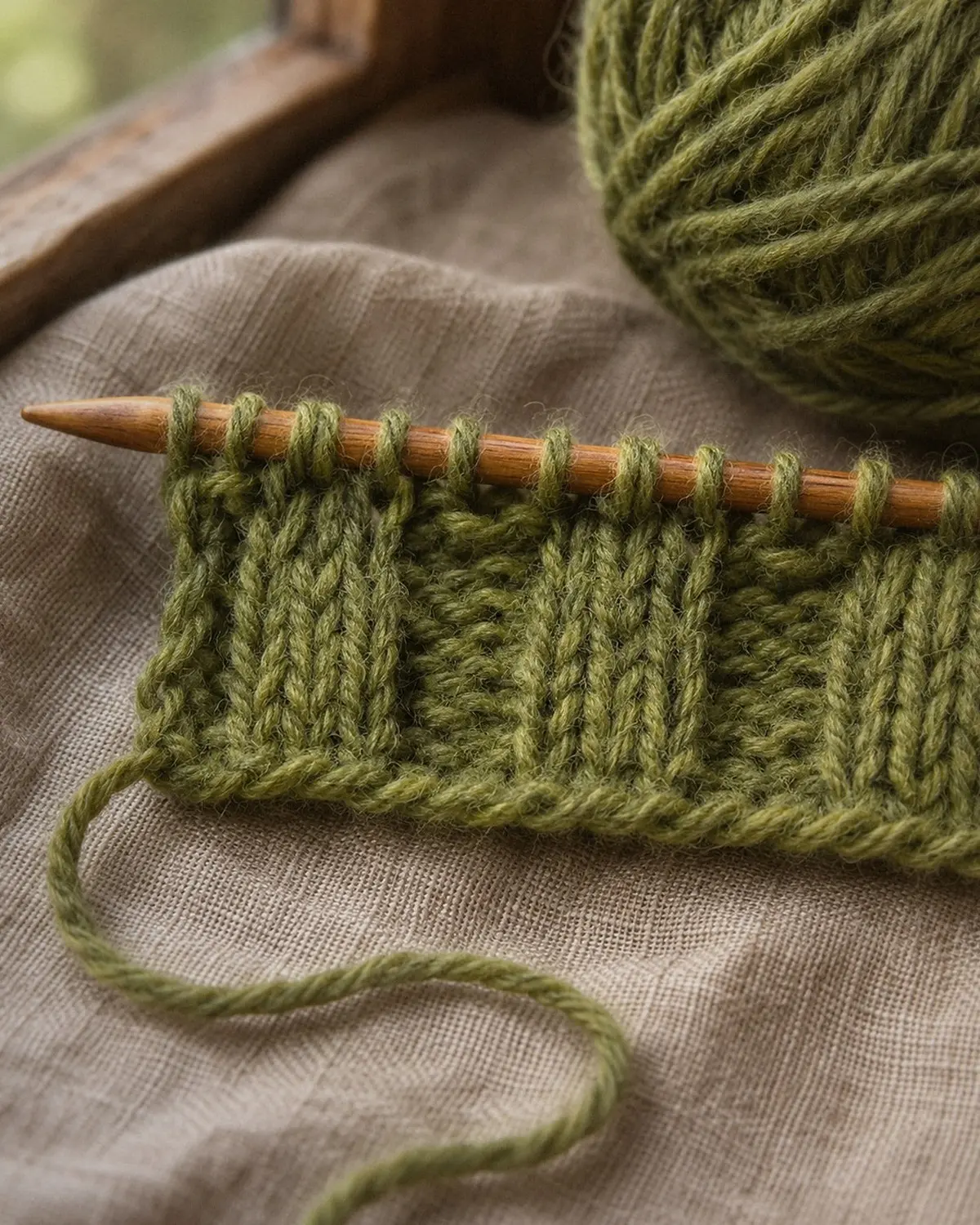
Pin the photo below to keep the rib fingerless mitts on your Pinterest board. Made the rib fingerless mitts? I’d love to see it: send a photo to info@cozymakery.com.
More knitting: how to knit, how to bind off and cable knitting.