Running stitch embroidery is the simplest stitch there is: the needle goes up and down along a line, leaving even dashes with little gaps between. It’s the base of sashiko and quilting, and with a second thread it turns into whipped, threaded and double running stitch. This tutorial covers the basic stitch, even spacing, 4 variations, and a free pattern that shows all of them: a rainbow sampler hoop.
In this post
Pattern at a glance
- Skill levelBeginner
- Hoop6 in (15 cm)
- DesignRainbow + 2 clouds
- Floss6 DMC colours
- StitchesRunning stitch + 4 variations (142 sts)
- TimeAbout 2–3 hours
Free printable pattern
The PDF has the running stitch steps, the stitch plan, the floss table and a true-size template. The Running Stitch Embroidery PDF has 5 pages and prints on US Letter paper; on A4, choose “Fit to page” in the print dialog.
How to do running stitch
- Up: Bring the needle up at the start of the line.
- Down a stitch along: Take it down about 3 mm (1/8 in) along the line.
- Up after a gap: Come up again about 2 mm further along, leaving a gap.
- Repeat: Keep the stitches the same length and the gaps the same size. On a soft fabric you can load 3 or 4 stitches onto the needle at once.
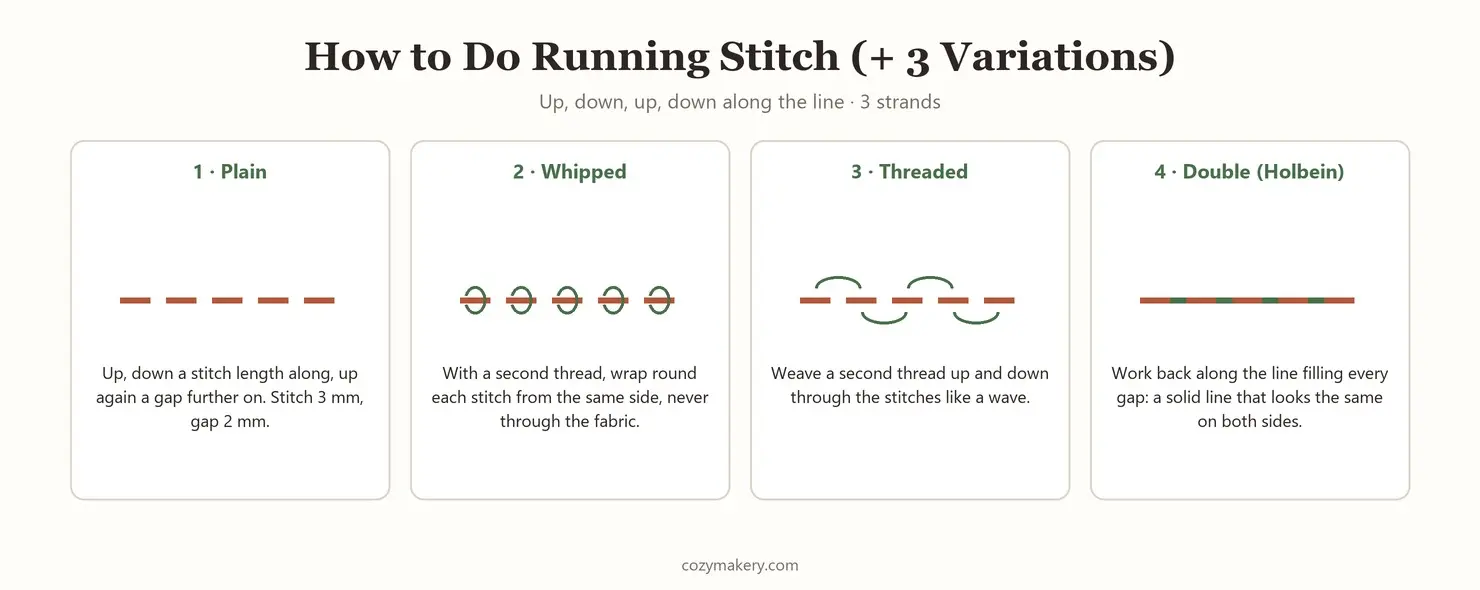
Even spacing
The look of running stitch is all in the rhythm. Mark the line with a water-soluble pen, keep the stitches a bit longer than the gaps, and plan the ends: in this pattern the gaps are spread so evenly that each arc starts and ends with a full stitch right on the baseline.
4 running stitch variations
- Whipped running stitch: with a second thread, wrap round each stitch from the same side, without going through the fabric. It makes a rope-like line.
- Threaded running stitch: weave a second thread up through one stitch and down through the next, like a wave.
- Double running (Holbein) stitch: work back along the line filling every gap. It makes a solid line that looks the same on both sides.
- Long and short: alternate long and short stitches for a dotted, playful line.
Running stitch is the heart of sashiko. For solid lines, compare back stitch and split stitch.
Practice pattern: rainbow sampler hoop
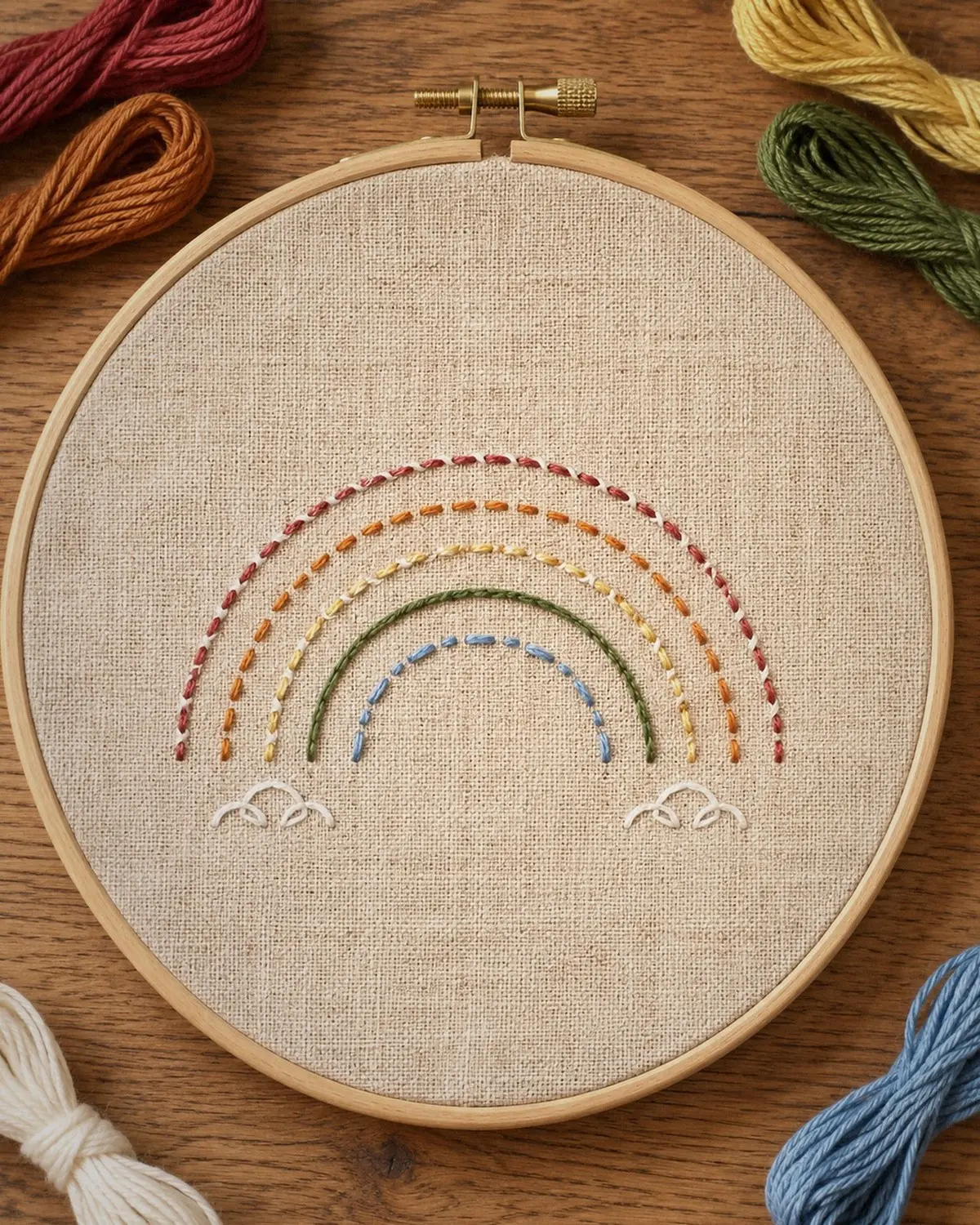
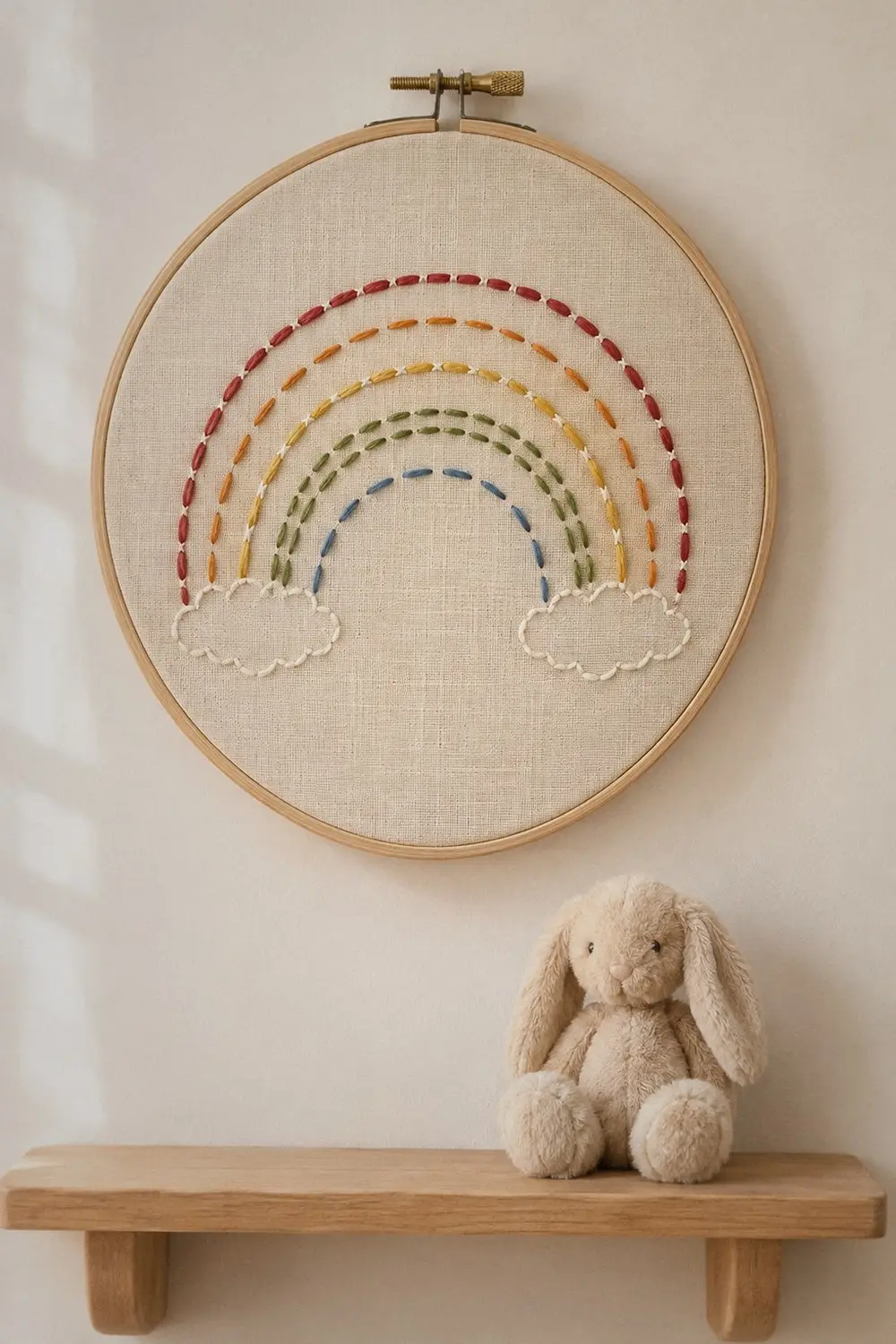
5 half-circle arcs, one in each variation, from a whipped red arc on the outside to a long-and-short blue one inside, with a small cloud at each end. It’s a sampler you can frame: every variation in one hoop.
You'll need
- DMC stranded cotton: 3328, 976, 3822, 3363, 932 and 3865 (winter white, for the clouds and the wraps), 1 skein each
- 9 × 9 in (23 cm) natural linen or cotton, a 6 in (15 cm) hoop
- Size 7 embroidery needle, a blunt tapestry needle for the wraps, water-soluble pen
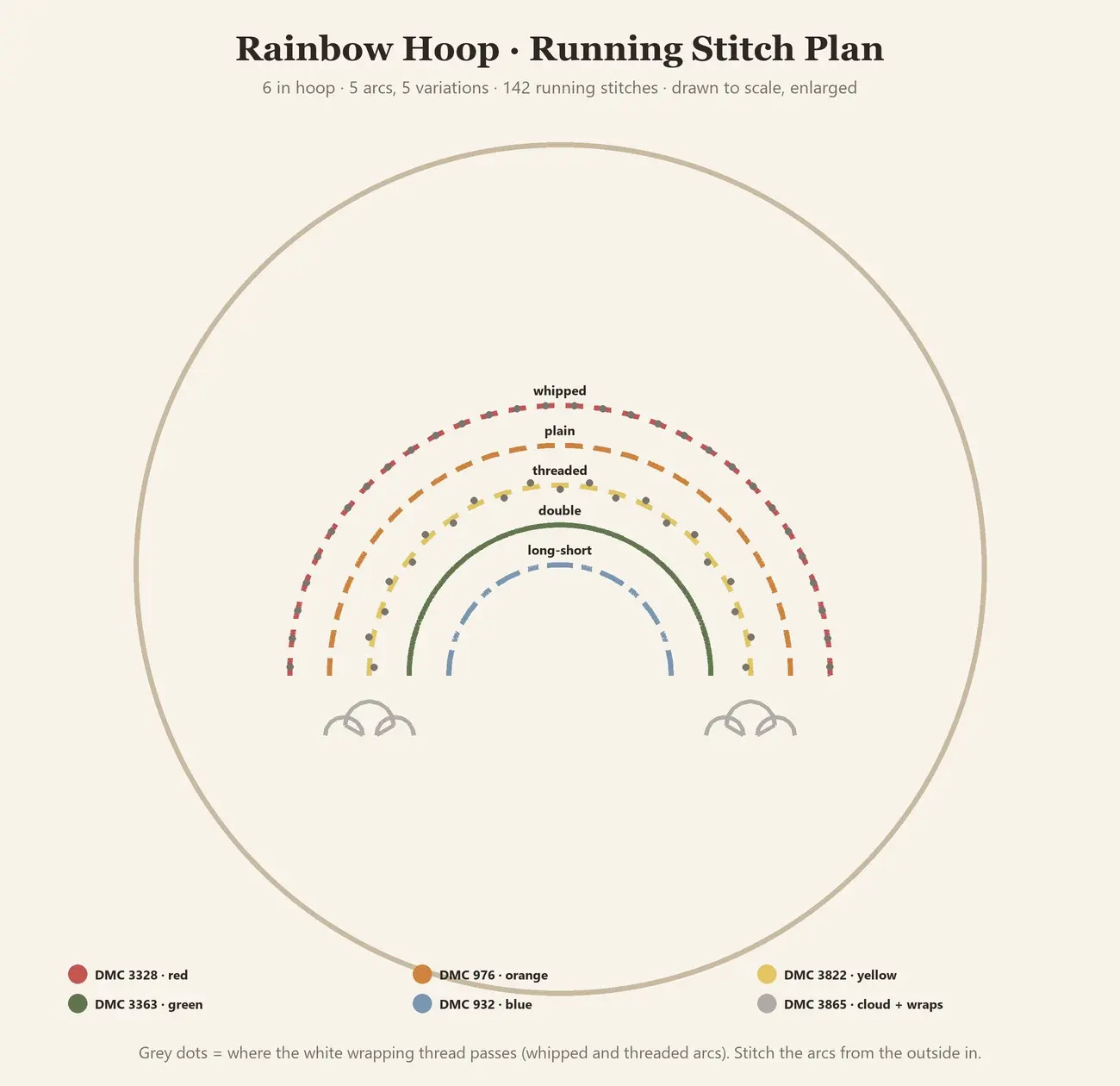
How to stitch it
- Trace: Print the template at 100%, check the 1 in (2.5 cm) bar, and trace the 5 arcs and the 2 clouds.
- DMC 3328: The red arc: whipped running stitch. (30 sts)
- DMC 976: The orange arc: plain running stitch. (26 sts)
- DMC 3822: The yellow arc: threaded running stitch. (21 sts)
- DMC 3363: The green arc: double running stitch. (34 sts)
- DMC 932: The blue arc: long-short running stitch. (13 sts)
- DMC 3865: Whip the red arc and thread the yellow one with the tapestry needle, then stitch the 2 clouds in plain running stitch. (50 wraps)
- Finish: Rinse out the pen, dry face down on a towel, press and frame in the hoop.
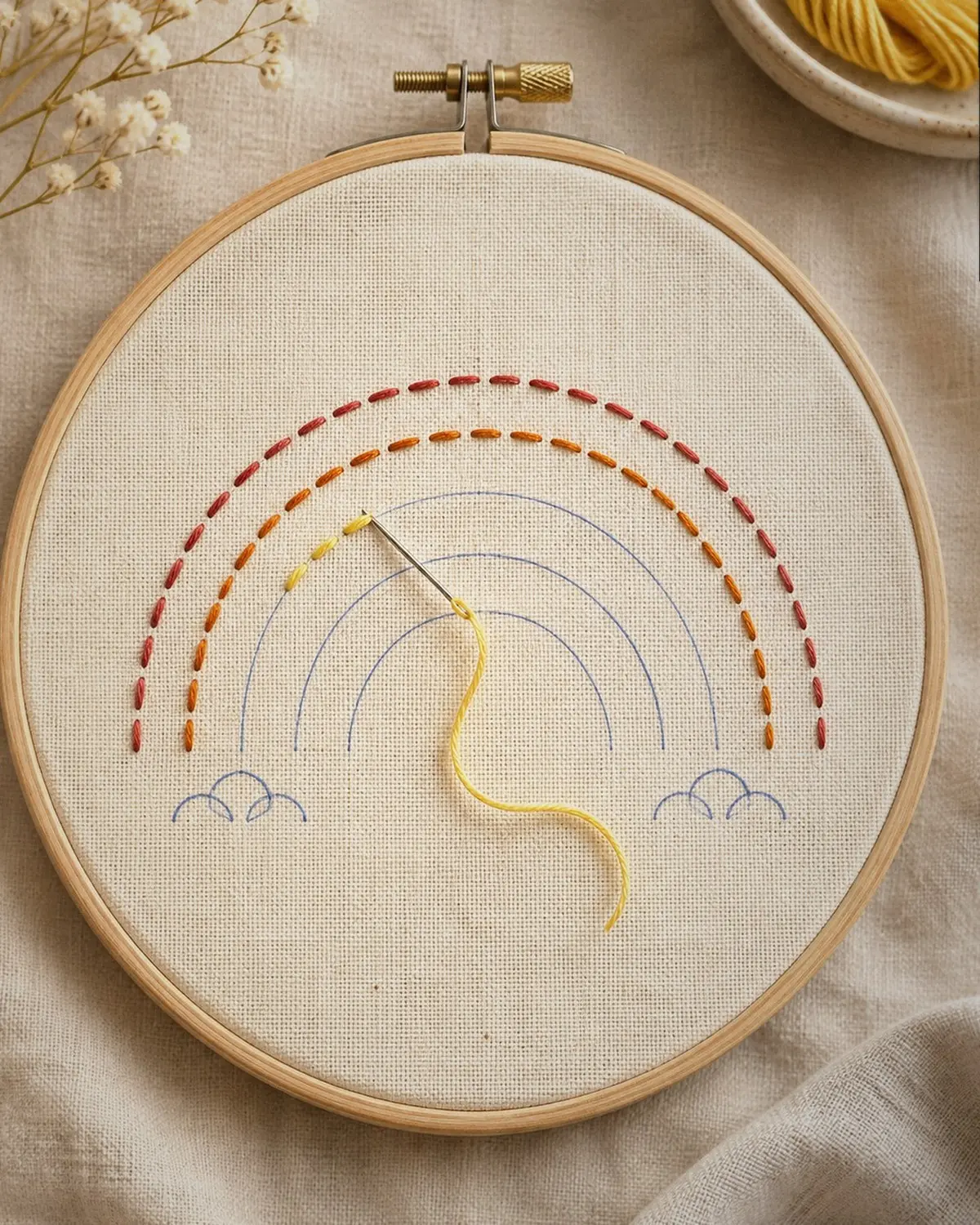
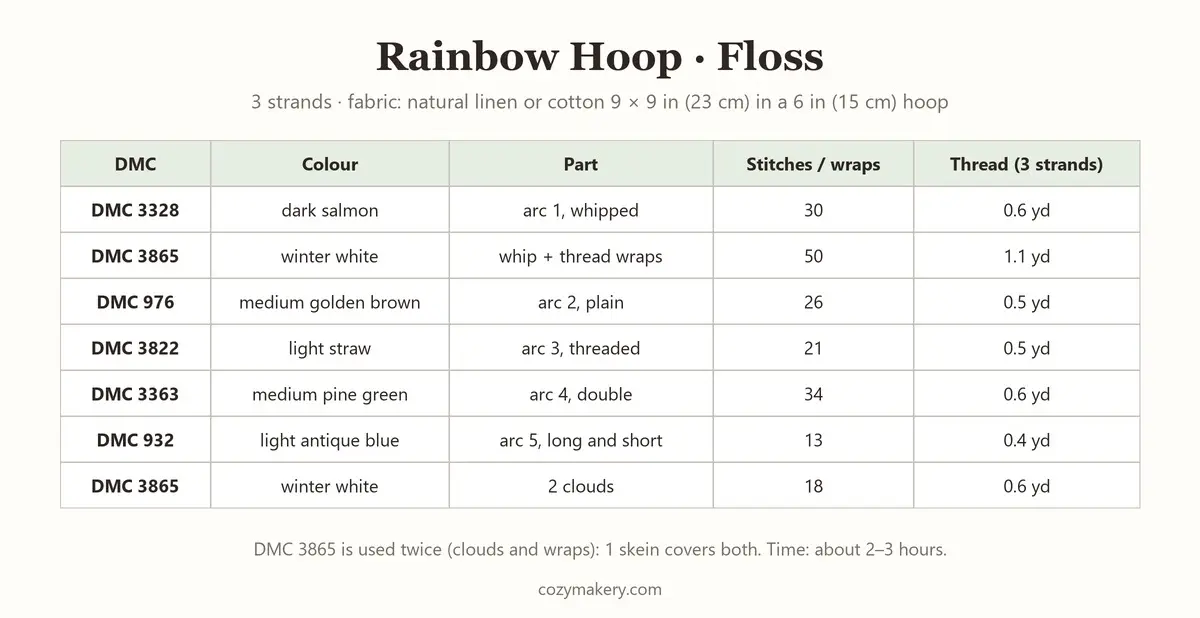
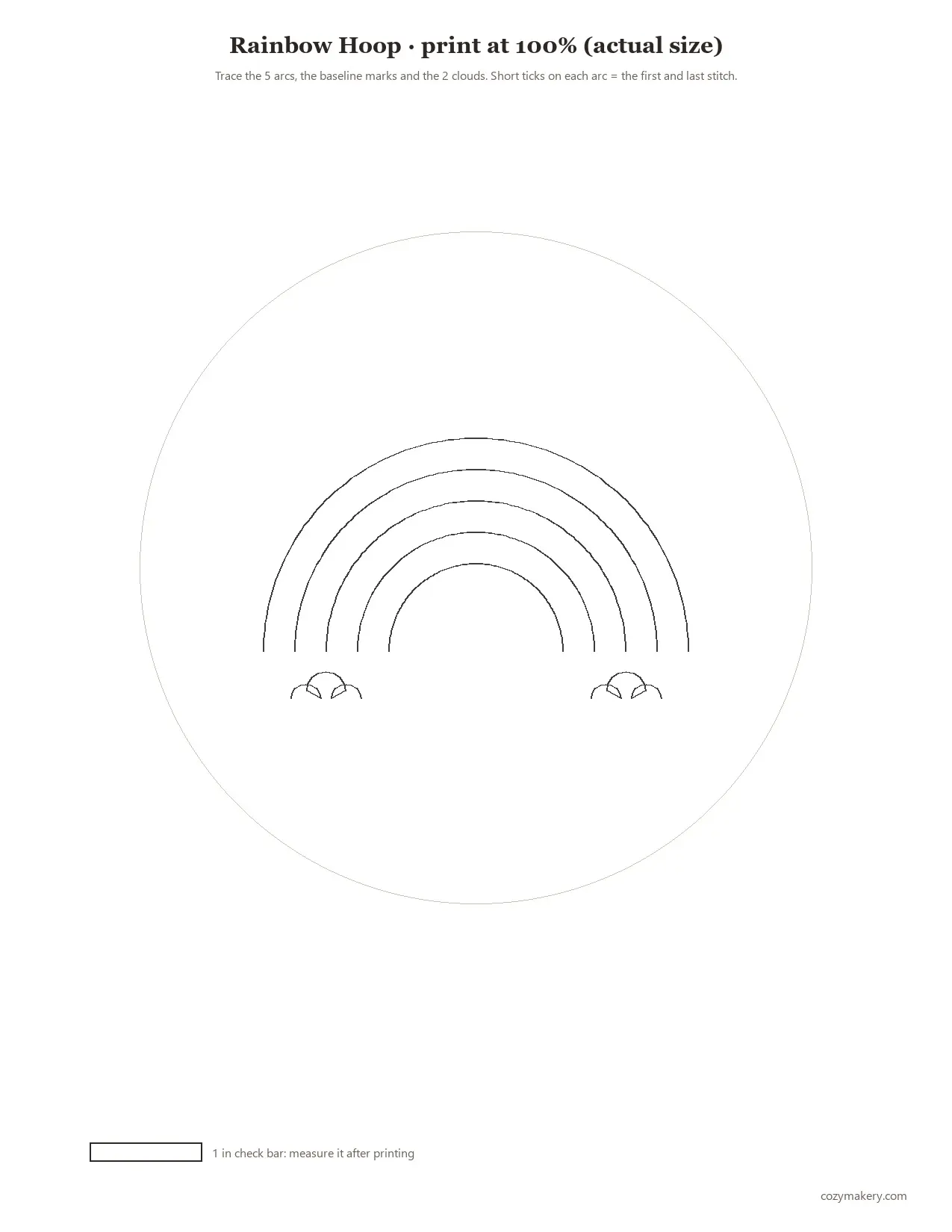
We split every arc into stitches and gaps in code: 3 mm stitches, gaps of about 2 mm spread evenly so each arc begins and ends with a stitch on the baseline, enough room between the arcs for the wraps, and everything well inside the hoop. The thread lengths come from the stitches. More designs: free embroidery patterns and hand embroidery stitches.
Frequently asked questions
What is running stitch used for?
Outlines, quilting, sashiko, gathering fabric, and decorative borders and lines.
What is the difference between running stitch and back stitch?
Running stitch leaves gaps between the stitches; back stitch goes back into the end of the last stitch to make a solid line.
How long should running stitches be?
About 3 mm (1/8 in) with gaps of about 2 mm for embroidery; longer for sashiko and quilting.
What is Holbein stitch?
Double running stitch: a second pass fills the gaps, making a solid line that looks the same on the back. It’s named after Holbein’s portraits of embroidered collars.
How many pages is the Running Stitch Embroidery PDF?
5 pages on US Letter, including a true-size template. Print the template at 100%; on A4 use “Fit to page” for the other pages.
Do I need a hoop for running stitch?
Not always: on a firm fabric you can load several stitches onto the needle without one. For this sampler, a hoop keeps the arcs smooth.
Save it for later
Pin the photo below to keep the rainbow hoop on your Pinterest board. Made the rainbow hoop? I’d love to see it: send a photo to info@cozymakery.com.
More stitches: satin stitch, back stitch and split stitch.