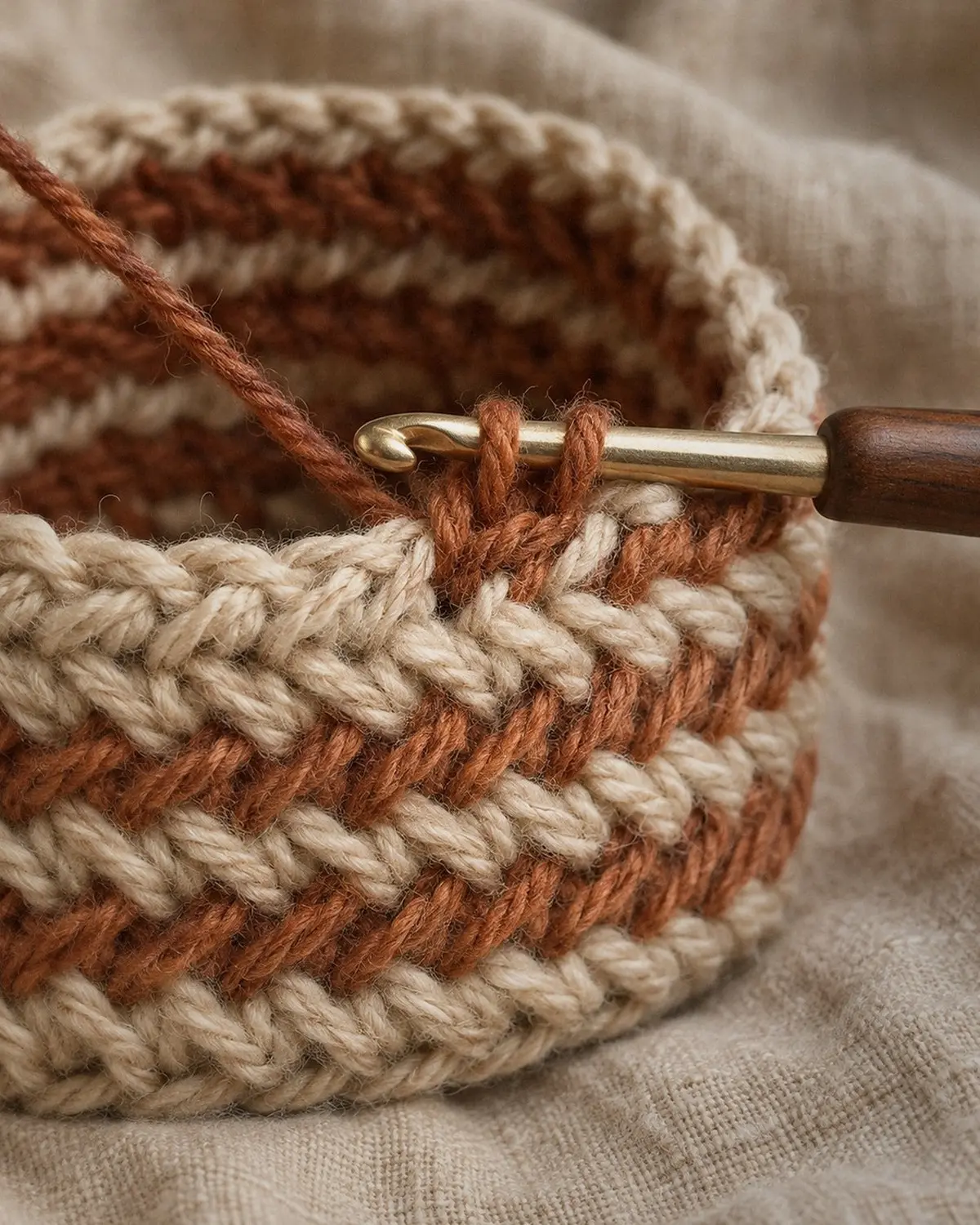
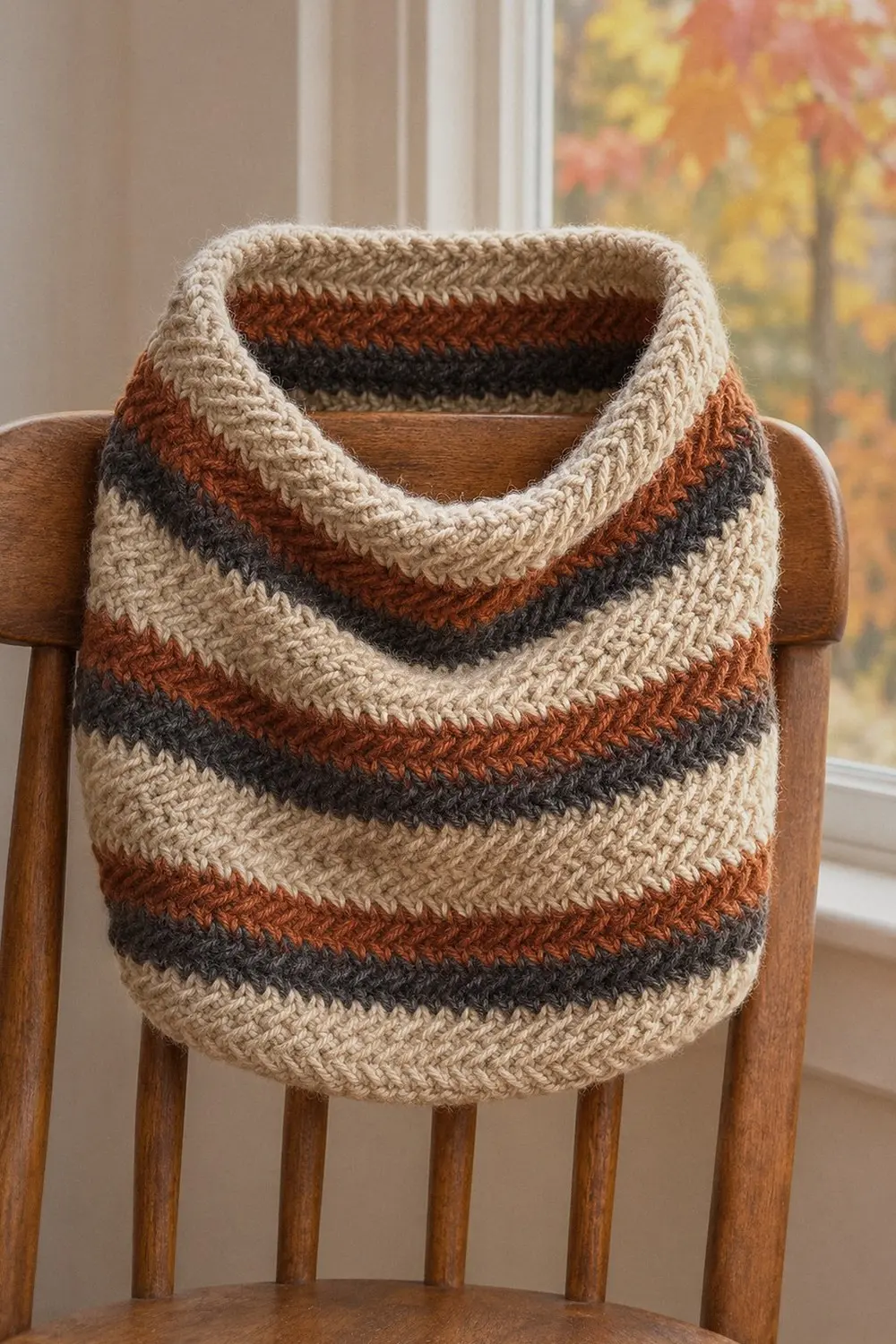
Herringbone half double crochet (hhdc) is an hdc with one small change: you pull the loop through the stitch and the first loop on the hook in one go. That makes each stitch lean, and worked in rounds that are never turned, the slanted stitches stack into a woven herringbone texture. It’s quick, flexible and lies flat. This tutorial covers the stitch, rows versus rounds, keeping the count, and a practice project: a striped herringbone cowl in 2 sizes.
In this post
Pattern at a glance
- Skill levelAdvanced beginner
- PracticeStriped cowl, 2 sizes
- YarnWorsted (#4), 3 colours
- Hook5.5 mm (US I-9)
- Gauge15 sts × 11 rounds = 4 in (10 cm)
- TimeAbout 4 / 6 hours
Free printable pattern
The PDF has the herringbone hdc steps, the stripe diagram, the size table and both cowls. The Herringbone Half Double Crochet PDF has 5 pages and prints on US Letter paper; on A4, choose “Fit to page” in the print dialog.
How to crochet herringbone hdc
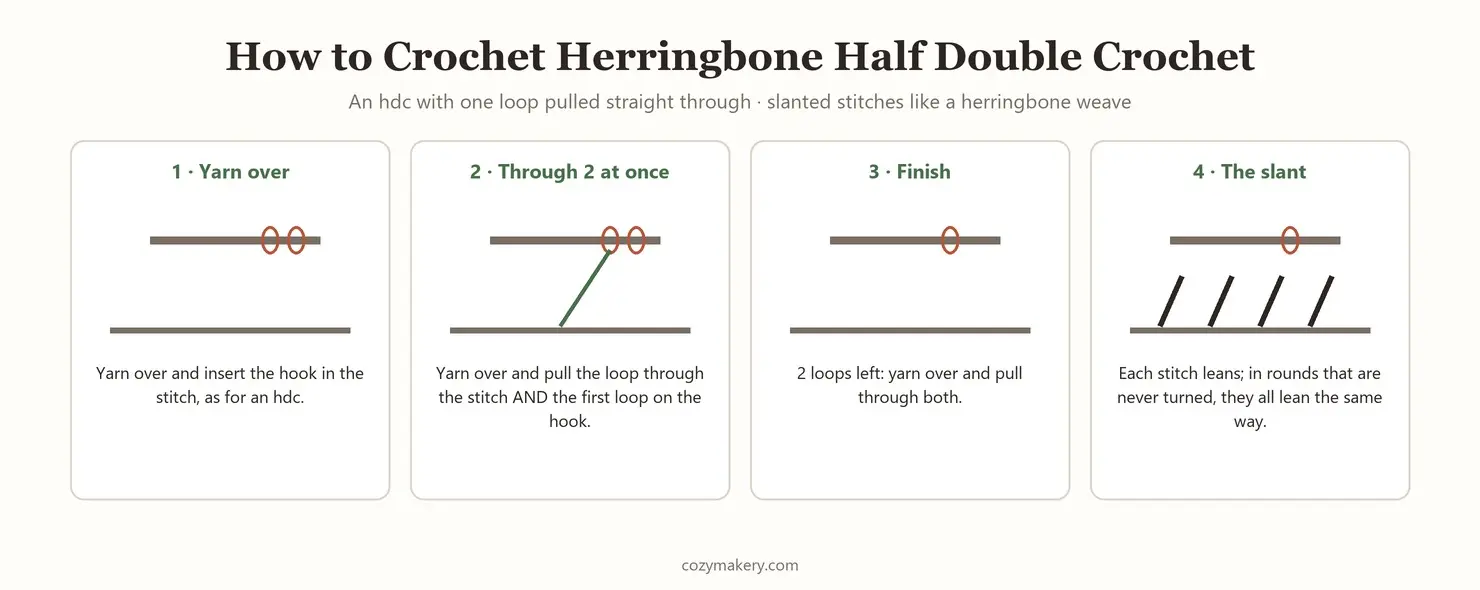
- Yarn over: Yarn over and insert the hook in the stitch, as for a normal half double crochet.
- Through 2 at once: Yarn over and pull the loop through the stitch AND the first loop on the hook. 2 loops left.
- Finish: Yarn over and pull through both loops.
- Repeat: Every stitch leans a little to the side. In rounds that are never turned, they all lean the same way.
Need a refresher on the base stitch? See half double crochet.
Rows or rounds?
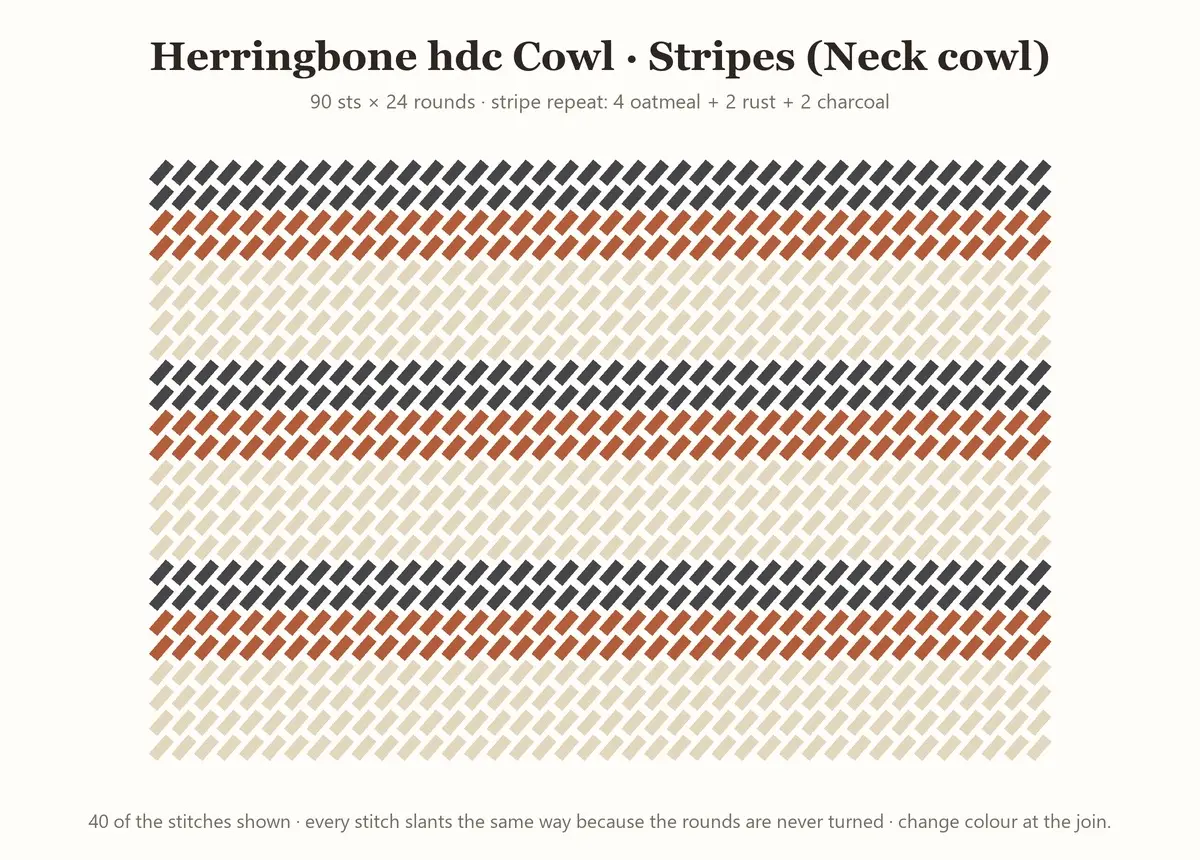
In rows, the slant changes direction every time you turn, which makes a zigzag texture. In rounds that are joined but never turned, every stitch leans the same way and the fabric looks like a herringbone weave. This cowl is worked in joined rounds, so you never turn and the join stays straight.
Tips
- Keep the loops even: the first loop on the hook is easy to pull too tight. Hold the yarn a little looser than for plain hdc.
- Count each round: the joining slip stitch is not a stitch. Start every round with ch 2 that doesn’t count.
- Change colour at the join: pull the new colour through on the slip stitch, so the stripes don’t step.
- Weave ends at the join, along the seam line, where they hide best.
Practice project: striped herringbone cowl
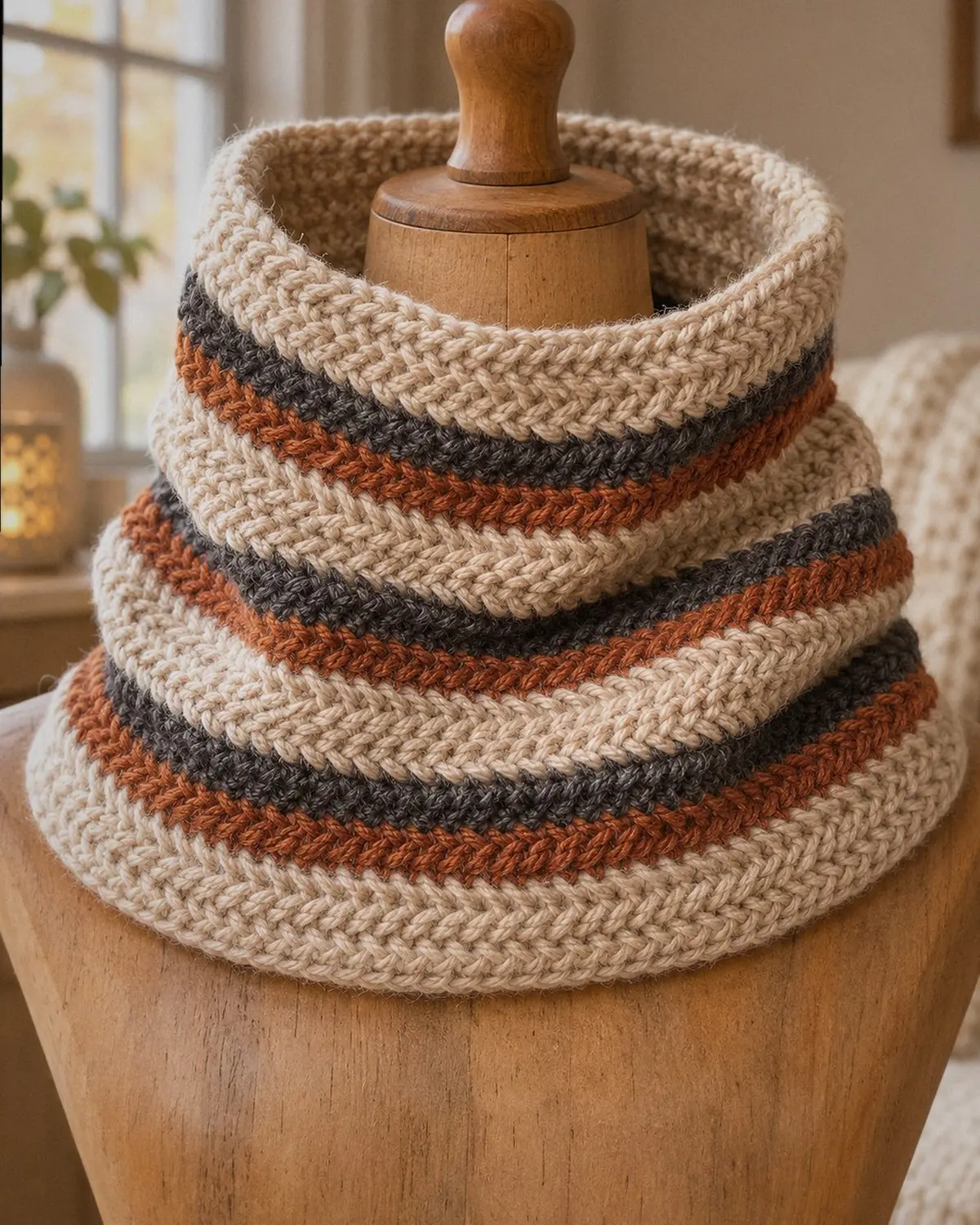
The cowl is 90 stitches round, worked in a 4-2-2 stripe of oatmeal, rust and charcoal. The neck cowl is 24 rounds; the long loop wraps twice.
You'll need
- Worsted (#4) yarn: oatmeal 95 yd, rust 50 yd, charcoal 50 yd (neck cowl; long loop in the table)
- 5.5 mm (US I-9) hook, tapestry needle
Gauge: 15 sts and 11 rounds = 4 in (10 cm) in herringbone hdc. A typical worsted value, not one we measured.
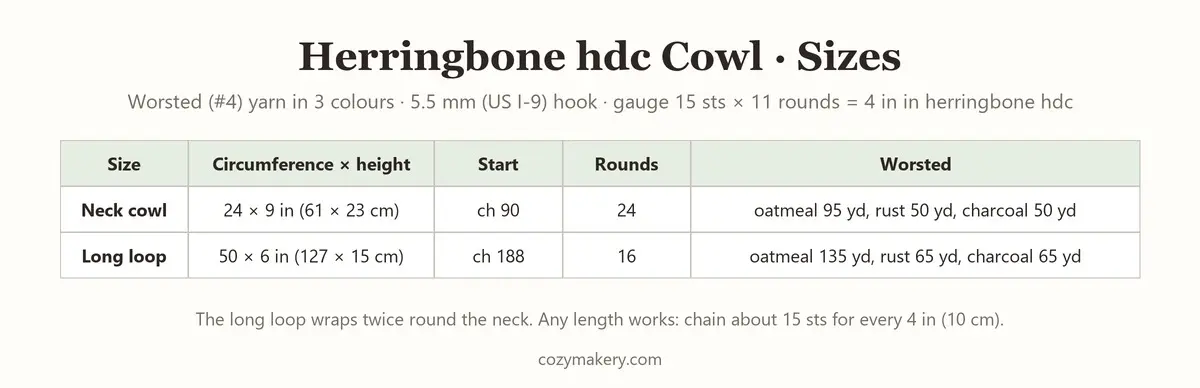
Neck cowl (24 × 9 in (61 × 23 cm))
- Foundation: With oatmeal, ch 90. Join with a sl st to the first ch, taking care not to twist the chain. (90)
- Herringbone hdc (hhdc): Yo, insert the hook in the stitch, yo and pull the loop through the stitch AND the first loop on the hook (2 loops left), yo, pull through both.
- Round 1: Ch 2 (doesn't count as a st), hhdc in each ch round (90 hhdc). Sl st to the first hhdc. Don't turn. (90)
- Round 2 onwards: Ch 2, hhdc in each st round, sl st to the first hhdc. Never turn: that keeps the slant going one way. (90)
- Stripes: Change colour at the sl st join: 4 rounds oatmeal, 2 rounds rust, 2 rounds charcoal. Repeat this 8-round stripe sequence 3 times (24 rounds, about 8.7 in or 22 cm).
- Finish: Fasten off. Weave in the ends at the joins, where they hide in the seam line.
Long loop (50 × 6 in (127 × 15 cm)): ch 188 and work 16 rounds with the same stripes.
We modelled every round of both sizes: the same count every round, never turned, and the stripes are whole runs of rounds, so the cowl is a whole number of stripe repeats. For another textured cowl stitch, try waffle stitch; more cowls in crochet cowl patterns.
Frequently asked questions
What is the difference between hdc and herringbone hdc?
In herringbone hdc the first loop is pulled through the stitch and a loop on the hook together, so there’s one fewer step and the stitch slants.
Why does my herringbone hdc zigzag?
You turned at the end of the rows. Work in joined rounds without turning for a one-way slant.
Is herringbone hdc stretchy?
More than plain hdc, which makes it good for cowls, hats and blankets.
Does the seam show?
A little, as a straight line where the rounds join. Keep the join at the back of the cowl.
How many pages is the Herringbone Half Double Crochet PDF?
5 pages on US Letter, with the stripe diagram and both sizes. On A4, print with “Fit to page”.
Can I make it in one colour?
Yes: the herringbone texture shows best in a light, solid colour.
Save it for later
Pin the photo below to keep the herringbone cowl on your Pinterest board. Made the herringbone cowl? I’d love to see it: send a photo to info@cozymakery.com.
More crochet: double crochet, bean stitch and moss stitch.