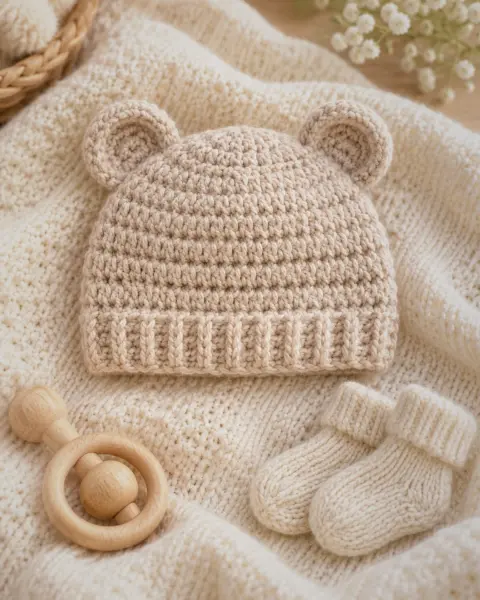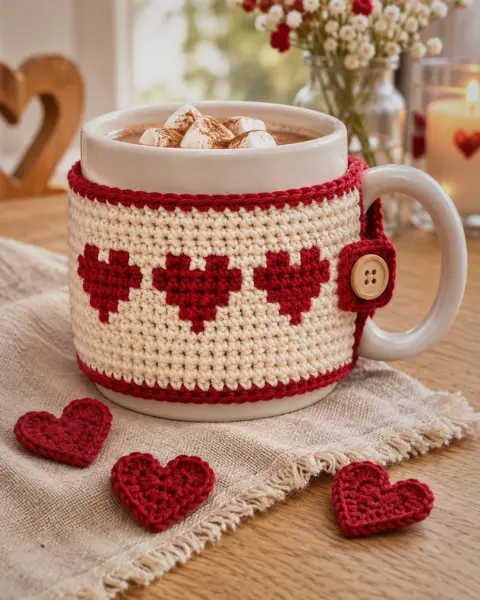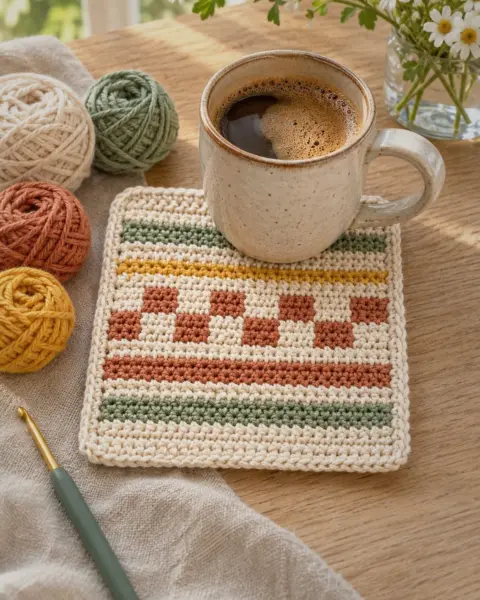
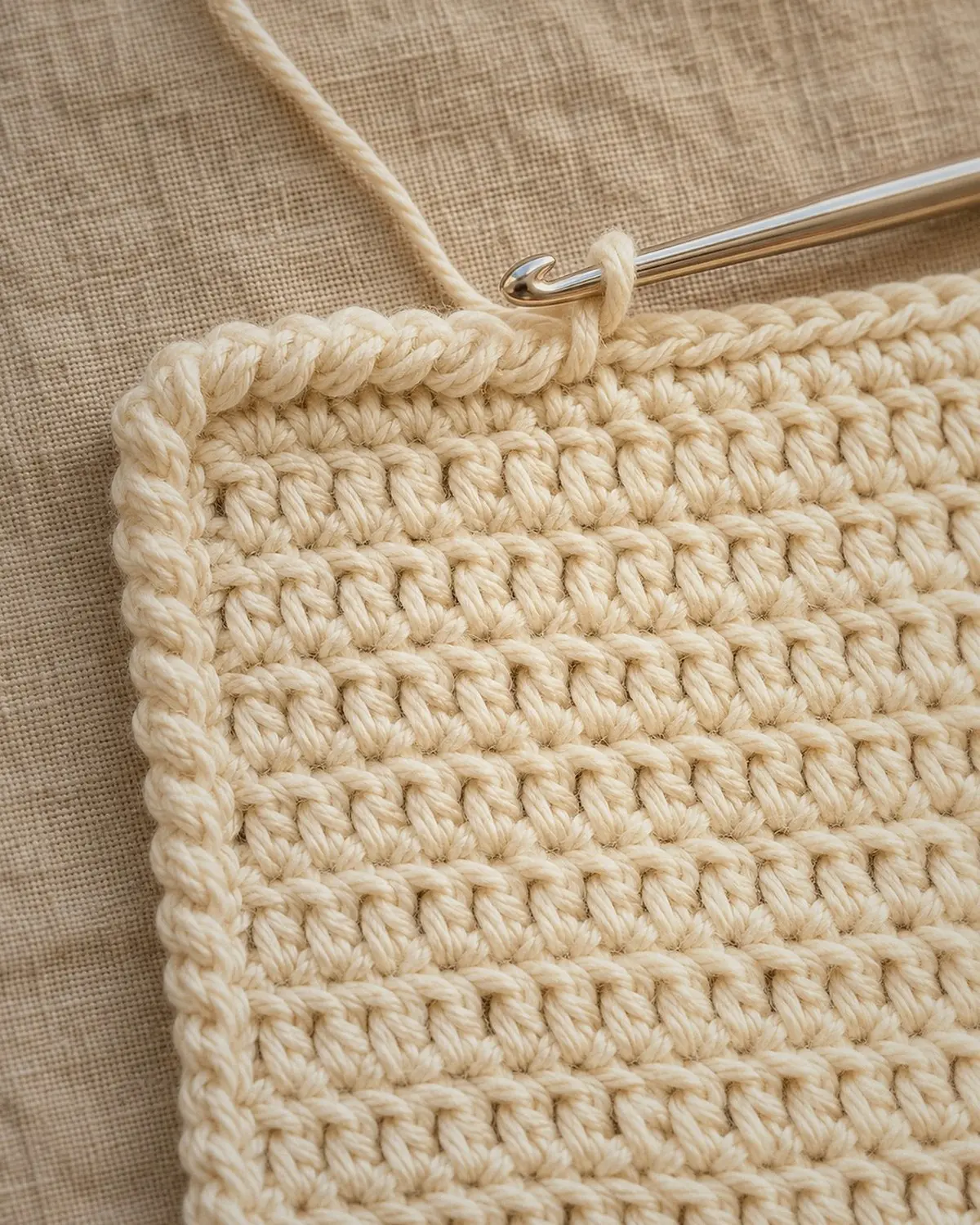
Crab stitch crochet, also called reverse single crochet, is a single crochet worked backwards: from left to right instead of right to left. Each stitch twists as you make it, so the finished edge looks like a little rope or cord. It’s the classic finishing edge for blankets, hats and placemats because it’s sturdy and doesn’t stretch. This tutorial covers how to work it, how to handle corners, the usual problems, and a practice project: an hdc coaster and placemat with a crab stitch border.
In this post
Pattern at a glance
- Skill levelAdvanced beginner
- PracticeCoaster + placemat
- YarnWorsted (#4) cotton
- Hook5 mm (US H-8)
- Gauge14 hdc × 10 rows = 4 in (10 cm)
- TimeAbout 1 / 5 hours
Free printable pattern
The PDF has the crab stitch steps, the border diagram, the size table and both makes row by row. The Crab Stitch Crochet PDF has 5 pages and prints on US Letter paper; on A4, choose “Fit to page” in the print dialog.
How to crochet crab stitch
- Don't turn: Finish a round of sc, chain 1 and keep the right side facing you.
- Go backwards: Insert the hook into the next stitch to the RIGHT (if you're right-handed), from front to back.
- Pull up a loop: Yarn over and pull up a loop: it will feel awkward, because the hook points the 'wrong' way. 2 loops on the hook.
- Finish: Yarn over and pull through both loops. Repeat in every stitch to the right.
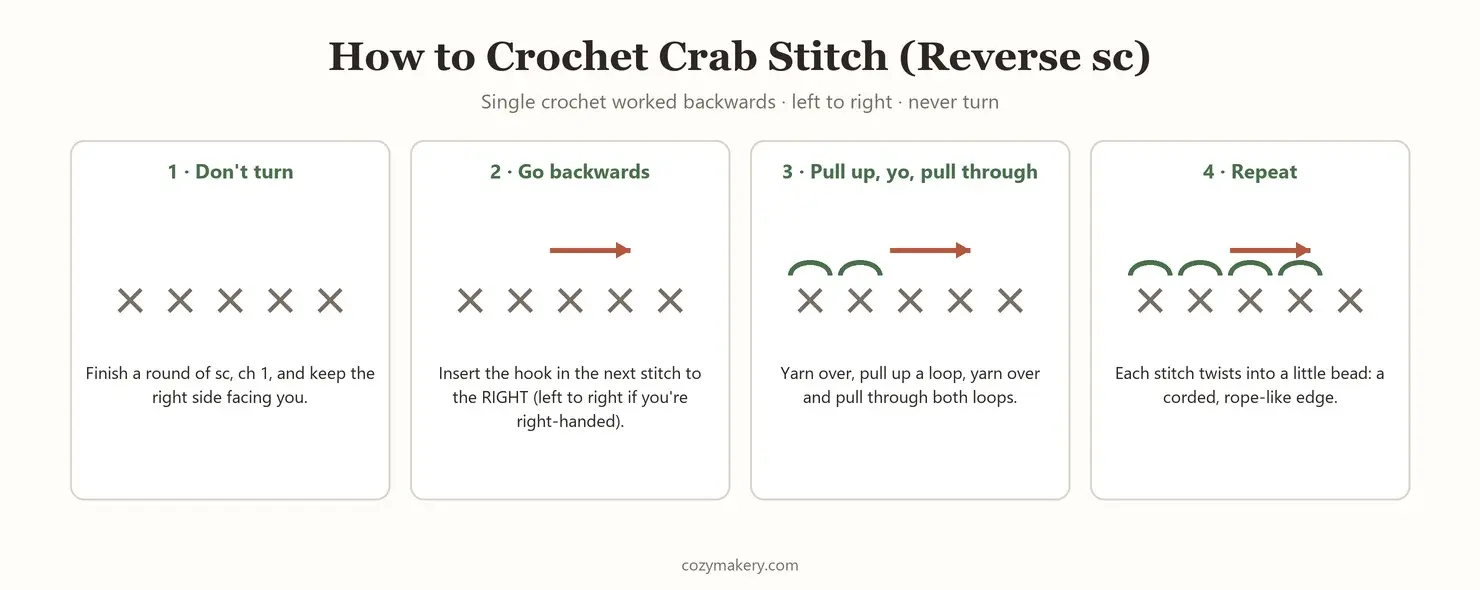
Left-handed? Everything is mirrored: you work from right to left. The edge looks the same.
Corners and tension
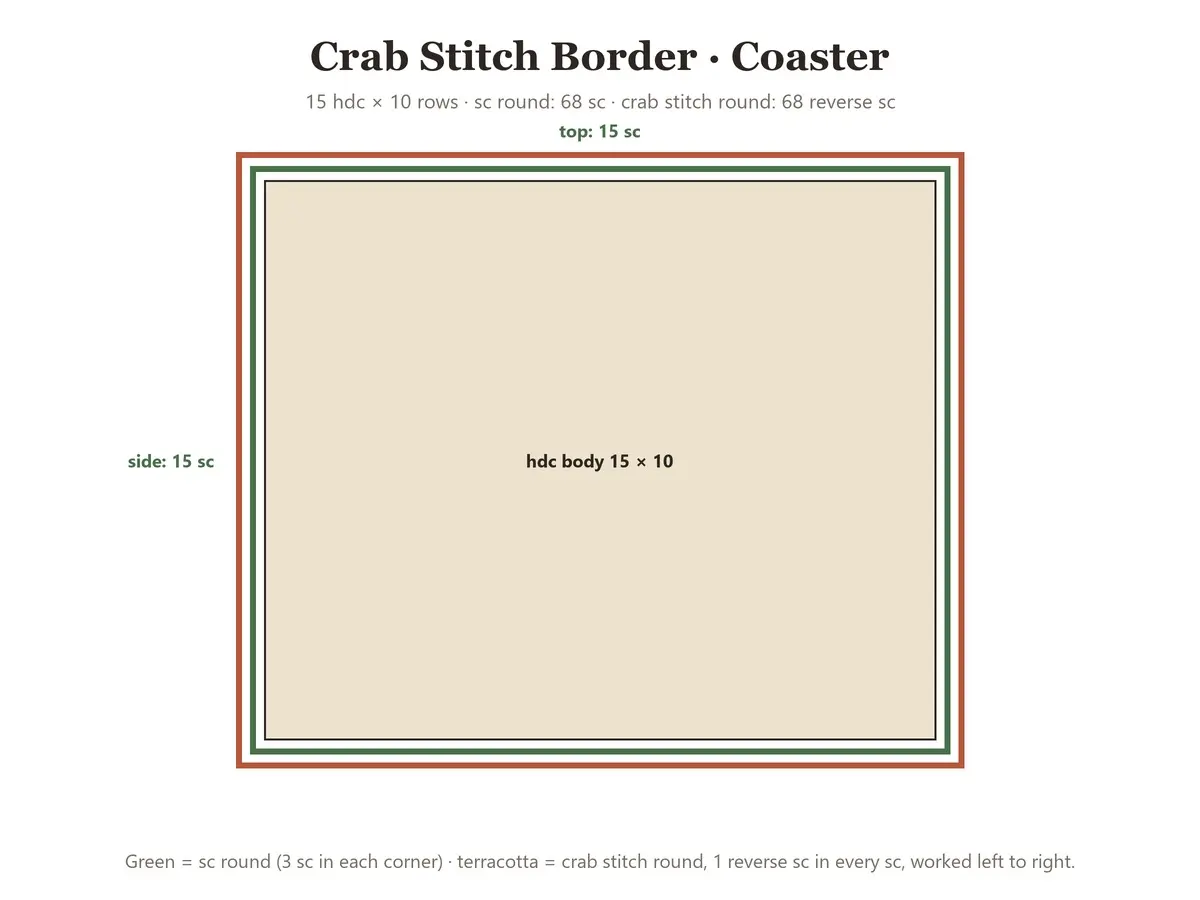
- Work a round of sc first, with 3 sc in each corner. The crab stitch goes 1 in each sc, corners included.
- Keep the loops loose. Pull up the first loop a bit taller than usual: crab stitch tightens as it twists.
- Edge rippling? Too many sc in the first round. Pulling in? Too few, or the crab stitches are too tight.
- Hard to get the hook in? Tilt the hook down a little and push it through the stitch at an angle.
Practice project: coaster and placemat
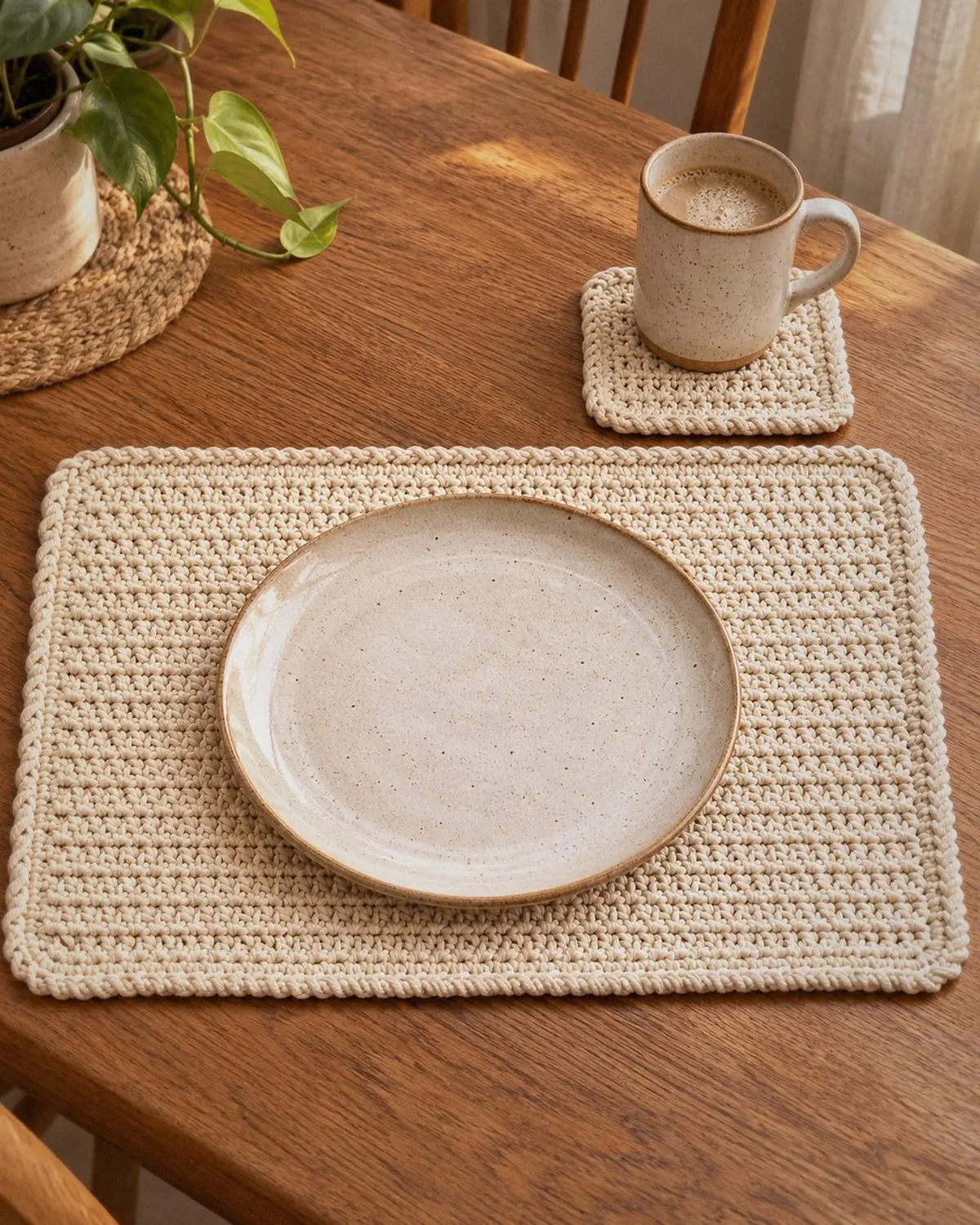
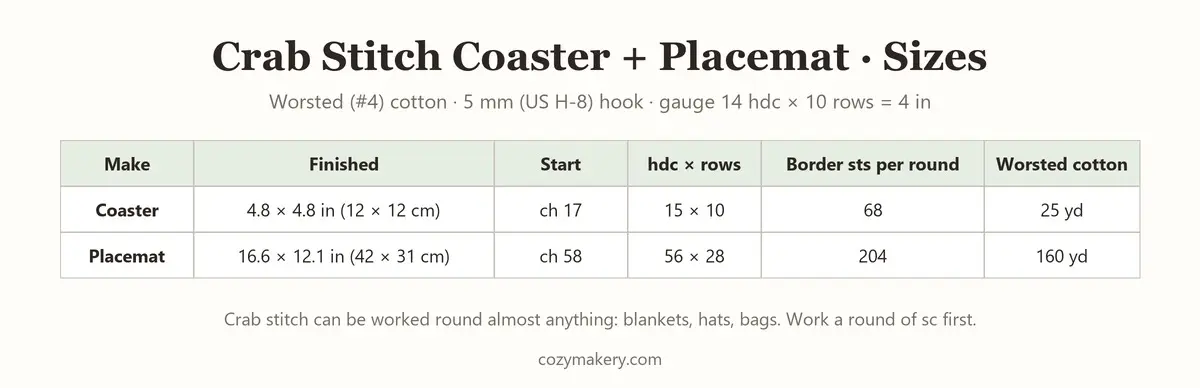
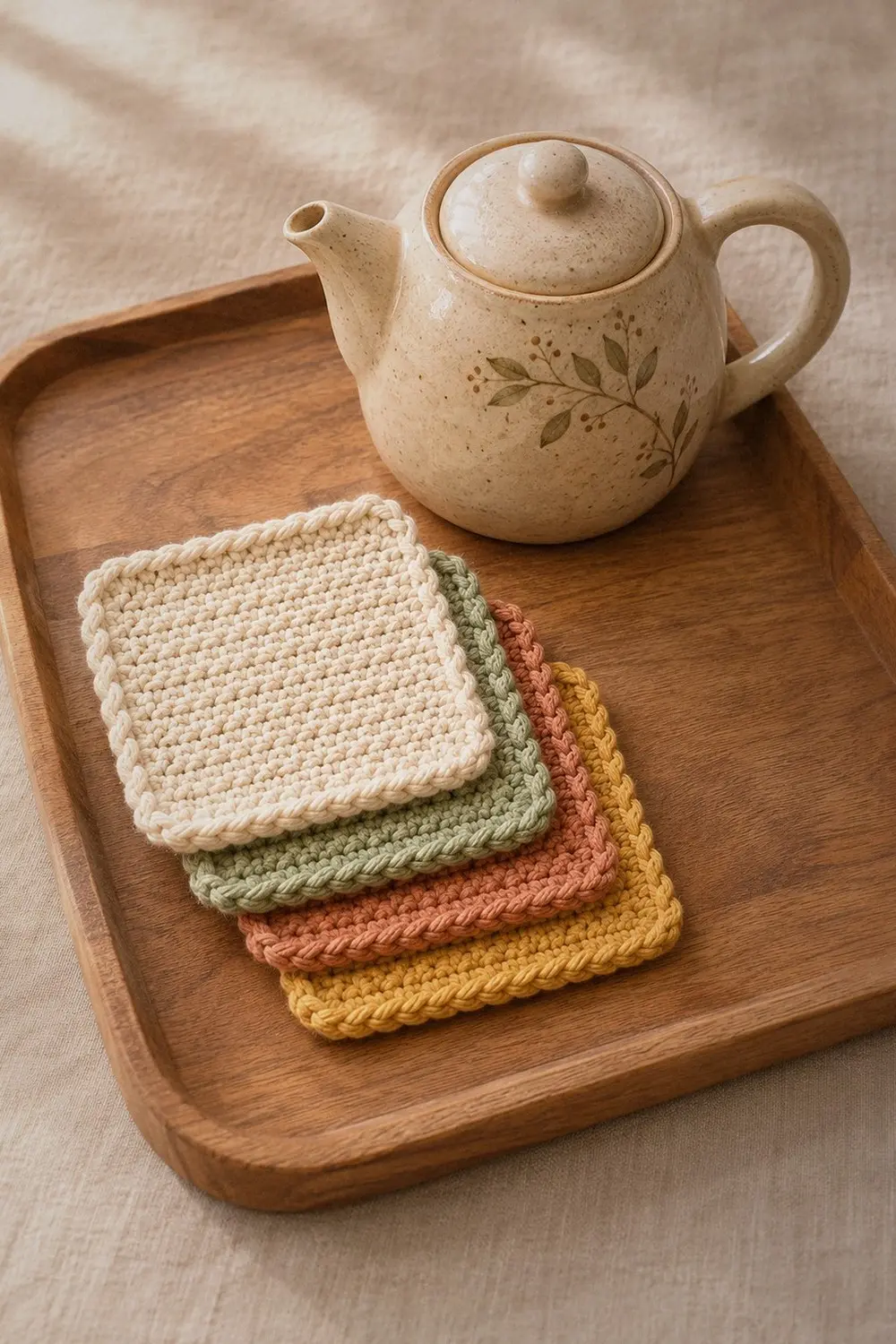
Both are rectangles of half double crochet, then a round of sc and a round of crab stitch. The coaster is quick practice; the placemat is 56 hdc by 28 rows, with 204 stitches in each border round.
You'll need
- Worsted (#4) cotton: 25 yd (coaster) or 160 yd (placemat)
- 5 mm (US H-8) hook, tapestry needle
Gauge: 14 hdc and 10 rows = 4 in (10 cm), a typical worsted cotton value, not one we measured.
Placemat (body 16 × 11.5 in (41 × 29 cm))
- Foundation: Ch 58.
- Row 1: Hdc in the 3rd ch from the hook and in each ch across (56 hdc). Turn. (56)
- Rows 2–28: Ch 2 (doesn't count as a st), hdc in each st across. Turn. The piece measures about 11.2 in (28 cm). (56)
- Round 1 (sc): Don't turn. Ch 1, sc evenly round: 1 sc in each st along the top and the bottom (56 each), 3 sc for every 2 rows along each side (42 each), 3 sc in each corner. Sl st to the first sc (204 sc). (204)
- Round 2 (crab stitch): Ch 1, do NOT turn. Working from LEFT to RIGHT: *insert the hook in the next st to the right, yo, pull up a loop, yo, pull through both loops*; repeat in every sc round (204 reverse sc). Sl st to the first st, fasten off. (204)
- Finish: Weave in the ends along the border. Steam lightly so the edge lies flat.
Coaster: ch 17, work 10 rows of 15 hdc, then 68 sc and 68 crab stitches.
We worked out the border in code: 1 sc per stitch along the top and bottom, 3 sc for every 2 hdc rows on the sides, 3 in each corner, and exactly 1 crab stitch in every sc. For more edges, see crochet border ideas, and for the body stitch, half double crochet.
Frequently asked questions
Is crab stitch the same as reverse single crochet?
Yes. ‘Crab stitch’ because it walks backwards; ‘reverse single crochet’ (rsc) in most US patterns.
Why is crab stitch so hard?
The hook points against the direction you’re moving. It gets easier after a dozen stitches; a hook with a pointed tip helps.
Do I need a round of sc before crab stitch?
Usually yes. It gives an even base of stitches to work into and squares off the corners.
Does crab stitch stretch?
Very little: it’s a firm edge, which is why it stops edges from waving and stretching.
How many pages is the Crab Stitch Crochet PDF?
5 pages on US Letter, with the border diagram and both makes. On A4, print with “Fit to page”.
What can I edge with crab stitch?
Blankets, hats, bags, coasters and cardigans: any edge that should look finished and stay put.
Save it for later
Pin the photo below to keep the crab stitch coasters on your Pinterest board. Made the crab stitch coasters? I’d love to see it: send a photo to info@cozymakery.com.
More crochet: dishcloth patterns, single crochet and crochet coasters.