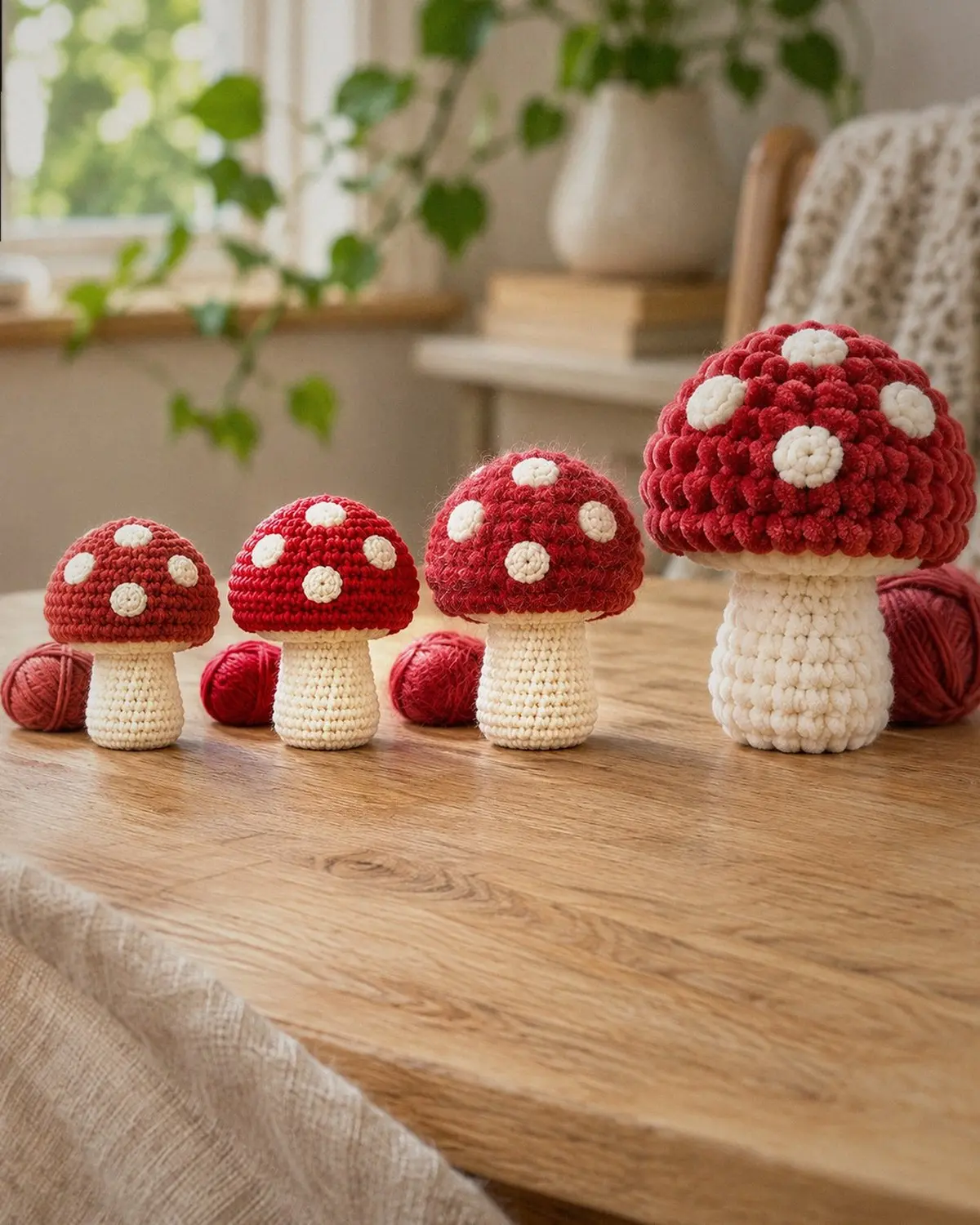
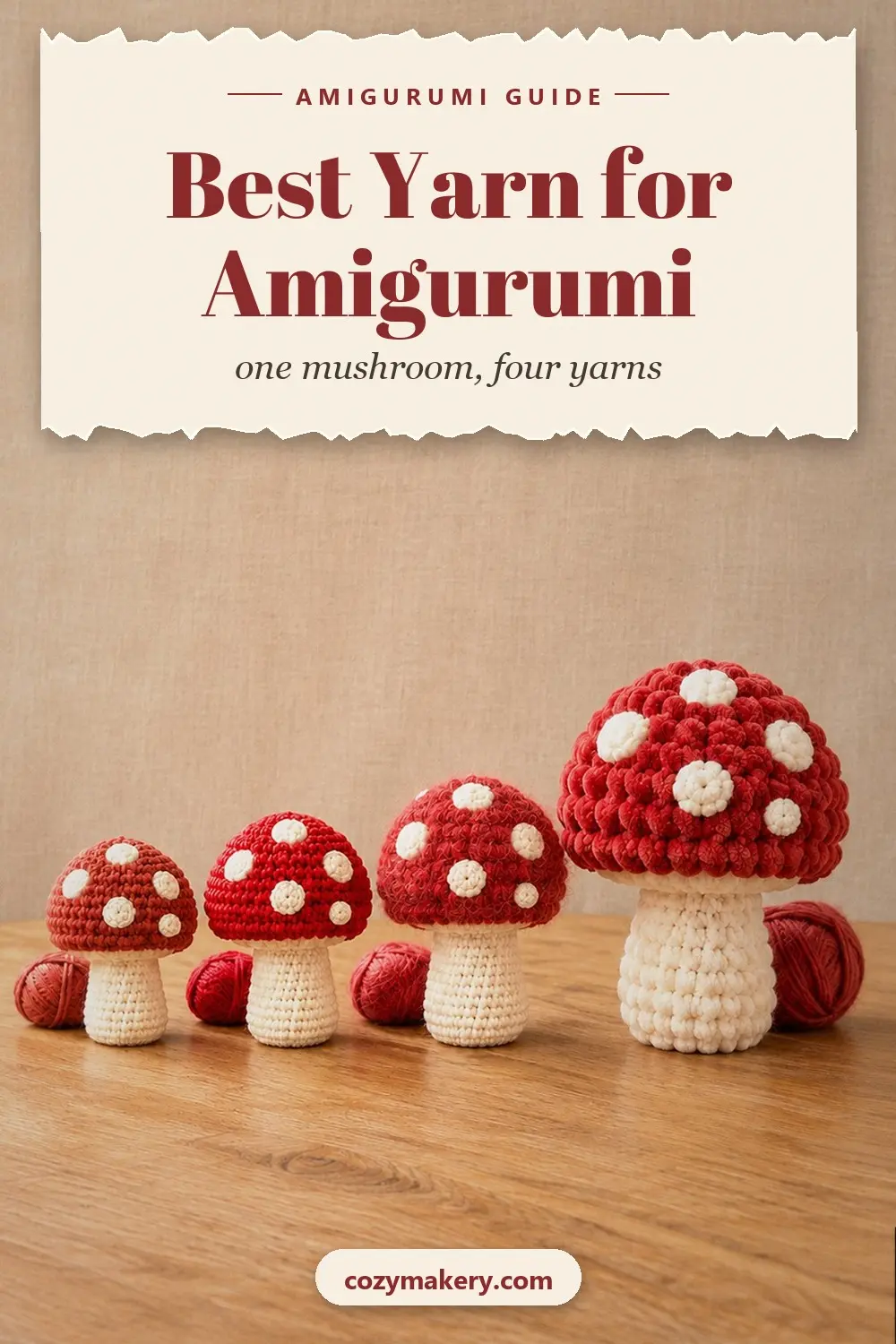
Choosing the best yarn for amigurumi decides how your toy looks, feels and holds up. Cotton gives crisp stitches, acrylic is cheap and washable, milk cotton is soft for babies and chenille makes the cuddliest (but trickiest) toys. This honest guide compares them, and to show the difference the same little mushroom pattern is worked out for each yarn, so you can see how big each one comes out.
In this post
Pattern at a glance
- Skill levelEasy
- Practice pieceMushroom, 2.7 in (6.9 cm) tall in cotton
- YarnAny amigurumi yarn
- Hook1–2 sizes below the label
- Stitchessc, inc, dec, BLO
- TimeAbout 1 hour
Free printable pattern
The PDF has the yarn guide, the mushroom pattern (cap, stem, spots, assembly) and the round map.
The Best Yarn for Amigurumi PDF has 4 pages and prints on US Letter paper; on A4, choose “Fit to page” in the print dialog.
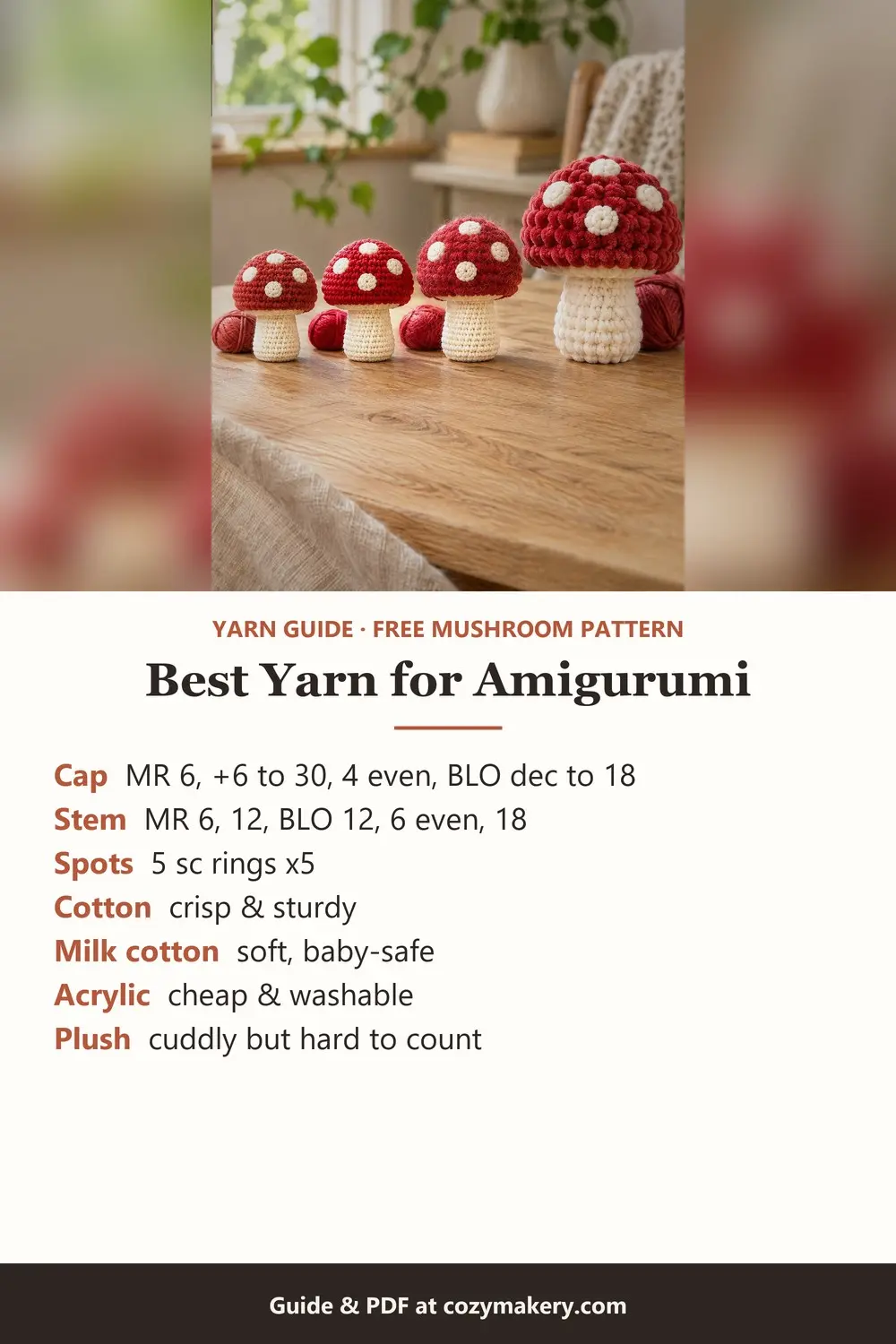
The best yarns for amigurumi
Cotton (Worsted #4)
Hook: 3.5 mm. Crisp stitches, holds shape, no fuzz; slightly stiff on the hands.
Milk cotton (DK #3)
Hook: 3 mm. Soft and smooth with clear stitches; great for baby toys.
Acrylic (Worsted #4)
Hook: 3.5 mm. Cheap, washable, huge colour range; can split and look a bit fuzzy.
Chenille / plush (Bulky #6)
Hook: 5 mm. Super soft and cuddly; stitches are hard to see, so count with markers.
Same pattern, four yarns
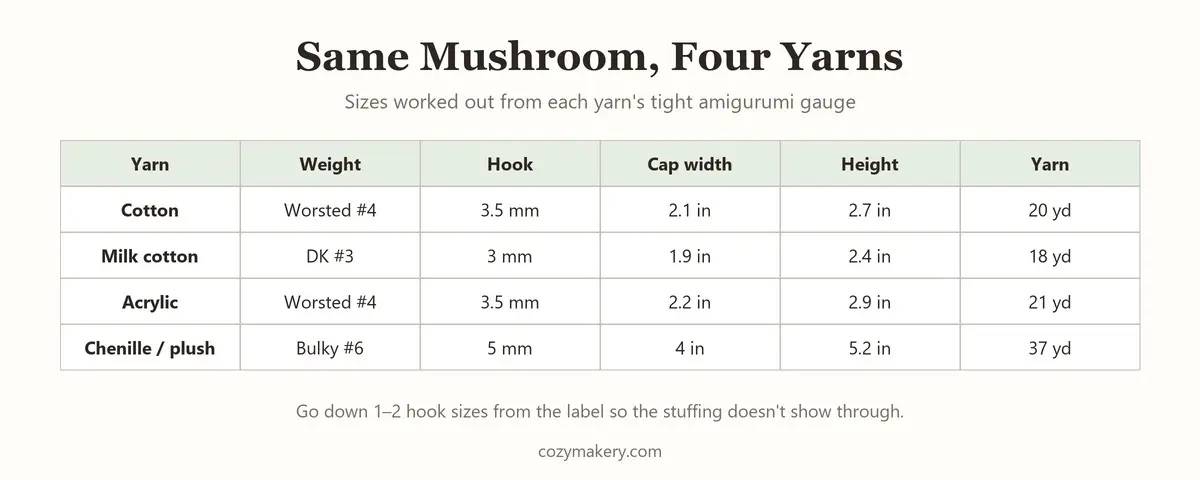
Tip: whatever yarn you pick, use a hook 1–2 sizes smaller than the label suggests. Amigurumi needs tight stitches so the stuffing does not show through.
What to avoid
- Very fuzzy yarns like mohair: you can’t see the stitches.
- Splitty, loosely twisted acrylic: it frays when you sew pieces together.
- Dark plush yarn for a first project: counting stitches is very hard. Use stitch markers every round.
Practice pattern: crochet mushroom
Materials
- Worsted cotton: red, cream and a little white (about 20 yd in all)
- 3.5 mm (US E-4) hook, fibre fill, a stitch marker and a tapestry needle
Abbreviations
| US | Meaning | UK |
|---|---|---|
| sc | single crochet | dc |
| inc | 2 sc in one st | 2 dc in one st |
| dec | invisible decrease | invisible decrease |
| BLO | back loop only | back loop only |
Round map
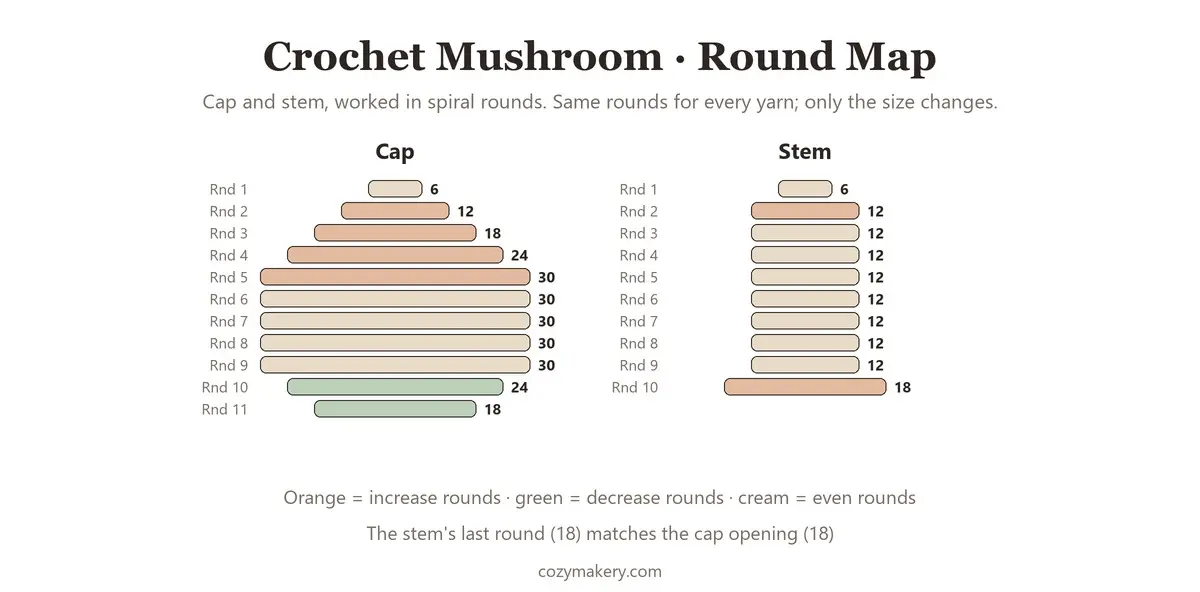
Cap (red)
- Rnd 1: 6 sc in a magic ring. (6)
- Rnd 2: Inc in each st. (12)
- Rnd 3: *Sc 1, inc*; repeat 6 times. (18)
- Rnd 4: *Sc 2, inc*; repeat 6 times. (24)
- Rnd 5: *Sc 3, inc*; repeat 6 times. (30)
- Rnd 6: Sc in each st. (30)
- Rnd 7: Sc in each st. (30)
- Rnd 8: Sc in each st. (30)
- Rnd 9: Sc in each st. (30)
- Rnd 10: Working in the back loops only: *sc 3, dec*; repeat 6 times. (24)
- Rnd 11: *Sc 2, dec*; repeat 6 times. Stuff the cap lightly so it stays a dome; leave the hole open. (18)
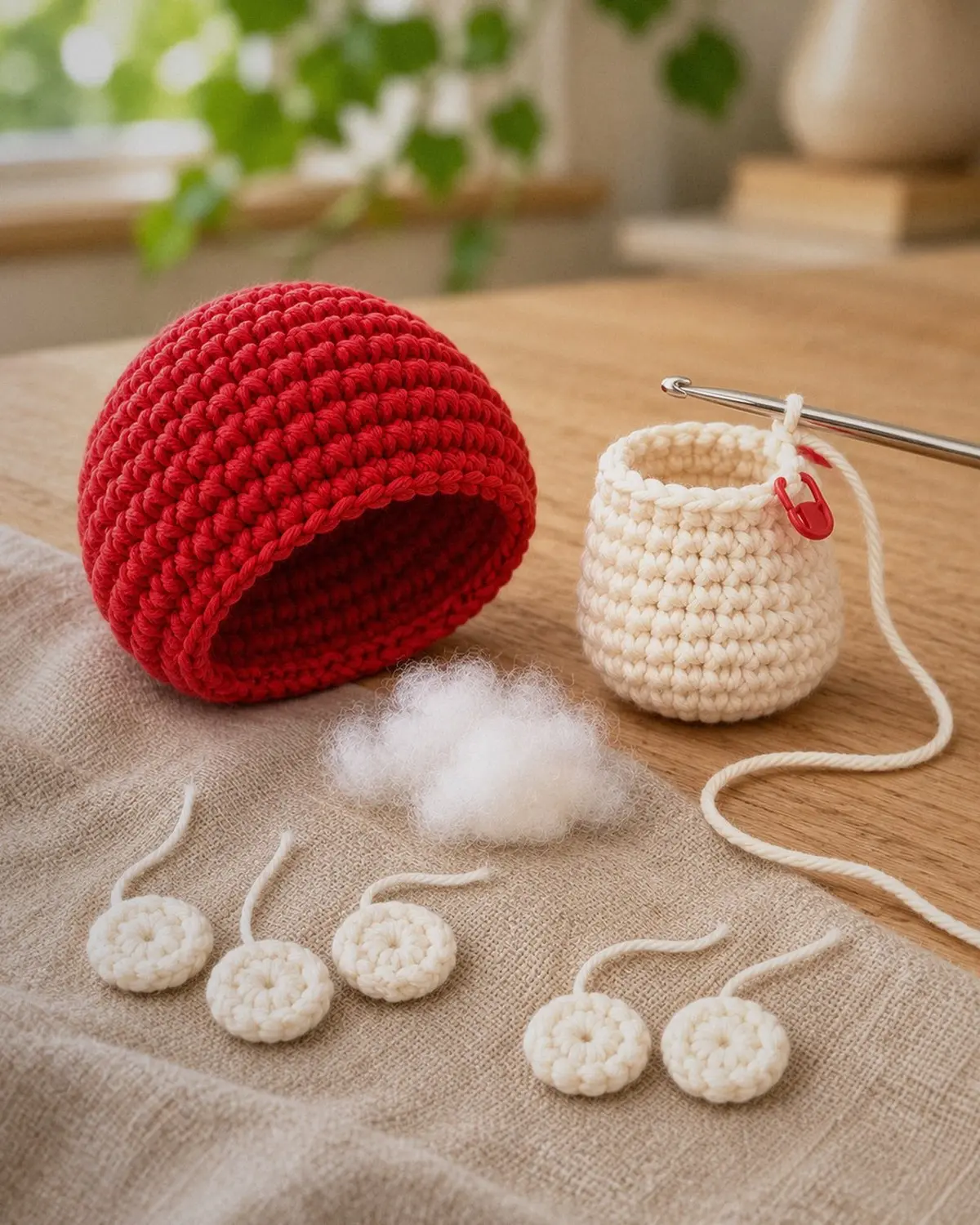
Stem (cream)
- Rnd 1: 6 sc in a magic ring. (6)
- Rnd 2: Inc in each st. (12)
- Rnd 3: Working in the back loops only: sc in each st (this makes the flat base). (12)
- Rnd 4: Sc in each st. (12)
- Rnd 5: Sc in each st. (12)
- Rnd 6: Sc in each st. (12)
- Rnd 7: Sc in each st. (12)
- Rnd 8: Sc in each st. (12)
- Rnd 9: Sc in each st. (12)
- Rnd 10: *Sc 1, inc*; repeat 6 times. Stuff firmly. Fasten off, leaving a long tail for sewing. (18)
Spots (white)
- Spots (make 5): In white, 5 sc in a magic ring, pull tight, sl st to the first sc. Fasten off with a tail and sew onto the cap. (5)
Assembly
- Join: Put the top of the stem into the open bottom of the cap: the stem's last round has 18 sts, the same as the cap opening. Whip stitch them together through the front loops.
- Gills: The front loops left by the cap's back-loop round make a little ledge under the cap, like the gills of a mushroom.
- Face (optional): Add 6 mm safety eyes between Rnds 5 and 6 of the stem, 4 sts apart, before stuffing; or embroider them for babies.
You might also like these tiny crochet projects.
Ready to start? Here are 16 easy amigurumi crochet patterns for beginners, from a ball to a dragon.
Frequently asked questions
What is the best yarn for amigurumi for beginners?
Worsted cotton: the stitches are easy to see and count, it doesn’t split much and the toy keeps its shape.
Is acrylic or cotton better for amigurumi?
Cotton gives a crisper, sturdier toy; acrylic is softer, cheaper and fine for most toys. For babies, cotton or milk cotton is the safer choice.
Why can I see the stuffing between my stitches?
Your stitches are too loose: go down a hook size and pull each stitch snug.
Does gauge matter for the amigurumi ball?
Only a little: the amigurumi ball isn’t fitted, so a tighter or looser tension just makes it slightly smaller or bigger and changes the yarn amount. For the size in the pattern, make a 4 in (10 cm) swatch for the amigurumi ball with the 1–2 sizes below the label hook first and compare.
How many pages is the amigurumi ball PDF?
4 pages on US Letter paper, with every step of the amigurumi ball written out. On A4 paper, pick Fit to page when you print the amigurumi ball PDF so the charts aren’t cropped.
Save it for later
Pin the image below to keep the amigurumi ball pattern on your Pinterest board. Made the amigurumi ball? I’d love to see your version: send a photo to info@cozymakery.com.
More amigurumi: the crochet cat, the crochet bunny and the invisible decrease.